

Identity, image and reputation: a thesis on how the value of a territory is built.
A territory’s reputation is not a consequence of what it does, but the accumulated result of what it decides to sustain. That is the thesis of Best Nation Branding: the country brand is a strategic decision, not a by-product of economic, cultural or diplomatic activity, and its management belongs to the realm of strategy rather than communication.
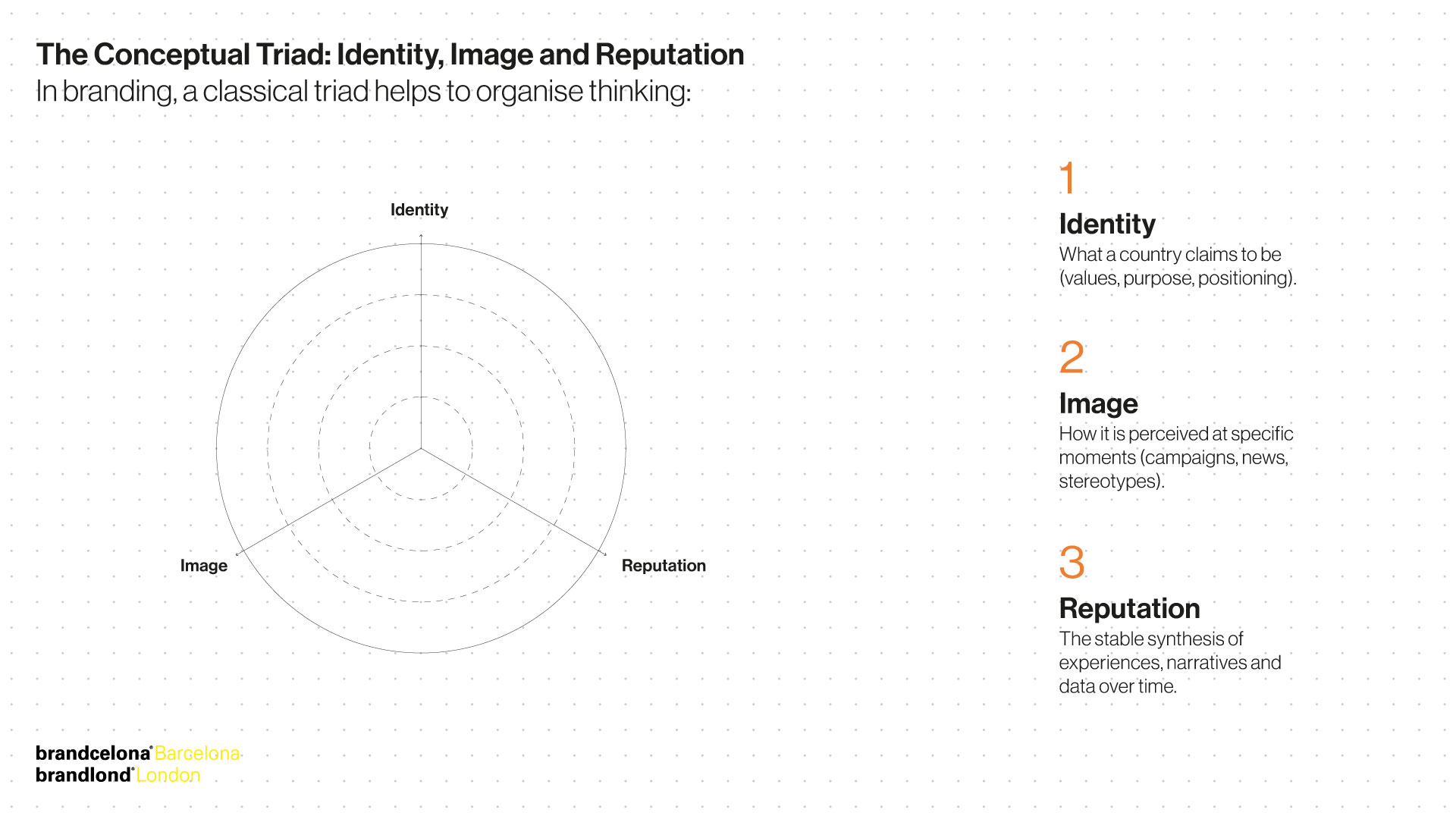
To approach it, the report distinguishes three levels: identity (what a territory claims to be), image (how it is perceived at a given moment) and reputation (the stable synthesis that consolidates over time). The distance between identity and reputation is the real object of the work. These are the eight ideas that shape our approach.
1. Communicating is not positioning
The most widespread error is to invert the hierarchy: acting on visibility before the foundation has been defined. Branding defines the role and the promise that a territory is willing to sustain for a decade or more; marketing activates that promise before specific audiences. Without the former, the latter is noise.
2. Three concepts, three timeframes
Identity is the intention; image, the perception of the moment; reputation, the sedimentation of experiences and data over time. Reputation is not managed directly: it is built by working on identity and on the coherence between what is promised and what is done. Anyone who manufactures reputation without intervening in what sustains it produces only image.
3. The gap as the unit of work
If the promise exceeds reality, the problem is one of credibility, and the discourse must be adjusted or the practice transformed. If reality exceeds reputation, the problem is one of perception, and the narrative must be synchronised with performance. In both cases the task is to close the distance, never to disguise it.
4. The brand as a system of meanings
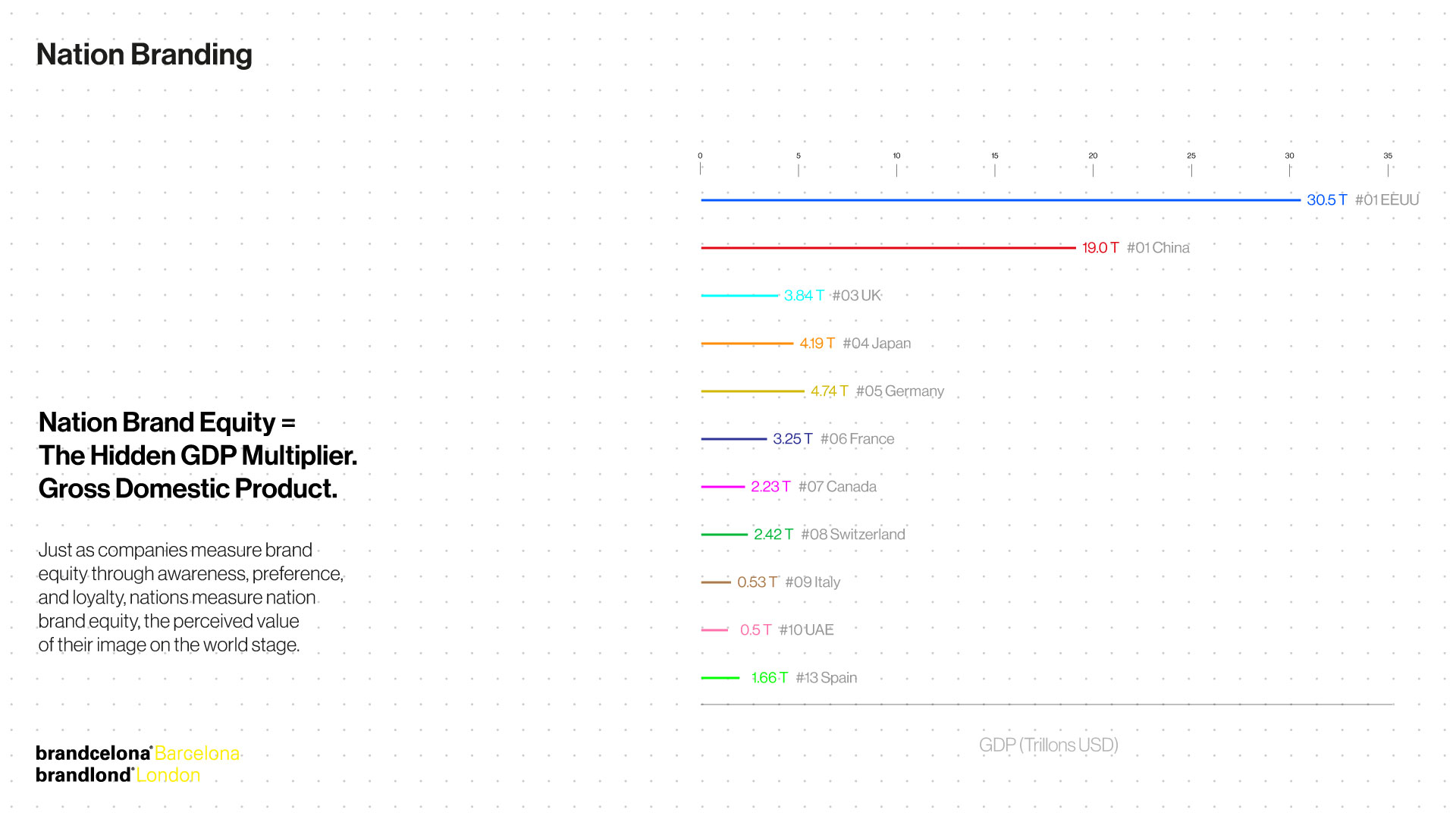
A territorial brand offers cognitive shortcuts to those who must decide where to invest, study, settle or travel: they trust, or do not trust, the territory’s seal. That is why reputation operates as a transaction cost: the weaker it is, the more effort it takes to be believed. The brand does not create wealth on its own, but it amplifies or limits the capacity to capture it.
5. Multidimensional coherence as a condition
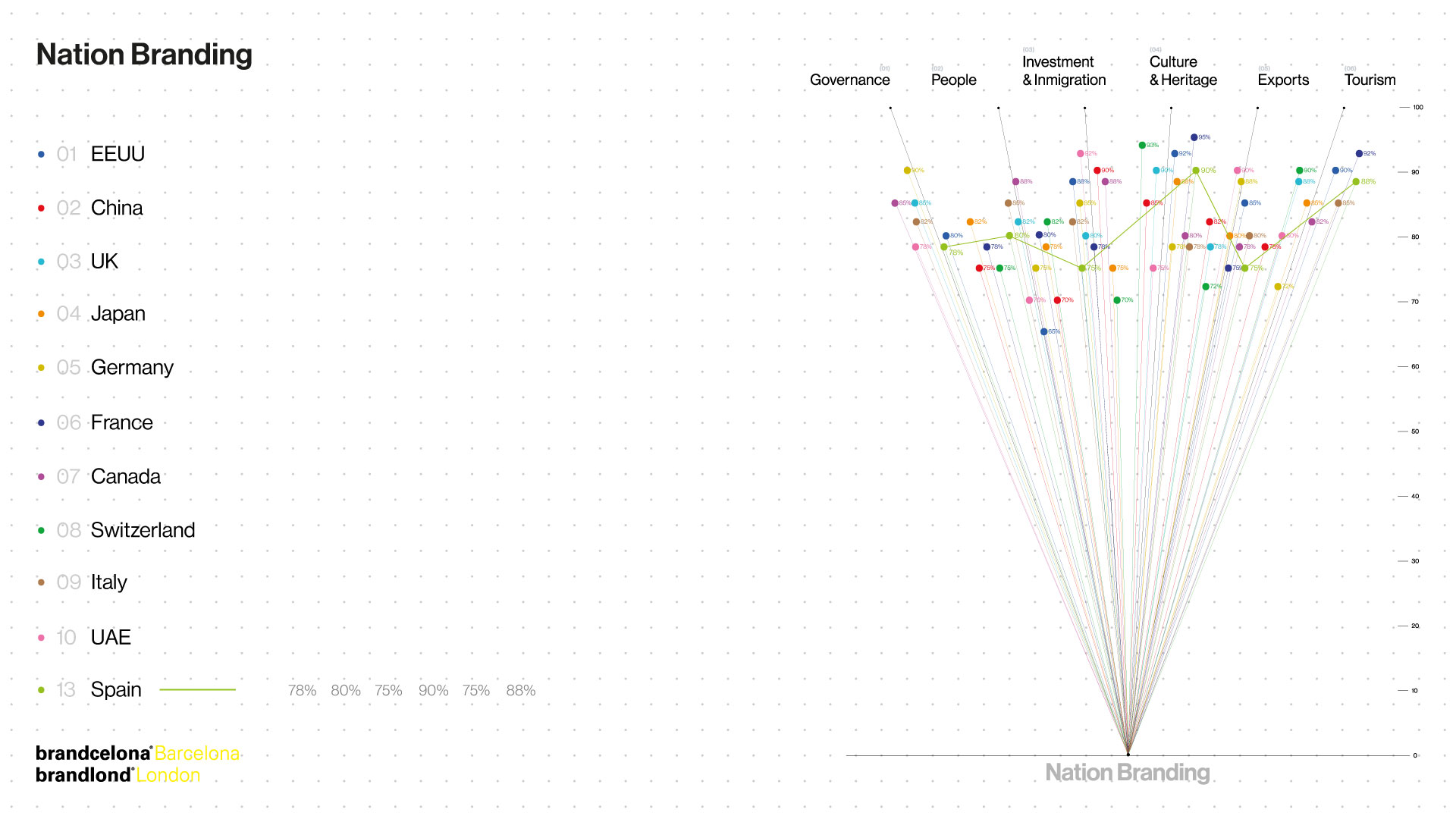
Governance, people, investment and mobility, culture and heritage, exports and tourism compete simultaneously, and their effect is multiplicative, not additive: the weakest dimension conditions the whole. Coherence weighs more than isolated excellence, and authenticity is a competitive defence, because what is invented does not withstand scrutiny.
6. Experience as proof of the promise
The promise is confirmed or refuted in every interaction with institutions, citizens, public communication and private organisations. Friction is therefore a brand problem and not merely a management one: the brand does not live in the message, it lives in the sum of the experiences that confirm it.
7. Measuring in order to decide
Reputation indices are proxies: they do not capture the whole of reality, but they offer a comparable baseline and make it possible to observe trends. Their value lies not in the position they confer, but in the questions they force us to ask. Hence the methodological order: insight, comparison, strategy, accountability and, only at the end, communication.
8. Where the discipline is heading
From the single narrative to value coalitions; from the static symbol to experience; from promotion to the defence of one’s own narrative. In an environment saturated with other people’s stories, preserving authorship of identity is also a strategic matter.
Conclusion: strategy first
Building a territorial brand demands three commitments that no campaign can replace: defining a promise with a long horizon, aligning all the vectors that sustain it, and maintaining that coherence beyond political cycles and the urgencies of communication. Reputation is neither improvised nor bought; it is decided, sustained and demonstrated.
If identity is the intention, image is the perception and reputation is the consequence, then the work of branding is to make the three speak the same language. That is the difference between competing out of necessity and leading through coherence.

Identidad, imagen y reputación: una tesis sobre cómo se construye el valor de un territorio.
La reputación de un territorio no es una consecuencia de lo que hace, sino el resultado acumulado de lo que decide sostener. Esa es la tesis de Best Nation Branding: la marca país es una decisión estratégica, no un efecto colateral de la actividad económica, cultural o diplomática, y su gestión pertenece al ámbito de la estrategia y no al de la comunicación.
Para abordarla, el informe distingue tres planos: la identidad (lo que un territorio afirma ser), la imagen (cómo se percibe en un momento concreto) y la reputación (la síntesis estable que se consolida con el tiempo). La distancia entre identidad y reputación es el verdadero objeto de trabajo. Estas son las ocho ideas que articulan nuestro enfoque.
1. Comunicar no es posicionar
El error más extendido es invertir la jerarquía: actuar sobre la visibilidad antes de definir el fundamento. El branding define el papel y la promesa que un territorio está dispuesto a sostener durante una década o más; el marketing la activa ante audiencias concretas. Sin lo primero, lo segundo es ruido.
2. Tres conceptos, tres temporalidades
La identidad es la intención; la imagen, la percepción coyuntural; la reputación, la sedimentación de experiencias y datos en el tiempo. La reputación no se gestiona de forma directa: se construye actuando sobre la identidad y sobre la coherencia entre lo que se promete y lo que se hace. Quien fabrica reputación sin intervenir en lo que la sustenta solo produce imagen.
3. La brecha como unidad de trabajo
Si la promesa supera a la realidad, el problema es de credibilidad y hay que ajustar el discurso o transformar la práctica. Si la realidad supera a la reputación, el problema es de percepción y hay que sincronizar la narrativa con el desempeño. En ambos casos se trata de cerrar la distancia, nunca de maquillarla.
4. La marca como sistema de significados
Una marca territorial ofrece atajos cognitivos a quien debe decidir dónde invertir, estudiar, instalarse o viajar: confía, o no, en el sello del territorio. Por eso la reputación opera como un coste de transacción: cuanto más débil es, más esfuerzo requiere ser creído. La marca no crea riqueza por sí sola, pero amplifica o limita la capacidad de capturarla.
5. La coherencia multidimensional como condición
Gobernanza, personas, inversión y movilidad, cultura y patrimonio, exportaciones y turismo compiten a la vez, y su efecto es multiplicativo, no aditivo: la dimensión más frágil condiciona el conjunto. La coherencia pesa más que la excelencia aislada, y la autenticidad es una defensa competitiva, porque lo inventado no resiste el escrutinio.
6. La experiencia como prueba de la promesa
La promesa se confirma o se desmiente en cada interacción con las instituciones, los ciudadanos, la comunicación pública y las organizaciones privadas. La fricción es, por tanto, un problema de marca y no solo de gestión: la marca no vive en el mensaje, vive en la suma de experiencias que lo confirman.
7. Medir para decidir
Los índices de reputación son proxies: no capturan toda la realidad, pero ofrecen una base comparable y permiten observar tendencias. Su valor no está en la posición que otorgan, sino en las preguntas que obligan a formular. De ahí el orden metodológico: conocimiento, comparación, estrategia, rendición de cuentas y, al final, comunicación.
8. Hacia dónde evoluciona la disciplina
Del relato único a las coaliciones de valor; del símbolo estático a la experiencia; de la promoción a la defensa de la narrativa propia. En un entorno saturado de relatos ajenos, preservar la autoría de la identidad es también una cuestión estratégica.
Conclusión: primero la estrategia
Construir una marca territorial exige tres compromisos que ninguna campaña puede sustituir: definir una promesa con horizonte largo, alinear todos los vectores que la sostienen y mantener esa coherencia más allá de los ciclos políticos y de las urgencias comunicativas. La reputación no se improvisa ni se compra; se decide, se sostiene y se demuestra.
Si la identidad es la intención, la imagen es la percepción y la reputación es la consecuencia; aquí el trabajo del branding consiste en que las tres hablen el mismo idioma. Esa es la diferencia entre competir por necesidad y liderar por coherencia.

