Views of the 20th century: Bauman // Lecturas del s.XX: Bauman

For a better understanding and to complete all those elements linked to the brand experience that influence the buying process, we will count with the collaboration of experts that will introduce concepts that will improve our business development, from different disciplines and points of view. Today we are pleased to introduce a new text of Insik W. Yoon, sociologist.

To choose or not to choose, that’s the question. This is the dilemma we face as consumers when we are in stores and supermarkets full of products. To choose a product from a growing range or not to choose buying as an alternative. The «choice» is a subject of study in schools of economics, political science, social psychology, studied by sociologists such as Herbert Spencer or figures like Machiavelli. The power of choice can lead to false beliefs about power and personal freedoms, Machiavelli warned that the Prince is almighty in everything but in his decisions, if he wants to remain as prince he has to behave in a certain way and not another. For Herbert Spencer the increase of the apparent freedom must be accompanied by a decrease in real freedom. The choice is always limited by the context. The Individual versus the market.

I remember an experiment that was as follows: they put two shelves full of jams; on a shelf there were six different varieties of jams, and the other shelf held more than twenty different kinds, then was introduced to a group of people to observe their buying behavior. The 60% of the group went to the shelf with the widest variety of jams, while the remaining 40% went to the other shelf. A 3% of the people ended up buying a product from the most varied shelf, while in the other shelf were the 30%. The study concluded that the election is a process of waivers, you start by choosing what you are willing to give up to reach the desired option.

When the choice options are numerous, the list of waivers is long and may tire the brain, or you will remember that  you’ve got jam at home. When the options are reduced, the choice is simple and quickly leads to purchase. The same happens with  infoxication or the excess of information  that makes more difficult the election process. Discard or give  up irrelevant information is key to facilitate the choice of purchase.

There is another component that is becoming increasingly important that intervenes in the purchase decision. The clock that shows the time remaining before the arrival of the next train in the subway, isn’t giving us information that helps us to choose: if we wait or seek an alternative transport. It serves to give us an experience during the wait, as the screenshots that appear while loading an application on the phone. Steve Jobs thought the user experience on all its products with the addition of tactile experience and more. Providing an enjoyable experience in the use or in the purchase becomes an added-value. In a way, the information society is transforming us from hardware to software, from the object to the experience, or quoting the old Bauman: «We are more liquid.» In everything that is sold must be included the experience (of shopping).

Creating a pleasant shopping experience involves everything that facilitates the consumer choice, therefore, there is a common trend towards specialization in retail  where expert staff can recommend the best option to reduce the possibilities. It is the paradox of hyperconsumism, that denotes an apparent freedom of choice but the vast amount of available options ends up reducing the real freedom of choice.

I.W.Y.

Ego Consumans

—-

Para completar y entender mejor todos los elementos vinculados a la experiencia de marca que inciden en el proceso de compra, contaremos con la colaboración de expertos que nos irán introduciendo, desde distintas disciplinas y visiones, conceptos que nos ayudarán a construir mejor nuestro negocio. Hoy estamos encantados de presentaros un nuevo texto de Insik W. Yoon, sociólogo.

Elegir o no elegir, he ahí la cuestión. Es el dilema al que nos enfrentamos como consumidores cuando nos encontramos en las tiendas y supermercados repletos de productos. Elegir un producto entre una gama cada vez mayor o no elegir comprar como alternativa. La “elección” es un tema de estudio en las facultades de economía, en ciencias políticas, en psicología social, estudiado por sociólogos como Herbert Spencer o figuras como Maquiavelo. El poder de elección puede dar lugar a falsas creencias sobre el poder y las libertades personales; Maquiavelo advirtió que el Príncipe es todopoderoso en todo menos en sus decisiones, que si quiere permanecer como príncipe tiene que comportarse de cierto modo y no otro. Para Herbert Spencer el incremento de la aparente libertad tiene que venir acompañada de una disminución en la libertad real. La elección siempre viene delimitada por el contexto. El Individuo versus el Mercado.

Recuerdo un experimento que consistió en lo siguiente: se colocó dos estanterías repletas de mermeladas, en una estantería había seis variedades distintas de mermeladas, y la otra estantería albergaba más de veinte clases diferentes; a continuación se introdujo a un grupo de gente para observar su comportamiento de compra. El 60% del grupo se dirigió a la estantería con más variedad de mermeladas, mientras que el restante 40% se dirigió a la otra estantería. El 3% de la gente acabó comprando algún producto de la estantería con más variedad, mientras que en la otra estantería fueron el 30%. La conclusión del estudio fue que la elección es un proceso de renuncias, se empieza eligiendo por aquello que se está dispuesto a renunciar para llegar a la opción deseada.

Cuando las opciones de elección son numerosas, la lista de renuncias es larga y el cerebro se puede cansar, o bien, recordar que en casa tienes mermelada. Cuando las opciones son reducidas, la elección es simple y conduce rápidamente a la compra. Lo mismo ocurre con la infoxicación o exceso de información que entorpece el proceso de elección. Descartar o renunciar a información no relevante resulta clave para facilitar la elección de compra.

Existe otro componente cada vez más importante que interviene en la decisión de compra. El reloj que muestra el tiempo que falta para la llegada del próximo tren en el metro, no es una información que se nos facilita para que elijamos: si esperamos o buscamos un transporte alternativo. Sirve para darnos una experiencia durante la espera, como los screenshots que aparecen mientras se carga una aplicación en el móvil. Steve Jobs pensó la experiencia del usuario en todos sus productos con la incorporación de la experiencia táctil entre otras cosas. Proporcionar una experiencia agradable en el uso o en la compra se convierte en algo más que valor añadido. En cierto modo, la sociedad de la información nos está transformando del hardware al software, del objeto a la experiencia, o parafraseando al viejo Bauman: “nos hacemos más líquidos”. En todo lo que se venda hay que incluir la experiencia (de compra).

Crear una agradable experiencia de compra implica facilitar todo lo posible la elección al consumidor, por ello, cada vez es más habitual la tendencia a la especialización en el retail con personal experto que puede recomendar la mejor opción reduciendo las posibilidades. Es la paradoja del híperconsumismo, que denota una aparente libertad de elección pero que la ingente cantidad de opciones disponibles acaban reduciendo la libertad real de elección.

I.W.Y.

Ego Consumans

I’ll see you in London! // ¡Nos vemos en Londres!

For a better understanding and to complete all those elements linked to the brand experience that influence the buying process, we will count with the collaboration of experts that will introduce concepts that will improve our business development, from different disciplines and points of view. Today we are pleased to introduce a text of Alexandra Gunnarsson, designer and conceptualizer.

I would not have expected myself to write about a mall, since I am quite anti these complexes. I find them crowded, stressful and filled with a lack of individuality. Everything is merged in to a couple of layers  placed on each other, defined as floors. They all tell a similar story!

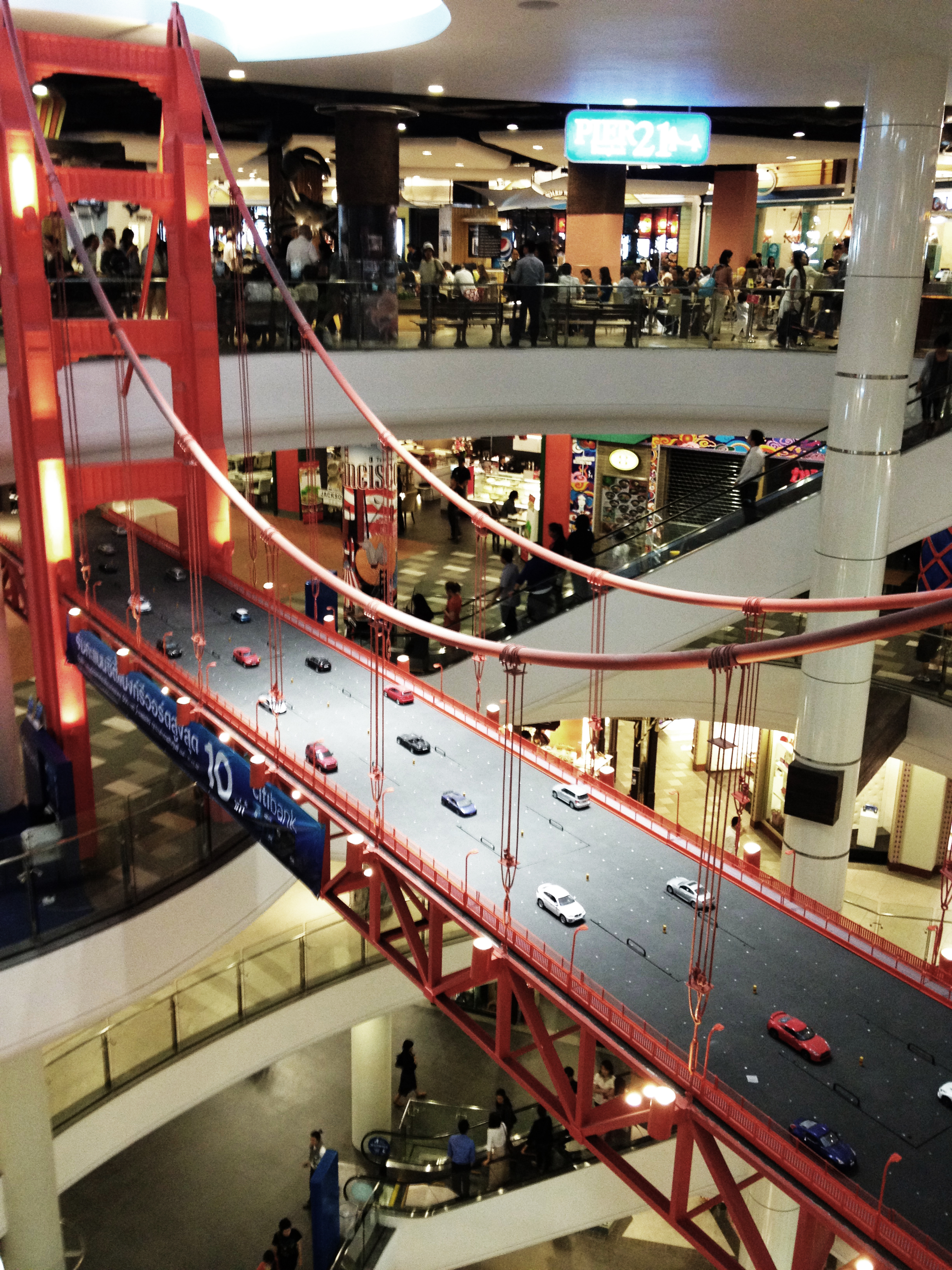
Well, not all of them… One of them mirrors the value of global diversity. It is called Terminal 21, located where Sukhumvit meets Asok in Bangkok, Thailand. I would describe it as a replication of shopping experiences on distance. You enter the terminal and by that action you are leaving Bangkok for a while. Each an every escalator takes you to a new spot on earth. You are being taken all the way from Tokyo to Istanbul, followed by Rome, Paris and London. Taken even further all the way to the Caribbean Islands, followed by a quick stop in L.A. And of course finalizing the trip with a classic shot at the Golden Gate.

It is tastefully crowded with boutiques that are typical for just that city that you’re visiting. The layout of the floors reflects a general visual interpretation of these places. So, it is not all about the shopping, it is about the adventure of it… The experience. For instance, when you actually go to one of these cities, you don’t necessarily remember the shopping itself but rather the journey of it. Please think about it. What do you really remember? One might call it superficial… But the essence of Terminal 21 is a physical reflection of globalization. Its a routine, an all day event… Imagine yourself visiting IKEA for a day with the family. Pit stops at all sections and floors. But at Terminal 21 you would not say… I’ll see you on the 2nd floor. No, you would, say,  –  I’ll see you in London!

—-

Para completar y entender mejor todos los elementos vinculados a la experiencia de marca que inciden en el proceso de compra, contaremos con la colaboración de expertos que nos irán introduciendo, desde distintas disciplinas y visiones, conceptos que nos ayudarán a construir mejor nuestro negocio. Hoy estamos encantados de presentaros un  texto de Alexandra Gunnarsson, diseñadora y conceptualizadora.

No me hubiera imaginado nunca escribiendo sobre un centro comercial, ya que soy bastante contraria a esos complejos. Siempre están llenos de gente, me estresan y predomina la falta de individualidad. Todo se combina en un par de capas colocadas una sobre la otra, definidas como plantas. Todos cuentan una misma historia!

Bien, no todos…Uno de ellos refleja el valor de la diversidad global. Se llama Terminal 21, ubicado en Sukhumvic con Asok en Bangkok, Tailandia. Yo lo describiría como una réplica de la experiencia de marca en la distancia. Nada más entrar a la terminal, vuelas lejos de Bangkok durante un rato. Cada una de las escaleras mecánicas te transporta a un lugar distinto del mundo. Viajas desde Tokio hasta Istanbul, pasando por Roma, París y Londres. Vas aún más lejos llegando a las islas del Caribe, haciendo una parada rápida en Los Ángeles y acabando tu vuelta al mundo con la clásica foto frente el Golden Gate.

Está lleno de boutiques con buen gusto que son típicas según la ciudad que estés visitando. La distribución de las plantas refleja una interpretación visual general de estos lugares. Por lo que no tiene que ver con las compras, se trata de la aventura de hacerlas … La experiencia. Por ejemplo, cuando visitas una de esas ciudades, no necesariamente recuerdas las compras en sí, sino más bien el recorrido de ellas. Por favor, piensa en ello. ¿Qué es lo que realmente recuerdas? Se podría llamar superficial… Pero la esencia de la Terminal 21 es un reflejo físico de la globalización. Es una excursión, un evento de todo un día … Imagínese visitar IKEA un día entero con la familia, deteniéndose en todas las secciones y pisos. Y sin embargo, en Terminal 21 no diría «Nos vemos en la 2 ª planta». No, sería: » ¡Nos vemos en Londres!»

Terminal 21 Mall (Bangkok) via sukhumvit.org

Golden Gate in Terminal 21 via bangkok101.com

London Bus at Terminal 21 Mall via marilil.files.wordpress.com

Terminal 21 Mall via cre8tivelifestyle.com

The user experience // La experiencia del usuario

User experience (UX) is defined as the perceptions and responses of a person as a result of using or anticipated usage of a product, system or service, as defined by ISO 9241-210. However, in practice, user experience consists of all interactions that a user has with a brand, company or organization and therefore affect all products, systems and services related to it.

Can we be leaders in new technologies having unskilled employees? Can we boast modern design without worrying about the packaging of our products? Can we spend a lot of resources in offering a friendly communication with the user and then have a bad telephone service? The answer is clear, of course we can, but we are neither coherent nor consistent with the user experience.

In the era of participation and two-way conversations, the user experience becomes a critical point to compete for attention, now and in the future, warning the social recommendation and loyalty. To design the user experience is important to invest a lot of empathy and take a holistic view of the brand that must be present in every detail. From Brandcelona, we understand that the best way of channeling the user experience of a brand is contextualizing all the agents that compose it from the emotional and rational side. Both solutions allow us to offer corporate, operational and emotional strategies allow us to engage customers over time.

A few days ago we tweeted an article on the Spanish newspaper El País on the closure of stores in Facebook of large e-tailers as his followers weren’t turning into buyers. Followers are content producers and users, but to turn them into buyers they must feel they are getting benefits and earnings also attractive for them. A win-win relationship in which both sides win. The same applies to user experience: needs to be designed by a positive strategy that generates value for the brand and for the user and must be seen in all supports and channels of our brand.

Brandcelona retail consulting can advise you on the most important elements to design a great user experience on your brand. Do not hesitate to contact us at info@brandcelona.com so we can study your best alternatives and plan how to carry them out in your business plan.

—-

La experiencia del usuario (UX) se define como las percepciones y respuestas de una persona como resultado del uso o uso anticipado de un producto, sistema o servicio, según define la ISO 9241-210. No obstante, en la práctica, la experiencia del usuario está compuesta por todas las interacciones que un usuario tiene con una marca, compañía u organización y por lo tanto, afectarán a todos los productos, sistemas y servicios relacionados con ésta.

¿Podemos ser líderes en nuevas tecnologías y tener empleados inexpertos? ¿Podemos presumir de diseño vanguardista y despreocuparnos luego del packaging de nuestros productos? ¿Podemos invertir muchos recursos en ofrecer una comunicación amable con el usuario y luego tener un mal servicio de atención telefónica? La respuesta es clara, poder podemos, pero no estaremos siendo ni coherentes ni íntegros con la experiencia del usuario.

En la era de la participación y las conversaciones bidireccionales, la experiencia del usuario se convierte en un punto crítico para captar la atención, ahora y en un futuro, poniendo en la picota la recomendación social y la fidelización. Para diseñar correctamente la experiencia del usuario es importante cargarse de una gran cantidad de empatía y tener una visión holística de la marca que esté presente en todos los detalles. Desde Brandcelona entendemos que la mejor manera de canalizar la experiencia del usuario de una marca es contextualizando todos los agentes que la componen desde la vertiente emocional y racional. Ambas nos permitirán ofrecer soluciones corporativas, operativas y emocionales para generar estrategias de fidelización con nuestros clientes de forma duradera en el tiempo.

Hace unos días tuiteamos una notícia de El País sobre el cierre de tiendas en Facebook de grandes cadenas de Internet pues no conseguían transformar sus seguidores en compradores. Los seguidores son productores y usuarios de contenidos, pero para que se conviertan en compradores deben sentir que están obteniendo ventajas y una utilidad también beneficiosa para ellos. Una relación win-win en la que ambos lados ganan. Lo mismo ocurre con la experiencia del usuario: debe diseñarse mediante una estrategia positiva que genere valor para la marca y para el usuario y debe contemplarse en todos los soportes y canales de nuestra marca.

Brandcelona retail consulting te puede asesorar sobre los aspectos más destacados para diseñar una excelente experiencia de usuario sobre tu marca. No dudes en contactarnos en info@brandcelona.com para que estudiemos las mejores alternativas y planificar cómo llevarlas a cabo en tu plan de negocio.