Hot Paper Restaurant, enveloping leitmotif // Hot Paper Restaurant, leitmotif envolvente

Hot Paper restaurant in Tczew via http://www.archdaily.com

Hot Paper restaurant in Tczew via http://www.archdaily.com

Hot Paper restaurant in Tczew via http://www.archdaily.com

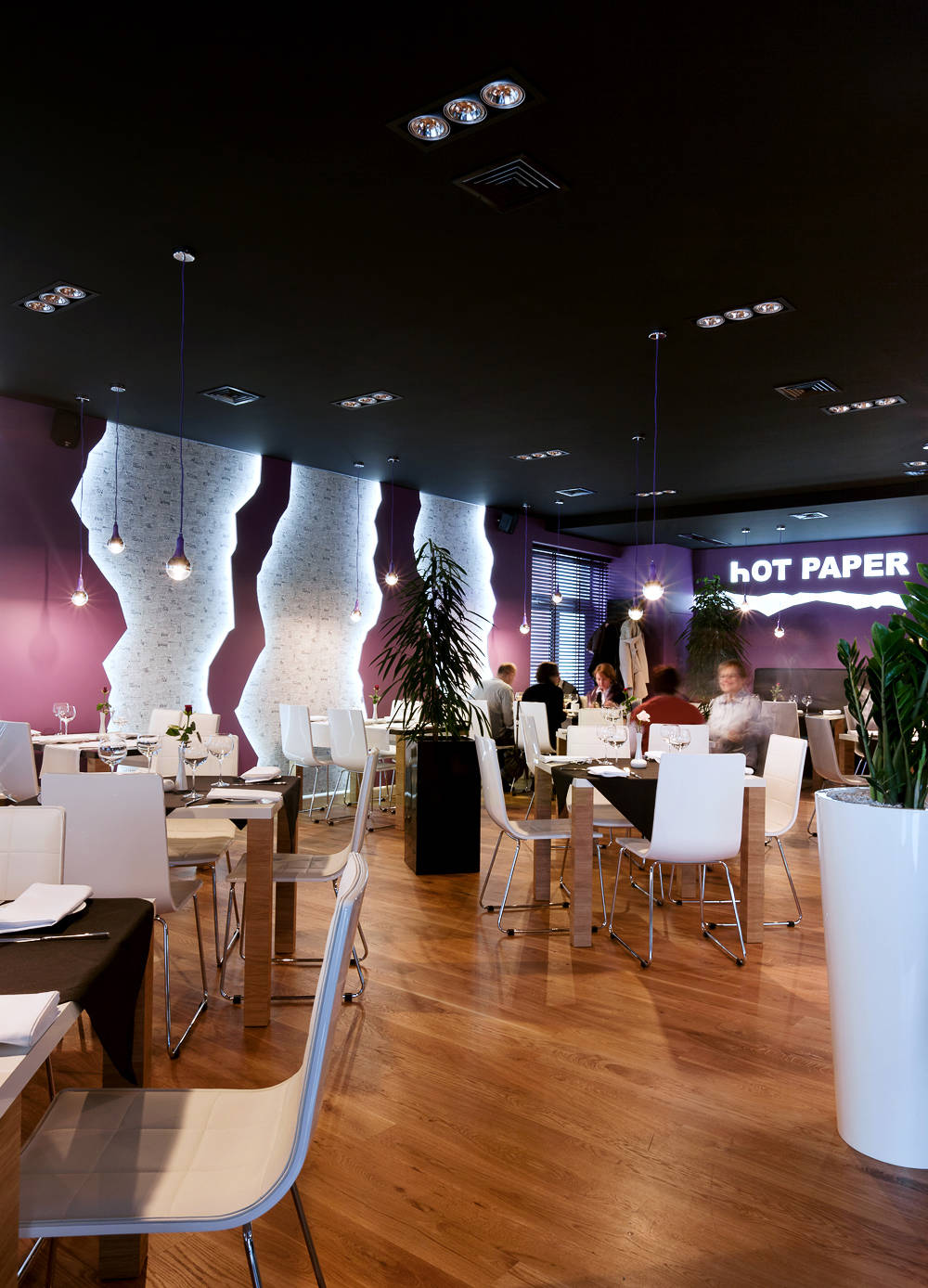
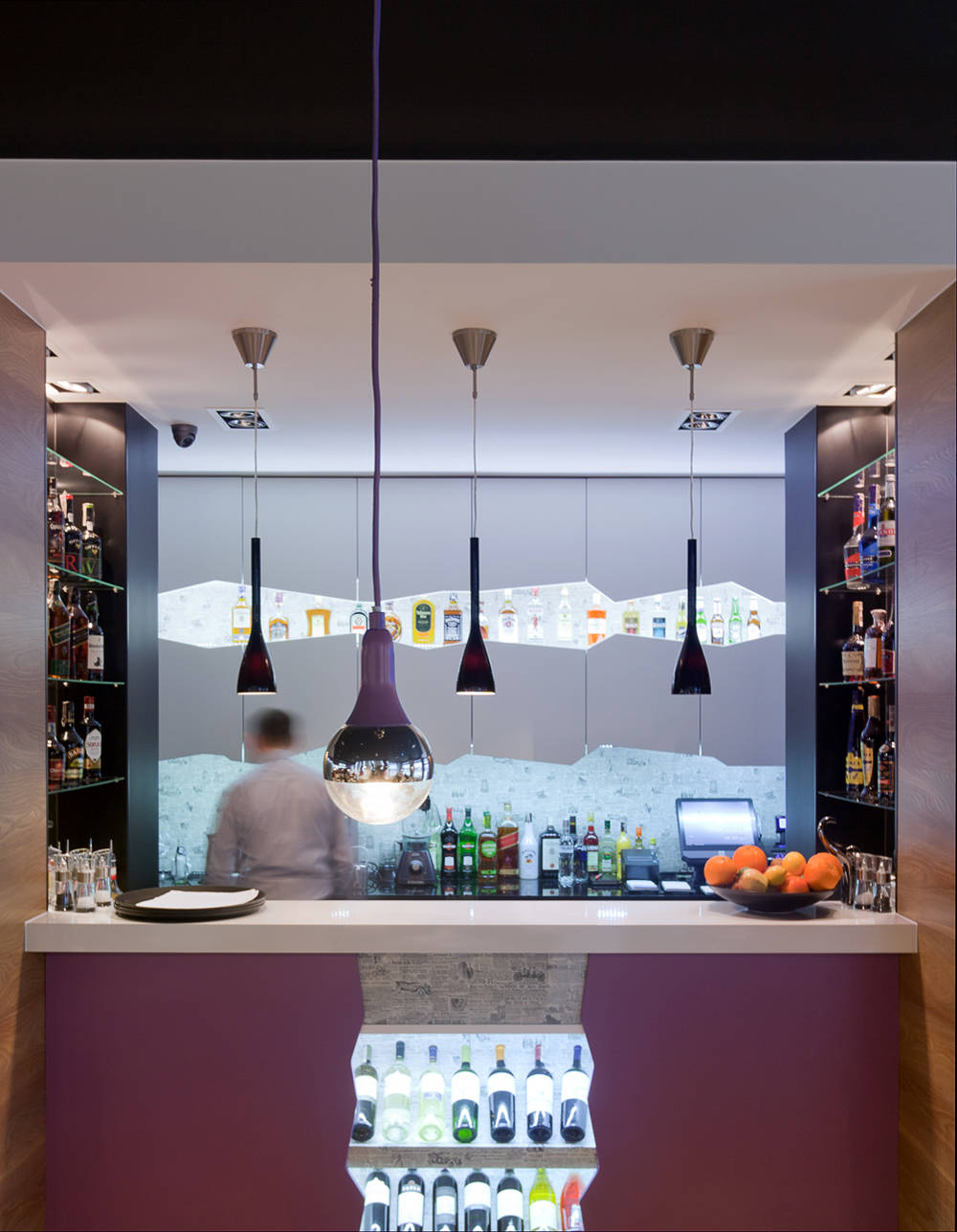
Last February was inaugurated in the Polish city of Tczew the urban restaurant Hot Paper under the leitmotif of newspapers and information, perhaps as a symbol of openness to an  increasingly cosmopolitan and modern environment.

On the walls blend 2 textures: a wallpaper of newspapers cuttings and a purple geometric shape made ​​of milled rock tiles. The combination is accentuated by the subtle lighting of the edges which creates two distinct planes, remembering the sound and image of a paper cut by hand. In addition, natural oak wood and colored milled rock tiles are incorporated to neutralize and give more prominence to the leitmotif, too.

In front of the kitchen, there is a small bar counter that recreates the concept three-dimensionally, making a game of lights, shapes and colors, thanks to the shelves where drinks are displayed.

The restrooms also maintain the concept and even seek a way to interact with the visitor, as the background music teaches words and phrases in other languages​​, as part of the cosmopolitan experience of the place.

The leitmotif of a space will help to articulate the type and style of the experience that we want the visitor remember, that’s why it’s so important to work it in all spaces and media of a business so long as it’d be enveloping, and specially, genuine and memorable.

Brandcelona retail consulting can advise you on the highlights to structure corporate identities through enveloping messages, as the leitmotif. Do not hesitate to contact us at info@brandcelona.com  to study the best alternatives and plan how to carry them out in your business plan.

—-

El pasado febrero se inauguró en la ciudad polaca de Tczew el restaurante urbano Hot Paper bajo el leitmotif de los periódicos y la información, quizás como símbolo de apertura a un entorno cada vez más cosmopolita y moderno.

En las paredes se mezclan 2 texturas: el papel de pared con recortes de periódico y unas formas geométricas de color violeta hechas de piedra molida. La combinación se acentúa gracias a la sutil iluminación de los bordes que crea dos planos diferenciados, recordando el sonido e imagen de un periódico recortado a mano. Además, la madera natural de roble y los azulejos de roca molida de colores se incorporan para neutralizar y a la vez, darle más protagonismo al leitmotif.

Frente la cocina, se sitúa una pequeña barra de bar que recrea el concepto tridimensionalmente, haciendo un juego de luces, formas geométricas y colores, gracias a las estanterías donde se coloca la bebida.

Los lavabos también mantienen el concepto e incluso, buscan una forma de interactuar con el visitante, pues el hilo musical enseña palabras y frases en otros idiomas, como parte de la experiencia cosmopolita del lugar.

El leitmotif de un espacio ayudará a articular el tipo y estilo de la experiencia que queremos que el visitante recuerde, por eso es tan importante trabajarla en todos los espacios y soportes de un negocio con tal de que sea envolvente y, sobre todo, genuína y memorable.

Brandcelona retail consulting te puede asesorar sobre los aspectos más destacados para estructurar identidades corporativas a través de mensajes envolventes, como el leitmotif. No dudes en contactarnos en info@brandcelona.com para que estudiemos las mejores alternativas y planificar cómo llevarlas a cabo en tu plan de negocio.

PAVÉ, cycling culture // PAVÉ, cultura ciclista

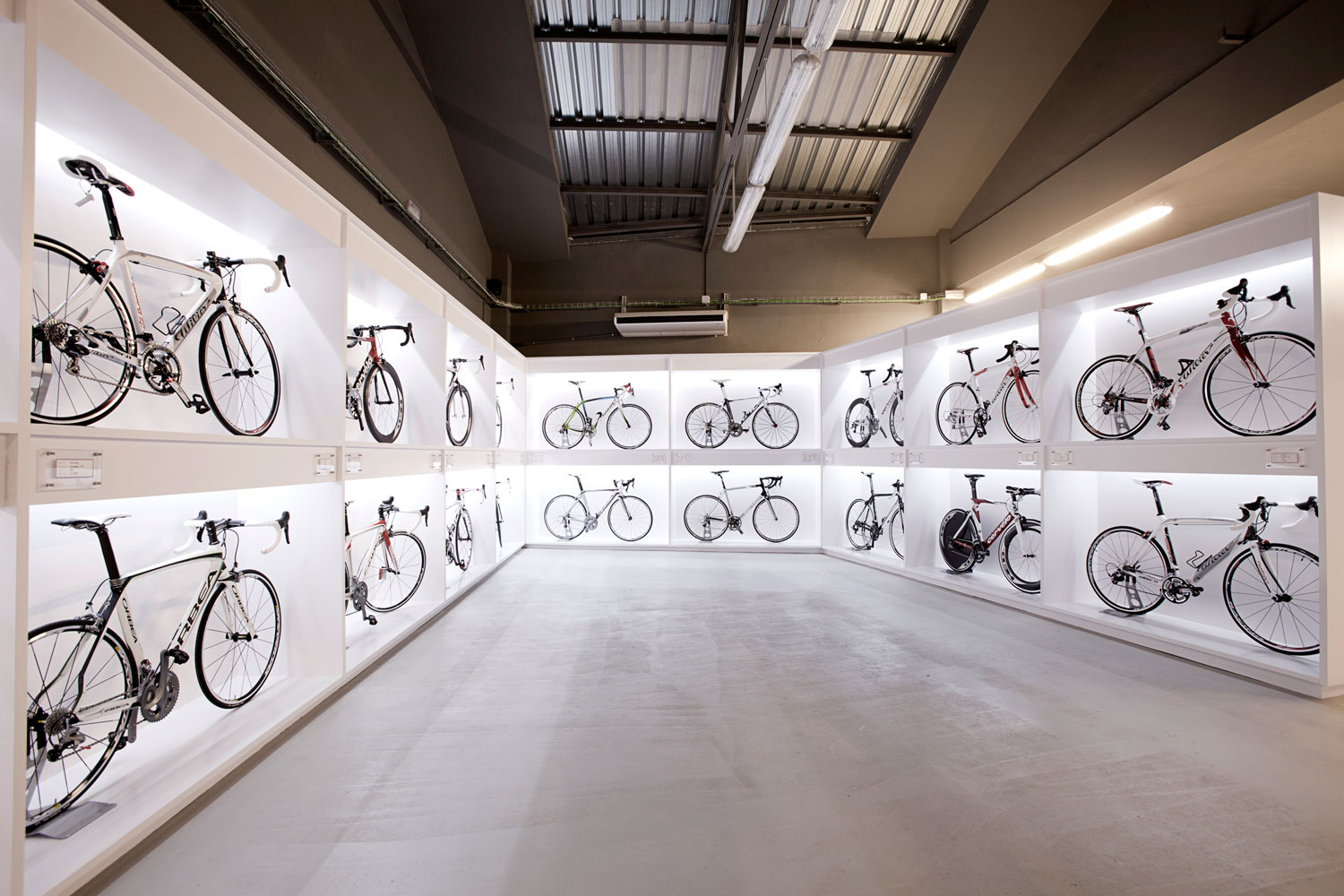
Rarely bikes have been exhibited in such a unique and enveloping space as PAVÉ. Their proposal of becoming a reference in the cycling culture, becomes the place in a meeting point of knowledge and lifestyle for all passionate about cycling.

Overlooking the advantages of this reinvented transport (does not consume or makes noise, takes up little space, improves the physical health of the driver and is more fun), the focus on showing technological innovation creating a culture it is no coincidence, but goes closely linked with this lifestyle. Sharing what are the best accessories and parts, the best cycling routes and enjoying with trips that start and end in the same location of Prat de Llobregat (Barcelona). Beginning with a coffee reading the morning newspaper, finishing with a refreshing shower and even, sometimes, with a sports massage and a good chat.

They take advantage of a large open space to share uses and environments. The Factory is dedicated to the «princesses» -the bikes- and serves as a workshop, maintenance area, pupilage and cleanliness. The bikes are kept with great order and neatness, exposing them as if they were pieces of art. In addition, the workshop is not hidden, is visible for the visitor as an open surgery. The Pop-up Hall serves as exhibition space and debate, showing surprising art works and pieces that keep the experience of culture-museum- space. They also have a Lounge where you can taste coffee, relax after a trip, read and view projections.

Their commitment to schedule group trips is divided into a group of young (the Crew) that wants to explore new routes and the Jubilee Crew that encourages an active aging through cycling.

Their communication and branding amazed by their excellent quality without losing the closeness and saboir-faire that they have. Probably that’s why The Guardian included it in the list of the best shops in the world. We leave you with a video they made to present their opening.

—-

Pocas veces la bicicletas han sido expuestas en espacios tan singulares y envolventes como PAVÉ. Su propuesta de ser un referente en cultura ciclista, convierte el lugar en un punto de encuentro del conocimiento y estilo de vida de todo apasionado por la bicicleta.

Vistas las ventajas que aporta este reinventado transporte (no consume ni hace ruido, ocupa poco espacio, mejora la salud física de su conductor y es más divertida), la apuesta por mostrar la innovación tecnológica creando cultura sobre ello no es casualidad, sino que va estrechamente ligado con este estilo de vida. Compartir cuáles son los mejores accesorios o piezas, las mejores rutas, así como disfrutarlo con salidas que empiezan y acaban en el mismo local del Prat de Llobregat (Barcelona). Empezando con un buen café leyendo la prensa del día, acabando con una ducha reconfortante e incluso, a veces, con un masaje deportivo y una buena charla.

Aprovechan un espacio amplio y diáfano para compartir usos y ambientes. La Factory está dedicada a las «princesas» -las bicicletas- y sirve de taller, zona de mantenimiento, pupilaje y limpieza. Las bicicletas se guardan con mucho orden y pulcritud, exponiéndose como si fueran obras de arte. Además, el taller no se esconde, está a la vista del visitante como un quirófano abierto. El Pop-up Hall sirve de espacio de exposición de arte y debate mostrando obras y piezas sorprendentes que mantienen la experiencia de espacio-museo-cultura. También disponen de un Lounge en el que degustar café, relajarse después de una salida, leer y visionar proyecciones.

Su apuesta por programar salidas en grupo se divide en un grupo de jóvenes (Crew) con ganas de explorar nuevas rutas y el Jubilee Crew que fomenta el envejecimiento activo a través del ciclismo.

Su comunicación y branding sorprenden por ser de una calidad excelente sin perder la cercanía y el saboir-faire que tienen. Probablemente por eso The Guardian la añadió a la lista de las mejores tiendas del mundo. Os dejamos con un vídeo que hicieron para presentar su apertura.

Proyéctate UIP & brandcelona

Last August 15 brandcelona had the pleasure of presenting by the hand of Marc Guitart this project and its methodology in a workshop and a lecture at the Universidad Interamericana de Panamá.

In the workshop on Service Design & Branding, 25 students of the Faculty of Architecture, Design and Communication worked on methodologies of action in branding and how to setup and design services from brand design.

During the lecture «brandcelona’s brand experience» various projects conducted by brandcelona were presented around brand experience, by means of branding and retailing as a strategy for internationalization. Also discussed specific projects according to their immediate context either geographical, economical, cultural, demographical, technological … and how to frame and use this link to create a close and enveloping identity.

Both sessions served to structure a solid basis on the design methodology, highlighting and sharing their importance for brandcelona in projects and consultancies.

From here, we would like to thank again Ilka Sanchez for her project l’Espai and Lauren Grimaldo, director of new degrees of UIP, for their invitation and the hospitality that we experienced during our stay in Panama.

And of course, «chorreamos seco y bailamos el mogollón», thanks to all!

—-

El pasado 15 de agosto brandcelona tuvo el placer de presentar de la mano de Marc Guitart este proyecto y su metodología en un workshop y una conferencia magistral en la Universidad Interamericana de Panamá.

En el workshop sobre Service Design & Branding, cerca de 25 alumnos de la Facultad de Arquitectura, Comunicación y Diseño trabajaron las metodologías de actuación en branding y cómo configurar y diseñar servicios a partir del diseño de marca.

En la conferencia magistral «La experiencia de marca de brandcelona» se presentaron diversos proyectos realizados por brandcelona entorno la experiencia de marca, a partir del branding y el retail como estrategia para la internacionalización. También se debatió sobre proyectos determinados según su contexto más inmediato ya sea geográfico, económico, cultural, demográfico, tecnológico… y como enmarcar y aprovechar ese vínculo para crear una identidad cercana y envolvente.

Ambas sesiones sirvieron para estructurar unas bases sólidas sobre la metodología de diseño, destacando y compartiendo la importancia de éstas para brandcelona en la realización de proyectos y consultorías.

Desde aquí nos gustaría agradecer de nuevo a Ilka Sánchez por su proyecto l’Espai y a Lauren Grimaldo, directora de nuevas licenciaturas de la UIP, por su invitación y la acogida que nos brindaron durante nuestra estancia en Panamá.

Y cómo no, «chorreamos seco y bailamos el mogollón», ¡gracias a todos!

Ania Kruk: Innovative jewelry from Poland // Ania Kruk: Joyería innovadora desde Polonia

The evolution of jewelry has been closely linked to the increase in the offer of complements of big fashion brands as well as the emergence of costume jewelry as an alternative to precious stones and jewels. The options were distancing: or betting on a traditional jewelry with author pieces, or designing and producing for either bigger brands, or offering cheap simple pieces with bright materials that public could buy without spending a fortune.

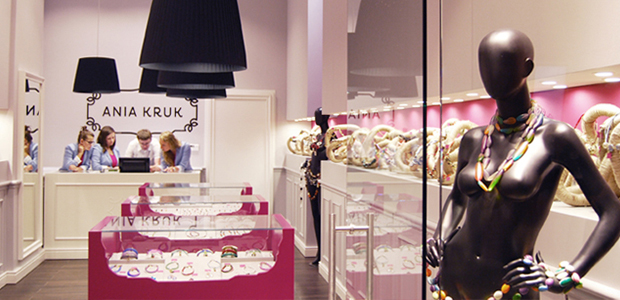
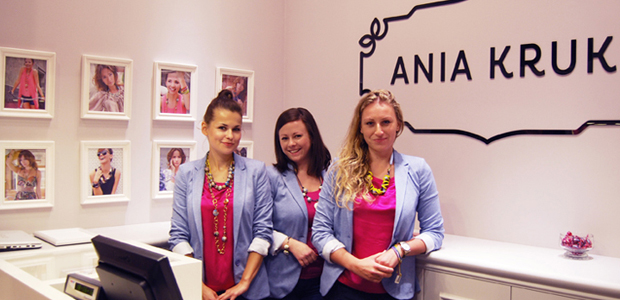
In Ania Kruk propose something different: reinterpret jewelry with original materials and supporting closeness. From Poland, this new family brand of jewelry, not only innovate in the use of unconventional materials like resins, wood, ceramic, silicone, leather, but also in the way they expose their collections and the philosophy of their shop. Color invades every corner and jewels, giving energy and vitality to the visitor. Their proposal focuses on casual products at reasonable prices, and even have a basic range of simple products with colors that vary according to seasonal trends. They opt for a close attendance so they want the wearer to feel unique and genuine when they wear their jewelry, highlighting femininity as a lifestyle and a pride. They approach modern jewelry collections fto everyone, democratizing the prices with the introduction of new materials.

The brand W.Kruk 1840 is one of the most popular jewelery companies in Poland, and that is why the new Kruk generation, by the hand of Ania and Wojtek Kruk, wants to introduce a completely different concept without losing the tradition and experience that distinguishes their family business. They plan to open three stores until late 2012 in major Polish cities, including Warsaw, a part of the one that have in Poznan; although they sell online across the country.

—-

La evolución de la joyería ha ido muy ligada al aumento de la oferta de complementos de grandes marcas de moda, así como a la aparición de la bisutería como alternativa a las piedras preciosas y joyas. Las opciones se iban distanciando: o apostar por una joyería tradicional con piezas de autor, diseñar o producir para marcas más grandes o bien, ofrecer piezas sencillas con materiales brillantes económicos y que permitieran al público comprar múltiples complementos sin gastar una fortuna.

En Ania Kruk proponen algo distinto: reinterpretar la joyería con materiales originales y apostando por la cercanía. Desde Polonia, esta nueva marca familiar de joyas, no sólo innova en el uso de materiales no convencionales como las resinas, la madera, la cerámica, la silicona, el cuero, sino también en su forma de exponerlos y la filosofía de su tienda. El color invade todos los rincones y las joyas, dando energía y vitalidad al visitante. Su propuesta se centra en productos ocasionales a buen precio, e incluso cuentan con una gama básica de productos sencillos con colores que varían según las tendencias de la temporada. El trato cercano que ofrecen pretende hacer sentir a la usuaria de sus joyas única y genuína cuando las lleve, resaltando la feminidad como estilo de vida y de orgullo. Sus colecciones acercan la joyería moderna a todo el mundo, democratizando los precios gracias a la introducción de nuevos materiales.

La marca W.Kruk 1840 es una de las empresas joyeras más populares en Polonia, y es por eso que la nueva generación Kruk, de la mano de Ania y Wojtek Kruk, quiere introducir un concepto totalmente distinto sin perder la tradición y experiencia que distingue a su empresa familiar. Tienen previsto abrir 3 tiendas hasta finales de 2012 en las principales ciudades de Polonia, entre ellas Varsovia, a parte de la que ya tienen en Poznan; aunque ya venden online por todo el país.

Traditional Feng Shui: Opportunities to improve // Feng Shui Tradicional: Oportunidades de mejora

For a better understanding and to complete all those elements linked to the brand experience that influence the buying process, we will count with the collaboration of experts that will introduce concepts that will improve our business development, from different disciplines and points of view. Today we are pleased to introduce a text of Montserrat Milian Batista, traditional Feng Shui consultant.

They said in the ancient China that «when we live in harmony with the energies of the environment, our lives improve.»

Feng Shui works with this environmental energy (or chi), always present, which should be favorable or otherwise, can be a heavy burden. According to Taoist metaphysics it represents approximately one third of a person’s life.

Anyway, this discipline is a great unknown. For some, it represents a trend or perhaps a superstition, for others it serves to decorate, but for most, it is a great mystery … And, while it is true that the application of its principles impacts on the decoration and looks for beauty, it is something deeper.

Its history goes back to thousands of years in a meeting point between Art and Science. The earliest record of its use is in classical Chinese poetry (1000-5000 BC).

Traditional Feng Shui meets the Form or Landscape School, – which analyzes the landscape (natural, urban or inner) as well as light, color, elements and other variables-, and the Compass School – which uses calculations based on the cardinal directions and the impact of certain constellations on the earth energy-.

Thus, takes into account both space and time, something that does not happen in simplified systems of Feng Shui, as Bagua, created by Lin Yun in California in the 70s to introduce this subject in the West.

To offer advice to remedy certain situations and avoid other and, in many cases, help to increase prosperity, improving relationships and health.

How does a Feng Shui consultant order to harmonize the energies in a space?

Basically, analyzing the environment based on the five animals that considers the School the Landscape (black turtle, red bird, yellow snake, green dragon and white tiger), using the five elements (fire, earth, metal, water and wood) and the work with the concepts of Yin and Yang. All this translates into tips for the correct placement and orientation of furniture, doors, roads, and other elements to the situation of people in space, in recommendations about shapes and colors and the most appropriate use for each of the rooms.

Thus, Feng Shui helps to inhabit a space in the best possible condition and its application extends to architecture, urbanism, landscape design, the choice of suitable land, interior design, and the optimization of business enterprises and personal growth.

This wisdom brings undoubtedly opportunities to improve worth to value.

—-

Para completar y entender mejor todos los elementos vinculados a la experiencia de marca que inciden en el proceso de compra, contaremos con la colaboración de expertos que nos irán introduciendo, desde distintas disciplinas y visiones, conceptos que nos ayudarán a construir mejor nuestro negocio. Hoy estamos encantados de presentaros un texto de Montserrat Milian Batista, consultora de Feng Shui tradicional.

Decían en la antigua China que “cuando vivimos en armonía con las energías del entorno, nuestra vida mejora”.

El Feng Shui trabaja con esta energía (o chi) ambiental, siempre presente, que conviene que sea favorable o, de lo contrario, puede llegar a ser una pesada carga. Según la metafísica taoísta representa aproximadamente la tercera parte de la vida de una persona.

Sea como sea, esta disciplina es una gran desconocida. Para algunos, representa una moda o, quizá, una superstición; para otros, sirve para decorar; para la mayoría, se trata de un gran misterio… Y, si bien es cierto que la aplicación de sus principios repercute sobre la decoración y busca la belleza, se trata de algo más profundo.

Su historia se remonta a miles de años en un punto de encuentro entre Arte y Ciencia. El documento más antiguo sobre su uso se encuentra en la poesía clásica china (1.000-5.000 aC).

 El Feng Shui Tradicional reúne la Escuela de la Forma o del Paisaje –que analiza el paisaje (natural, urbano o interior) así como la luz, el color, los elementos y otras variables- y la Escuela de la Brújula – que se sirve de cálculos basados en las orientaciones cardinales y en el impacto de determinadas constelaciones sobre la energía terrestre-.

De esta manera, tiene en cuenta tanto el espacio como el tiempo, algo que no sucede en los sistemas simplificados de Feng Shui, como el Bagua, creado por Lin Yun en la California de los años 70 para introducir esta materia en Occidente.

Permite ofrecer consejos para paliar determinadas situaciones y evitar otras y, en muchos casos, ayudará al incremento de la prosperidad, a la mejora de las relaciones y de la salud.

 ¿Cómo trabaja un consultor de Feng Shui para armonizar las energías presentes en un espacio?

Básicamente, analizando los entornos a partir de los cinco animales que tiene en cuenta la Escuela del Paisaje (tortuga negra, pájaro rojo, serpiente amarilla, dragón verde y tigre blanco), mediante el uso de los cinco elementos (fuego, tierra, metal, agua y madera) y el trabajo con los conceptos Yin y Yang. Todo esto se traduce en consejos para la correcta ubicación y orientación de muebles, puertas, caminos y otros elementos para la situación de personas en el espacio, en recomendaciones sobre formas y colores y sobre el uso más adecuado para cada una de las estancias.

Así pues, el Feng Shui ayuda a habitar un espacio en las mejores condiciones posibles y su aplicación se extiende a la arquitectura, el urbanismo, el paisajismo, la elección de terrenos adecuados, el diseño de interiores, la optimización de empresas y negocios y el crecimiento personal.

Su sabiduría aporta, sin duda, oportunidades de mejora que vale la pena saber valorar.

The shopping villages experience // La experiencia de las villas de shopping

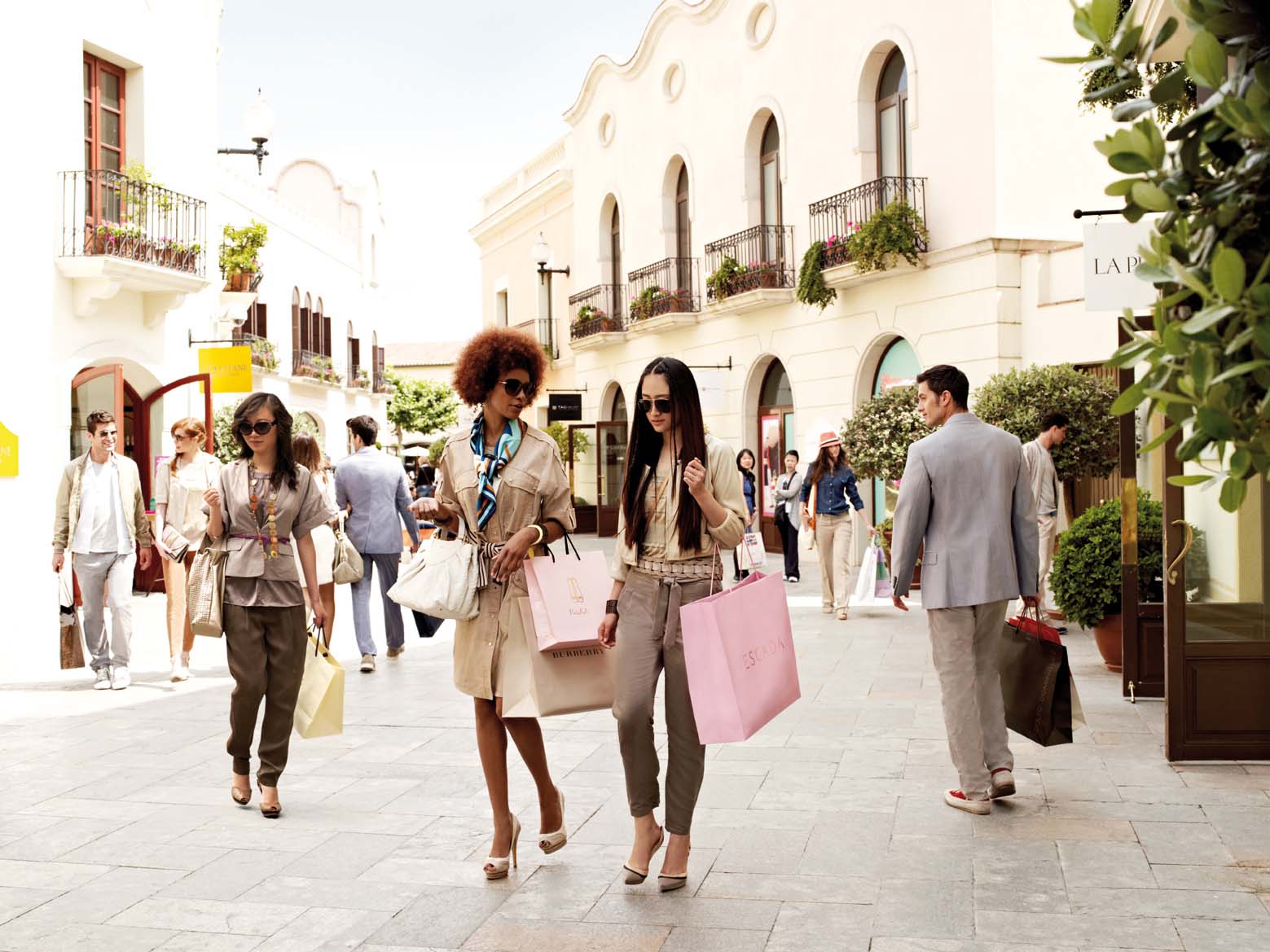
La Roca Village (Barcelona) via somepleasures.blogspot.com

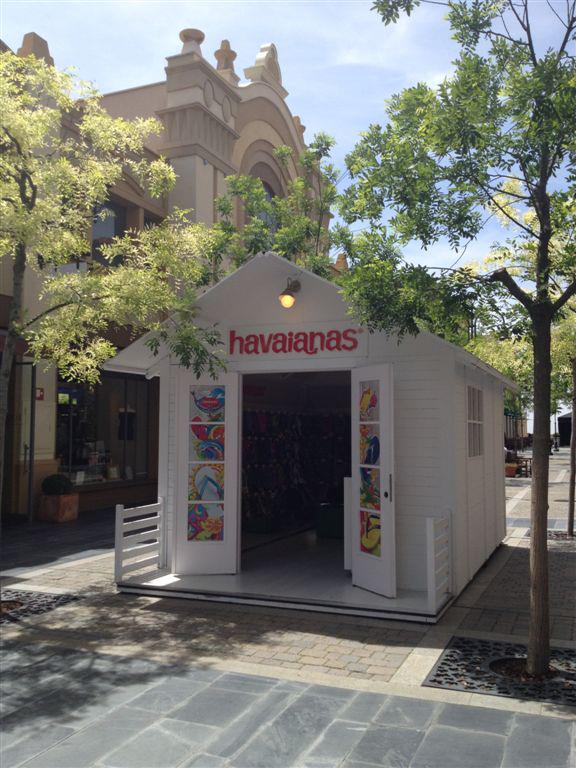
Havainas Store in Las Rozas Village (Madrid) vía Las Rozas Village Facebook Page

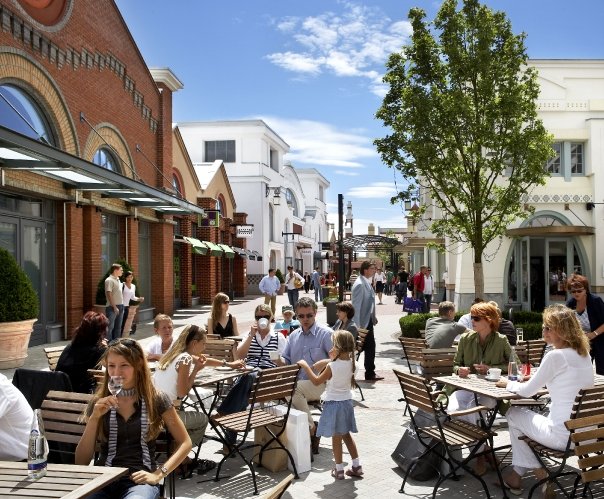
Ingolstadt Village (Munich) vía Ingolstadt Village Facebook Page

The city center has gradually become a space of pace and stress in which traffic, construction and the crowd are the background music and distances between the chic shops is widening more and more. All this, is just turning the experience of shopping into a «risky sport» that saturates and depletes visitor forces. Shopping villages are responding to this new scenario: decentralized small towns with streets and squares to walk through without cars or noise and where brands are exposed in an intimate and relaxed way.

The added value of this retail format is to offer an enjoyable experience, more adapted to the needs of visitors. In shopping villages we often find luxury brands with great deals and innovative and unique collections, as well as independent retailers and cultural projects, such as exhibitions and leisure activities. Its aesthetic of small autochthonous village  accompanied by a good choice of restaurants, cafes and terraces as well as gardens and areas for the amusement of children. They become places to visit with the family and offer common services for all facilities as the possibility of having a personal shopper, shopping without hanging bags and visitor information points. Also usually consider a good link with the surrounding towns and from the airport, providing shuttle buses and proximity to major transport networks, as they also represent a good tourism offer to the area.

One of the pioneers in Europe of this format is the company Chic Outlet Shopping that has villas in London, Milan/Bologna, Dublin, Brussels/Antwerp/Cologne, Frankfurt and Munich, Barcelona (La Roca) and Madrid (Las Rozas). They plan to open a new villa in Suzhou (Shanghai, China), to push the boundaries of the European continent. We could also cite as a reference, the Boxpark mall in London or the popup REC festival in Igualada (Barcelona)  of whom we talked about a few months ago.

—-

El centro de la ciudades se ha ido convirtiendo en un espacio de paso y estrés en el que el tráfico, las obras, la multitud son el hilo musical y las distancias entre las tiendas más chic cada vez se amplían más. Todo ello, acaba convirtiendo la experiencia del shopping en un «deporte de riesgo» que satura y agota las fuerzas del visitante. Las shopping villages son la respuesta a este nuevo escenario: pequeños pueblos descentralizados en los que pasear por calles y plazas sin coches ni ruidos donde las marcas se exponen de forma más íntima y relajada.

El valor añadido de este formato de retail reside en ofrecer una experiencia agradable y más adaptada a las necesidades de los visitantes. En las shopping villages suelen encontrarse marcas de lujo con grandes descuentos con colecciones innovadoras y exclusivas, así como proyectos de retail independiente y culturales como exposiciones y actividades de ocio. Su estética de pequeño pueblo autóctono se acompaña por una buena oferta de restauración, cafés y terrazas así como zonas ajardinadas y áreas para el divertimento de los más pequeños. Se convierten en espacios en los que visitar en familia además de ofrecer servicios comunes para todos los establecimientos como la posibilidad de contar con un personal shopper, comprar sin cargar bolsas y puntos de información al visitante. También suele tenerse en cuenta la buena conexión con las localidades vecinas y también desde el aeropuerto, ofreciendo buses lanzadera y cercanía a las principales redes de transporte, pues también representan una buena oferta turística para la zona.

Una de las compañías pioneras en Europa de este formato es Chic Outlet Shopping que cuenta con villas en Londres, Milán/Bolonia, Dublín, Bruselas/Antwerp/Colonia, Frankfurt y Munich, Barcelona (La Roca) y Madrid (Las Rozas). Próximamente planean abrir una nueva villa en Suzhou (Shanghái, China), traspasando las fronteras del continente europeo. También podríamos citar como referente, el centro comercial Boxpark en Londres o el festival popup REC en Igualada (Barcelona) de los que hablamos hace unos meses.

Fàbrica Moritz: tradition and modernity // Fàbrica Moritz: tradición y modernidad

Fàbrica Moritz in Barcelona via http://www.com-elisava.com

Fàbrica Moritz in Barcelona via http://www.barcelona-metropolitan.com

Fàbrica Moritz in Barcelona via brillat-savarin.blogspot.com

Fàbrica Moritz in Barcelona via http://www.barcelona-metropolitan.com

Brompton by Moritz in the «M» Store in Barcelona via lamevabcn.blogspot.com

By the end of 2011, after seven years of rehabilitation, Moritz opened the door to a unique space that recovers the origins of its artisan production steeped in the iconography of Barcelona. The space of 4,500 m2 has been redesigned by the hand of Jean Nouvel and divided by spaces dedicated to the brewery and Moritz link to the culture and leisure of Barcelona.

In the borough of Sant Antoni, the space highlights for its many possibilities. In the cellar there is a microbrewery originally built in 1856 in which you can observe the process and make free guided tours. On the main floor, we found the brewery and restaurant as well as the «M» Store, Sala 39, the Daily Zone and the Bar à vins.

The restaurant has a menu of Catalan and Alsatian food (homeland of the founder Louis Moritz), designed to match with the varieties of beer Moritz. The «M» Store, that will be open in October, invites you to see the merger of the beer iconography with other brands such as Brompton, which was the first to submit the bike model Brompton by Moritz. This space is open to products and events related to the design and creativity. The Sala 39 is open to leisure and cultural events in which creativity and genuine modernity create a unique club in the city. The Daily Zone is a space in which to read new magazines of design, culture, art and cuisine that also offers an assortment of artisan breads and the possibility of filling a glass of fresh non-pasteurized beer. This recovers the ancestral origin of the beer as «liquid bread». Finally, the Bar à vins, which will officially open its doors on September 18, wants to be a wine tasting room with over 400 references available by weight, glass or bottle accompanied by specialized sommeliers.

Its commitment to leading the brewing industry of the city and its link with the design and creativity presents endless options and future projects as a cuisine classroom, an atelier and the Moritz Think Tank. Should be added that the company’s offices are located over all this great meeting place for beer, culture and design, making it clear that the entire building and its surroundings breathe the environment and the brand identity.

—-

A finales del 2011, después de 7 años de rehabilitación, Moritz abrió las puertas de un espacio único con el que recupera los orígenes de su elaboración artesana impregnados de la iconografía barcelonesa. El espacio de 4.500 m2 ha sido rediseñado de la mano de Jean Nouvel y se divide por espacios dedicados a la cervecería y al vínculo de Moritz con la cultura y ocio de Barcelona.

En pleno barrio de Sant Antoni, el espacio destaca por sus múltiples posibilidades. En el  sótano se presenta una microcervecería de 1856 en la que se puede observar el proceso de elaboración, así como hacer visitas guiadas gratuitas. En la planta principal, encontramos la cervecería y restaurante, así como la «M» Store, la Sala 39, la Zona Daily y el Bar à vins.

El restaurante presenta una carta de comida catalana y alsaciana (tierra de origen del fundador Louis Moritz), ideada para combinar con las variedades de cerveza Moritz. La «M» Store, que se inaugurará en octubre, invita a conocer la fusión de la iconografía de la cerveza con otras marcas como Brompton, que fue la primera en presentar su modelo de bicicleta Brompton by Moritz. Este espacio queda abierto a productos y eventos relacionados con el diseño y la creatividad. La Sala 39 queda abierta a eventos de ocio y culturales en los que la creatividad y la modernidad crean una sala genuina en la ciudad. La Zona Daily es un espacio en el que hojear las nuevas revistas de diseño, cultura, arte y gastronomía que además ofrece un surtido de panes artesanos y la posibilidad de llenarse un vaso de cerveza fresca sin pasteurizar. Así se recupera el origen ancestral de la cerveza como «pan líquido». Por último, el Bar à vins, que abrirá oficialmente sus puertas el 18 de septiembre quiere ser un espacio de degustación de vinos con más de 400 referencias disponibles por peso, copa o botella acompañado por someliers especializados.

Su apuesta por liderar el sector cervecero de la ciudad y su vínculo con el diseño y la creatividad abre a la marca infinitas opciones y futuros proyectos como una aula gastronómica, un atelier y el Moritz Think Tank. Cabe añadir, que las oficinas de la empresa están situadas sobre todo este gran espacio de encuentro de la cerveza, la cultura y el diseño, por lo que es evidente que el edificio entero y sus alrededores respira el ambiente y la imagen de la marca.

Surprise factor: the most fleeting emotion // Factor sorpresa: la emoción más fugaz

Many brands are working on innovation to look forward to surprise and to catch the attention of users. Obviously, with this «infoxication» in which we live, stealing some seconds of the public attention makes this step a career full of competition. But how our body deals with something that surprises us?

First, according to the psychologist Paul Ekman of the University of California – mentioned in an article of the Spanish magazine Muy Interesante-, surprise is the most fleeting emotion. This prepares us for new developments, unexpected and perhaps greater than  imagined.

Noradrenaline prepares our brain to be alert to any stimulus and able to react properly. Endocrine glands release hormones, increase our heart rate and prepare for an intensive breathing. But all this only lasts a moment, because immediately our body will classify the event giving way to other emotions such as anger, fear or joy. However, surprise may always be short, because for our body would be too stressful and counterproductive living in a continuous state of surprise. Our body wouldn’t be able to react if there weren’t any known stimulus to interact with.

The surprising ability of a brand is key to promote innovation and to encourage interaction with visitors. Surprise is exciting and the state in which we have increased chances for remembering those moments and beyond. If we manage that surprise factor during the buying process to create positive memories, it will be a breakthrough for the relationship with the user and its engagement. And that can be generated, sometimes just changing or rearranging the parts of the process, seeking alternatives to ordinary formulas. Could there exist a bakery that opens just in the early hours -as did traditional bakers-? Or a hairdresser that doesn’t cut your hair? Or an open-air gym?

—-

Numerosas marcas trabajan la innovación buscando sorprender y captar la atención de los usuarios. Normal, con la «infoxicación» en la que vivimos, poder robar unos segundos de atención del público convierte este paso en una carrera llena de competencia. Pero, ¿cuál es el proceso que sigue nuestro organismo ante algo que nos sorprende?

En primer lugar, según el psicólogo Paul Ekman de la Universidad de California – como cita un artículo de Muy Interesantela sorpresa es la emoción más fugaz. Ésta nos prepara para acontecimientos nuevos, inesperados y quizás mayores de lo que imaginamos.

La noradrenalina hace que el cerebro esté atento a cualquier estímulo y sea capaz de reaccionar. Las glándulas endocrinas liberan hormonas, aumentan nuestras pulsaciones y nos preparamos para una respiración más intensa. Pero todo ello sólo dura un momento, pues justo después podremos catalogar el suceso, dando paso a otras emociones como la ira, el miedo o la alegría. Para bien o para mal, la sorpresa sólo puede ser breve, pues para nuestro organismo sería demasiado estresante y contraproducente vivir en un estado contínuo de sorpresa. El cuerpo no sería capaz de reaccionar si no hubiera estímulos conocidos con los que interactuar.

La capacidad de sorprender de un negocio es clave para promover la innovación y  estimular la relación con los visitantes. La sorpresa es emocionante y el estado en el que nos dispone aumenta las posibilidades de que recordemos esos instantes y los posteriores. Si conseguimos que esa sensación de sorpresa durante el proceso de compra lleve a recuerdos positivos, será un gran avance para la relación con el usuario y su fidelización. Y ello puede generarse, a veces, simplemente variando las piezas del proceso u reordenándolo, buscando fórmulas alternativas a lo común. ¿Podría haber una panadería que sólo abriera a primera hora -como hacían los panaderos tradicionalmente-? ¿Una peluquería en la que no se corte el pelo? ¿Un gimnasio al aire libre?

Doing things well will never be old fashioned // Hacer las cosas bien nunca pasará de moda

Paul’s Hat Works in San Francisco via http://mistercrew.com

Paul’s Hat Works in San Francisco via http://www.thebolditalic.com/

Paul’s Hat Works in San Francisco via diggstatic.com

Paul’s Hat Works in San Francisco via http://www.thebolditalic.com/

«In a time where traditions have faded, where people avoid eye contact on the streets and heads remain barren & cold, four women have set out on an adventure to revive tradition, to unify the people and to bring the hat back.” So explains the reason for their existence in Paul’s Hat Works, a hat shop in San Francisco with nearly 100 years of history, that wants to recover, dignify and renew the use of this accessory full of elegance.

Since its opening in 1918, the store has maintained its beauty and craft tradition carefully to the point that entering into this hat shop is making a visit to the «Roaring Twenties». Its current owners, Abbie Dwelle, Wendy Hawkins, Olivia Griffin and Kirsten Hove, are a clear representation of vintage elegance and innovation that doesn’t turn back on craft tradition. Not only that, but have been able to create a space that goes beyond the sale of hats, as they serve coffee, teach users the secrets of hats and offer an open studio and gala opportunities for the neighborhood and visitors.

Their dedication is committed to personalized service and the creation of custom pieces that fit the needs of each user. So, do not sell over the Internet because they want to satisfy every customer in person, using tools and techniques with over one hundred years of history. Perhaps it is an «old fashioned» tradition, but certainly the one that spends more time and care to details and customer satisfaction. At the end of this post you’ll find a video they made in late 2011 to raise funds to open a new hat shop in New York throughout this year 2012.

—-

«En una época donde las tradiciones se han desvanecido, donde la gente evita el contacto visual en las calles y los jefes siguen siendo áridos y fríos, cuatro mujeres se han embarcado en una aventura para revivir la tradición, para unificar al pueblo y traer el sombrero de vuelta.» Así explican el motivo de su existencia en Paul’s Hat Works, una sombrerería en San Francisco con casi 100 años de historia, que quiere recuperar, dignificar y renovar el uso de este complemento lleno de elegancia.

Desde su apertura en 1918, el establecimiento ha mantenido su estética y tradición artesanal y cuidadosa hasta tal punto, que adentrarnos en su sombrerería es hacer un visita a los maravillosos años ’20. Sus actuales propietarias -Abbie Dwelle, Wendy Hawkins, Olivia Griffin y Kirsten Hove- son una clara representación de la elegancia vintage y de la innovación que no da la espalda a la tradición artesana. No sólo eso, sino que han sido capaces de crear un espacio que va más allá de la venta de sombreros, pues sirven café, enseñan a los usuarios los secretos de los sombreros y ofrecen un estudio abierto y oportunidades de gala para todo el vecindario y visitantes.

Su dedicación apuesta por el trato personalizado y la creación de piezas a medida que se ajusten a las necesidades de cada usuario. Por eso, no venden a través de Internet pues quieren satisfacer a cada cliente en persona, usando herramientas y técnicas con más de cien años de historia. Quizás es una costumbre «pasada de moda», pero sin duda, la que dedica más tiempo y cuidado a todos los detalles y a la satisfacción del usuario.

A continuación, os dejamos con un vídeo que realizaron a finales de 2011 para recaudar fondos para abrir una nueva sombrerería en Nueva York a lo largo de este año.


Our website is coming! // ¡Nuestro website está al caer!

We are finalizing the details of our new website to have it at 100% near the end of summer (first fortnight of September). If you do not want to miss the release, leave us your email in our launching site.

—-

Estamos ultimando los detalles de nuestro nuevo website para tenerlo al 100% a finales de verano (primera quincena de Septiembre). Si no quieres perderte el lanzamiento, déjanos tu email en nuestro launching site.