Sponsorship Activation, another brand extension // Activación de patrocinios, una extensión más de la marca

For a better understanding and to complete all those elements linked to the brand experience that influence the buying process, we will count with the collaboration of experts that will introduce concepts that will improve our business development, from different disciplines and points of view. Today we are pleased to introduce a text of Noelia Cabezas, project manager on business innovation ideas.

«The current trend in communication, is to use the activation of sponsorship as an extension of the brand, to make branding.»

SPONSORSHIP (just plain), is no longer enough.
In the old school the leadership of a sponsorship offers to the client or to the sponsoring brand different positions to provide visibility and activate the brand.

ACTIVATION AND ENTERTAINMENT / SPONSORSHIP ACTIVATION AND BRANDED ENTERTAINMENT, is what creates value today in any sponsorship.
Is the current proposal and future projection to enhance the communication of any brand. A global vision, a distinctive design, the integration in new media, entertainment and user experience, create synergies that connect audiences with the sponsorship and the sponsor.

A client seeking the sponsorship is to go beyond the screen, to echo in different media and thereby obtain returns above all. Not an easy task, since the activation of sponsorship needs to find its starting point, synergy between the event / brand / sponsored person and the sponsoring brands. The key is to follow a methodology suitable for bonding both brands and launch a single message that connects with the user.

Activation is an opportunity that generates dialogue connecting with the public in a context that the audience has chosen and wants to enjoy.

The benefits of doing a sponsorship activation are: obtaining best return on investment, ROI and generating diffusion in the several media.

The advantage of using the Sponsoship Activation as an extension of the brand generates:
– Interaction
– CRM
– Sales promotion
– Information and dialogue
Branding

An added value that we propose is to work closely with the brand and the sponsorship to achieve:
– Live events
– Competitions
– Cross-Promotions
– Contents
– Videos
– Social Media

The Sponsorship Marketing Awards recognizes excellence in sponsorship, marketing and activation of it, generating publicity and always a clear access to the user.

The result of performing a proper activation of sponsorship is to increase the profitability of the brand and the sponsorship. That is achieved by aligning the points mentioned above, launching a single message, generating business opportunity through activation (dialogue and user experience), diffusion beyond the screen and the branding that remains in the user memory.

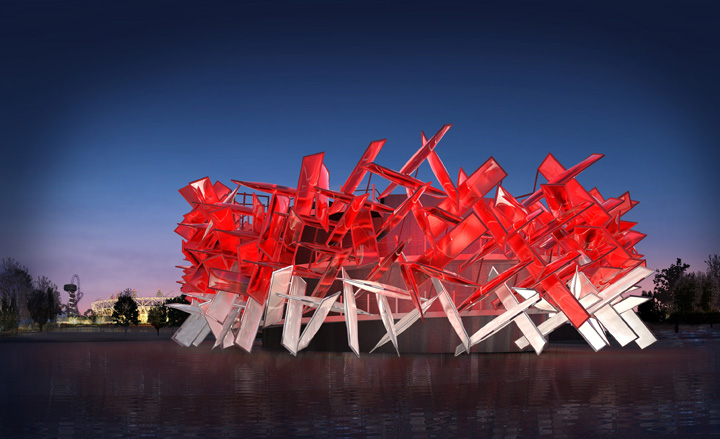
One of the best integrations of sponsorship activation, is the one of Coca-Cola in the Olympic Games in 2012.
Its application in 360° format has a clear the impact and visibility of a previous strategic plan of marketing and communication.

Pernilla & Asif studio has presented the design of a pavilion that can interact as a musical instrument.

The design, structure and thematic is fully aligned to the Olympics.

The user experience, interaction with the brand, entertainment, broadcasting and integration of new media, are the key facts of this spectacular action.

Its strategic approach and media coverage, have been key to creating with the artist Mark Ronson, the event’s commercial song, Move to the Beat of London 2012, integrating young athletes and artists.

The potential is having experience with brands and sponsors, an analytical personality, innovative, creative, with sensitivity to consumer trends and clear communication skills.

—-

Para completar y entender mejor todos los elementos vinculados a la experiencia de marca que inciden en el proceso de compra, contaremos con la colaboración de expertos que nos irán introduciendo, desde distintas disciplinas y visiones, conceptos que nos ayudarán a construir mejor nuestro negocio. Hoy estamos encantados de presentaros un  texto de Noelia Cabezas, project manager de ideas de innovación para empresas.

“La tendencia actual en comunicación, es utilizar la activación de patrocinio como una extensión más de la marca, para hacer branding.”

PATROCINIO (y punto), ya no es suficiente.
En la old school la dirección del patrocinio propone al cliente o marca patrocinadora diferentes posicionamientos para dar visibilidad y activar la marca.

ACTIVACIÓN Y ENTRETENIMIENTO / SPONSORSHIP ACTIVATION AND BRANDED ENTERTAINMENT, es lo que hoy en día crea valor en cualquier patrocinio.
Es la actual propuesta y proyección de futuro para potenciar la comunicación de cualquier marca. Una visión global, un diseño diferenciador, la integración en nuevos medios, el entretenimiento y la experiencia de usuario; crean sinergias que conectan a la audiencia con el patrocinio y el patrocinador.

Un cliente lo que busca con el patrocinio es ir más allá de la pantalla, hacer eco en diferentes medios y sobre todo obtener rentabilidad con ello. No es una tarea fácil, pues la activación de patrocinio necesita encontrar su punto de arranque, sinergia entre el evento/marca/personaje patrocinado y la marca patrocinadora. La clave es seguir una metodología adecuada para unir ambas marcas y lanzar un mensaje único que conecte con el usuario.

La activación es una oportunidad que genera diálogo conectando con el público dentro de un contexto que la audiencia ha elegido y quiere disfrutar.

Los beneficios de realizar una activación de patrocinio es: obtener mejor retorno de inversión, ROI, generando difusión en los diferentes medios de comunicación.

La ventaja de utilizar la Sponsoship Activation como una extensión más de la marca es generar:
−  Interacción
−  CRM
−  Promoción de ventas
−  Información y diálogo
−  Branding

Un plus que proponemos es trabajar en estrecha relación con la marca y el patrocinio para conseguir:
−  Live events
−  Concursos
−  Promociones cruzadas
−  Contenidos
−  Vídeos
−  Redes sociales

En los Sponsorship Marketing Awards reconocen la excelencia del patrocinio, en la comercialización y activación del mismo, generando publicidad y siempre un claro acceso al usuario.

El resultado de realizar una correcta activación de patrocinio es incrementar la rentabilidad de la marca y el patrocinio. Que se consigue alineando los puntos citados anteriormente; lanzar un mensaje único, generar oportunidad de negocio mediante la activación (diálogo y experiencia del usuario), una difusión más allá de la pantalla y el branding de la marca que permanece en la memoria del usuario.

Una de las mejores integraciones de la activación de patrocinio, Coca-Cola en los Juegos Olímpicos de Londres 2012.

Su aplicación en formato 360º ha tenido la repercusión y notoriedad clara de un proyecto estratégico de marketing y comunicación previo.

Pernilla & Asif han presentado el diseño de un pabellón con el que se puede interactuar como instrumento musical.

Su diseño, estructura y temática totalmente alineada a los Juegos Olímpicos.

La experiencia de usuario, la interacción con la marca, el entretenimiento y la difusión e integración con los nuevos medios, son la clave de esta espectacular acción.

Su planteamiento estratégico y repercusión mediática, han sido clave para crear junto al artista Mark Ronson, la canción comercial del evento, Move to the Beat of London 2012, integrando a deportistas y jóvenes artistas.

El potencial es tener experiencia en marcas y sponsors, una personalidad analítica, innovadora, creativa, con sensibilidad por las tendencias de consumo y unas claras dotes de comunicación.

The Coca-Cola beatbox, LONDON 2012 via http://www.hiperarquitectura.com

The Coca-Cola beatbox, LONDON 2012 via http://www.plataformaarquitectura.cl/

The Coca-Cola beatbox, LONDON 2012 via http://www.hiperarquitectura.com

Temps suspendu: Hermès vs Hermes

For a better understanding and to complete all those elements linked to the brand experience that influence the buying process, we will count with the collaboration of experts that will introduce concepts that will improve our business development, from different disciplines and points of view. Today we are pleased to introduce a text of Elena Rocchi, architect, artist and teacher.

There are small actions that give to us as designers the ability to make a transversal reflection between knowledge, occupation and age. Reflection requires a suspended time. Mr. Alvaro (Siza) is impressed on how in our time there is a hurry to finish everything quickly. For some time now, I agree with him. I am an architect. In my work there is never time to finish the good work. Perhaps Architecture and Interior Design will now suffer because of the rush. Architects are freaks of drawing and redrawing, this obsession to retain the good ideas, enjoying the slow time of the working hypotheses. Difficult task, because at the end of the day you have to mediate with the width of the street …

Here I will deal with a slower theme, almost suspended.

Italo Calvino, in his posthumous book «Six Memos for the Next Millennium» opens the book talking about «taking weight» as an attitude to the new time in which we live right now, as well as designers. Speaks of Pegasus, the winged horse born from the blood of Medusa, and Hermes with winged feet, light, air, deft, agile, adaptable, all equipped to «run» from one side to another and to establish relationships between men and their gods. The most similar to our Internet. At a era when there was not even Nokia, Calvino spoke of the speed of Hermes as an ingredient to be carried the future. And yes, we took it.

At the end of the chapter on the speed, Calvino quotes a Chinese story about the artist Chuang-Tzu to whom one day a king ordered the drawing of a crab. Chuang-Tzu told the king he needed five years. After 5 years, the picture was not even begun. «I need another five years,» said the king. On termination of the time a total of ten years, Chuang-Tzu took a brush, and instantly drew the most perfect crab ever had seen.

Quite the opposite of what would happen in our time where we «domiciled» the idea of velocity (Paul Virilio, the vitesse)… Today everything is fast. We do not have a king to ask him ten years to draw a crab. And if we shoot at this speed in which we are involved, we would fall like a top.

Almost all of our scenarios are stuck in this change that has altered «the relationship» between the two times spoken of by the Chinese story: the fast and the suspended, deeply linked to each other in a matter of settling, maturation and separation of the impatience and ephemeral contingency as Calvino tells us.

By turning the world, I find devices that can interpret in another way the direction of these changes.

Hermès/French Fashion for example, speaking of Hermes/Mercury.

In 2009, Hermès sets a time to make a stop on their way to see which is the model that they will apply in their company trip, as a way to professionalizing and personalizing it.

At the 24 of the Rue du Faubourg Saint-Honore in Paris, a clock suspended, La Pendulette Boule, presided over the old desk of Émile Hermès Maurice (1871-1951), a man who collected objects which had in common emotion, tradition and modernity.

A suspended a clock witnessed the birth of this company that deals with the time since 1912, when he made his first strap of a pocket watch that «… agree to postpone the release of a scarf one year to allow a craftsman to perform well his work. «

The handcrafted «Do» by Hermès is well known for its «Kelly bag«. I had boyfriend who was an artisan of leather bags that took almost three days to reproduce one of them… But in the 80s, for all those who «did» things with their hands, seemed normal to spend more time on learning how to do something. 17,000 enrolled in the faculty of Architecture, we were aware that only a small percentage was going to complete their studies to meet the requirement of patience in repeating and repeating and repeating things in a long time, a fundamental condition for the training in our profession. Embarking on the training of architects was knowing that hurry wasn’t worth at all. But neither served for the necessary rest that ideas need.

In an age where time is the real luxury of today’s society, in December 2011 Hermès organized near the Great Wall of Beijing an «altered» and «custom» (re)presentation of time through the clock «Temps Suspendu«. Those who attended to the (re)presentation experienced the «forget» of the actual time to enter into «Hermès» time, using the imagination. The event was to launch the clock «Suspended time», a watch that sometimes acts like «forgetting» for a moment of the present, through a mechanism, and altering the time it takes. Pressing a button at 9, there is the illusion of «suspending time» at 12 while the calendar simply «disappears» from view.

Hermès’ relationship with time has nothing to do with the quantity but quality. From the drawing of the products to their stores. The experience that Hermès wants to give to those buying Hermès is accompanied by a «warm» time. It’s like when you date with the man of your life. The most important thing is this suspended time you will spend with him.

The interpretation of time by Hermès is also the starting point of the design of its stores. Several designers who are called to design them, should think on their designs with an attitude: «Temps Suspendu» as time to dream, without stress.

Hermès’ obsession in trying to draw «humanized» objects in the context of a world ruled by the impersonal is reflected in the scale of their shops and storefronts. Works in their stores with designers who think spaces where people can feel with all their senses. An example is the collaboration with the multidisciplinary artist and industrial designer Tokujin Yoshioka, a very special artist who in his youth visited the Chapelle du Rosaire whose light is nourished by the stained glass of Matisse.

The shopwindow at the Maison Hermès in Japan by Tokujin designed for the french fashion company is a «moment of emotion» in a time suspended.

One of the most famous actress in Japan is on screen and in front of her, a scarf of the new collection. Nothing more. Digital + Analog, both literally suspended, both rectangular, same height, one opposite to the other (one in color, the other in black and white).

An instant of the duration of a breath that will be remembered for that matter, absorbed in their haste to go from one place to another «running (without wings)» and stops to wait for the blow and the magic happen again and again. Hermès vs Hermes.

My mother has an Hermès scarf given by my father in the 80’s, bought in Paris. Blue and gold. I know the feeling of wearing a Hermès scarf around the neck.

But even if I didn’t, the repeated contemplation of that light and delicate breath makes imagining it during the duration of the suspended time, which then you will end up buying: the feeling of that silk. This is design. It is talking about peripheral and dreamy perceptions.

These projects make the user time to a standstill, even the movement keeps running. As the clock button that makes disappear time that we spoke above. Freeze the time of reality and pass to be in your own time. Pierre-Alexis, the 6th generation of Hermès speaks of «a slower time». Slow time, quick time, time to enjoy … All this is Hermès. It is the same pleasure wearing a cashmere sweater or having a beautiful leather accessory. You’re at your own time, and that’s important … It seems that Hermès is like a refuge».

Can we, in our time of Vitesse where everything is fast and in continuous motion with no  stopping signals, stop time?

Can we freeze for a moment the Vitesse, as in the paradox of Zeno’s arrow, where if you look at each position where the arrow is for an instant of its movement to reach its goal, paradoxically it does not move?

Can we stop for a moment the other moments that are happening?

The future world will be a world where differences will be minor. Has started a new process of «changing attitudes» that everyone can analyze in their own small laboratory of taking decisions. Suspend time and say: «I want to be this.»

Elena Rocchi

—-

Para completar y entender mejor todos los elementos vinculados a la experiencia de marca que inciden en el proceso de compra, contaremos con la colaboración de expertos que nos irán introduciendo, desde distintas disciplinas y visiones, conceptos que nos ayudarán a construir mejor nuestro negocio. Hoy estamos encantados de presentaros un  texto de Elena Rocchi, arquitecta, artista y profesora.

Hay pequeñas intervenciones que dan a nuestra condición de diseñadores la posibilidad de hacer una reflexión transversal entre saber, profesión y época. Una reflexión necesita de un tiempo suspendido. Don Álvaro (Siza) se impresiona de cómo en nuestro tiempo hay prisa por acabar todo rápidamente. Desde hace un tiempo, estoy de acuerdo con él. Soy arquitecta. En mi trabajo nunca hay el tiempo para acabar bien los trabajos. Quizás la Arquitectura y el Diseño de Interiores sufren ahora por culpa de las prisas. Los arquitectos somos unos maniáticos de dibujar y redibujar, por esta obsesión de conservar las buenas ideas, de disfrutar del tiempo lento de las hipótesis de trabajo. Difícil tarea, porque al final del día hay que mediar con el ancho de la calle…

Aquí trataré un tema más lento, casi suspenso.

Italo Calvino, en su póstumo libro “Seis propuestas para el próximo milenio” abre el libro hablando de “quitar peso” como actitud para el nuevo tiempo en el que vivimos ahora, también como diseñadores. Habla de Pegaso, el caballo alado nacido de la sangre de Medusa, y de Hermes con alas en los pies, ligero, aéreo, hábil, ágil, adaptable, todo equipado para “correr” de un lado al otro y establecer relaciones entre los hombres y sus dioses. Lo más parecido a nuestro Internet. En una época en la que ni siquiera existía Nokia, Calvino hablaba de la rapidez de Hermes como ingrediente para llevarse al futuro. Y sí, nos lo llevamos.

Al final del capítulo sobre la rapidez, Calvino cita un cuento chino sobre el dibujante Chuang-Tzu al cual un día un rey pidió el dibujo de un cangrejo. Chuang-Tzu le dijo al rey que necesitaba cinco años. Después de 5 años, el dibujo ni siquiera estaba empezado. “Necesito otros cinco años”, le dijo al rey. Al pasar los diez años, Chuang-Tzu cogió un pincel, y en un instante dibujó el cangrejo más perfecto que jamás se hubiera visto.

Todo lo contrario de lo que ocurriría en nuestra época donde hemos “domiciliado” la idea de velocidad (Paul Virilio, la vitesse)… Hoy todo es rápido. Ya no tenemos un rey al que pedirle diez años para dibujar un cangrejo. Y si dejamos de rodar a esta velocidad en la que estamos metidos, como una peonza, nos caeríamos.

Casi todos nuestros escenarios son atrapados en este cambio que ha alterado “la relación” entre los dos tiempos de los que hablaba el cuento chino: el rápido y el suspendido, el uno ligado profundamente al otro en cuestión de sedimentación, maduración y separación de la impaciencia y contingencia efímera, así como nos cuenta Calvino.

Dando vueltas por el mundo, encuentro dispositivos que saben interpretar de otra manera la dirección de estos cambios.

Hermès/moda francesa por ejemplo, hablando de Hermes/Mercurio.

En 2009 Hermès fija un momento en el que hacer un alto en su camino para ver cuál es el modelo que aplicará en su viaje de empresa, como forma de profesionalización y personalización de la misma.

En el 24, Rue du Faubourg Saint-Honoré, en París, un reloj suspendido, La Pendulette Boule, presidía la antigua mesa del despacho de Émile-Maurice Hermès (1871-1951), un hombre que coleccionaba objetos que tenían en común emoción, tradición y modernidad.

Un reloj suspendido fue testigo del nacimiento de esta empresa que trata con el tiempo desde 1912, cuando realizó su primera correa para un reloj de bolsillo y que «…acepta posponer el lanzamiento de un fular un año para permitir que un artesano realice bien su trabajo».

El “Hacer” artesanal de Hermès es famoso por el bolso “Kelly”. Tuve un novio artesano de bolsos de piel que tardaba casi tres días en reproducir uno de ellos… Pero en aquellos años ’80, a todos aquellos que “hacíamos” las cosas con nuestras manos, nos parecía normal tardar en aprender a hacer algo. 17.000 inscritos en la facultad de arquitectura, éramos concientes que sólo un pequeño porcentaje iba a completar sus estudios por cumplir el requisito de la paciencia en repetir y repetir y repetir las cosas en un tiempo largo, condición fundamental de la formación en nuestra profesión. Embarcarse en la formación de arquitecto era saber que tener prisa no servía para nada. Pero sobre todo no servía para el necesario poso que necesitan las ideas.

En una época donde el tiempo es el auténtico lujo de la sociedad actual, en diciembre de 2011 Hermès organiza cerca de la Gran Muralla en Pekín una (re)presentación “alterada” y “personalizada” del tiempo a través del reloj “Temps Suspendu”. Quien asistió a la (re)presentación experimentó “olvidar” el tiempo real para entrar en el tiempo “Hermès”, usando la imaginación. El evento fue para el lanzamiento del reloj del “Tiempo suspendido”, un reloj que a veces “olvida” por un instante, a través de un mecanismo, el momento presente y altera el tiempo del que lo lleve. Presionando un pulsador a las 9, se produce la ilusión de «suspender el tiempo» a las 12 a la vez que el calendario simplemente “desaparece” de la vista.

La relación de Hermès con el tiempo no tiene que ver con la cantidad, sino con la calidad. Del dibujo de los productos a sus tiendas. La experiencia que Hermès quiere dar a los que compran Hermès va acompañada de un tiempo “cálido”. Es como cuando quedas con el hombre de tu vida. Lo mas importante será ese tiempo suspendido que pasarás con él.

La interpretación del tiempo por parte de Hermès es el punto de partida también del diseño de sus tiendas. Varios diseñadores que son llamados a proyectar, deben reflexionar con sus diseños sobre una actitud: “Temps Suspendu” como tiempo para soñar, sin estrés.

La obsesión de Hermès por intentar dibujar objetos “humanizados” en el contexto de un mundo regido por lo impersonal, se refleja en la escala de sus tiendas y sus escaparates. Trabaja para sus tiendas con diseñadores que piensan espacios donde las personas puedan sentir con todos sus sentidos. Un ejemplo es el de la colaboración con el artista multidisciplinar y diseñador industrial Tokujin Yoshioka, un artista muy especial que en su juventud visitó la Chapelle du Rosaire cuya luz es alimentada por los vitrales de Matisse.

El escaparate en la Maison Hermès de Japón que Tokujin diseñó para la empresa de moda francesa es un “momento de emoción” en un tiempo suspendido.

Una actriz de las más famosas en Japón está en pantalla y delante de ella, un pañuelo de la nueva colección. Nada más. Digital + Analógico, ambos suspendidos literalmente, ambos rectangulares, misma altura, uno el opuesto del otro (uno en color, el otro en blanco y negro).

Un instante de la duración de un soplo que quedará en la memoria de el que pasa, absorbido en su rapidez de ir de un lugar a otro “corriendo (sin alas)” y que se para a esperar a que el soplo y la magia ocurran una y otra vez. Hermès delante de Hermes.

Mi madre tiene un pañuelo Hermès que le regaló mi padre en los años ’80, comprado en París. Azul y oro. Sé cuál es la sensación de llevar un pañuelo Hermès al cuello.

Pero aunque no la supiera, la contemplación repetida de aquel ligero y delicado soplo hace imaginar durante el rato que dure el tiempo suspendido, lo que luego acabarás comprando: la sensación de una seda. Esto es diseño. Es hablar de percepciones periféricas y ensoñadas.

Estos proyectos hacen que el tiempo del usuario se paralice, aunque el movimiento siga corriendo. Como el pulsador del reloj que hace desaparecer el tiempo del que hablaba más arriba. Congelas el tiempo de la realidad y pasas a estar en el tuyo. Pierre-Alexis, de la 6ª generación Hermès, habla de “Un tiempo más lento. Tiempo lento, tiempo rápido, tiempo para disfrutar… Todo eso es Hermès. Resulta el mismo placer que ponerte un suéter de cachemir o tener un hermoso accesorio de piel. Estás en un momento para ti, y eso es importante… Parece que Hermès es como un refugio”.

¿Podemos, en nuestro tiempo de Vitesse donde todo es rápido y en movimiento contínuo sin señales de detenerse nunca, suspender el tiempo?

¿Podemos congelar por un momento la Vitesse, como ocurre en la paradoja de la flecha de Zenón, donde si analizamos cada posición en la que se encuentra la flecha durante un instante de su movimiento para alcanzar su objetivo, paradójicamente ella no se mueve?

¿Podemos por un momento parar a los demás instantes que se sucedan?

El mundo del futuro será un mundo donde las diferencias serán menores. Ha comenzado un proceso nuevo de “cambio de actitudes” que cada uno puede analizar en su pequeño laboratorio personal en el que toma sus decisiones. Suspender el tiempo y decir: “ yo quiero ser esto”.

Elena Rocchi

Dialogues on the future of retail part III // Diálogos sobre el futuro del retail parte III

This is the third and last part of a series of dialogues between Marc Guitart and Erika Herrera thinking about the future of retail. Did you read the first and the second part?

MG: Independent retailers who know how to differentiate are gaining a lot of weight on the market. Probably because they are investing more on innovation and close dealing as a differential value of your business.

EH: Yes, in every aspect: from the store design to service. But mostly I find that independent retailers have become a kind of curators, as in museums. That is, there are so many options to count on, that betting for distinguishing from the crowd, constantly making a shortlist of the best products and innovations to present to users. An example that comes to mind is Late Night Chameleon Café, a concept store in London that cures products from different designers and displays them in a new space that invites to be shared.

MG: Yes, and are obvious the improvements they bring to one place. The opening of singular spaces, no doubt, glads neighbors and spreads, reaching even to transform entire neighborhoods as in the case of Borough and Bermondsey in London or the Borne in Barcelona.

EH: Innovation is contagious, it is perhaps its best feature. Invites and strengthens competition. That is, going from shop to shop, from window to window.

MG: This may give us clues about the future of retail that we are talking about… If before we thought that large surfaces would end up with traditional commerce, today we have great doubts of the model of large malls, while the online stores keep upscaling.

EH: I don’t think that the physical space will disappear. However, the retail will be increasingly be digital and global. There will be a better integration of the channels. Therefore, stores must evolve to become the basis of the user experience by integrating technologies to enhance the benefits perceived by users.

MG: Sure, as they bet for consistency and a positive experience surrounded, retail strategic planning will be in the right direction, regardless of the support or channel. Methodology and service and processes design help to strengthen the link with the user and make him partaker of it. There is still much to do and users are willing to feel it!

—-

Ésta es la tercera y última parte de una serie de conversaciones entre Marc Guitart y Erika Herrera reflexionando sobre el futuro del retail. ¿Leíste la primera y la segunda parte?

MG: Los retailers independientes que saben diferenciarse están ganando mucho peso en el mercado. Es probable que sea porque están apostando mucho más por la innovación y el trato cercano como valor diferencial de su negocio.

EH: Sí, en todos los aspectos: desde el diseño de la tienda hasta el servicio. Pero sobre todo me parece que los retailers independientes se han convertido en una especie de curadores, como en los museos. Es decir, son tantas las opciones con las que se cuentan que, apostando a distinguirse entre la multitud, constantemente hacen una preselección de los mejores productos e innovaciones para presentarlas a sus usuarios. Un ejemplo que me viene a la mente es Late Night Chamaleon Café; una concept store en Londres que cura productos de diferentes diseñadores y los exhibe en un espacio novedoso que invita a ser compartido.

MG: Sí, y son evidentes las mejoras que aportan a un lugar. La apertura de espacios singulares, sin duda, alegra a los vecinos y se contagia, llegando incluso, a transformar barrios enteros como en el caso de Borough y Bermondsey en Londres o el Borne en Barcelona.

EH: La innovación es contagiosa, tal vez es su mejor característica. Invita y fortalece la competencia. Es decir, pasa de tienda en tienda, de aparador en aparador.

MG: Todo ello quizás nos da pistas sobre este futuro del retail del que hablamos…Si antes pensábamos que las grandes superfícies acabarían con el comercio tradicional, hoy tenemos dudas del modelo de grandes superficies, mientras las tiendas online siguen escalando posiciones.

EH: En ningún momento creo que el espacio físico se vaya a perder. Sin embargo, el retail será cada vez más digital y global. Habrá una mejor integración de los canales. Por lo tanto, las tiendas deben de evolucionar para convertirse en la base del la experiencia del usuario, integrando las tecnologías que permitan enriquecer los beneficios percibidos por los usuarios.

MG: Claro, mientras se apueste por la coherencia y por una experiencia positiva envolvente, la planificación estratégica del retail irá por el buen camino, sea cual sea su soporte o canal. La metodología y el diseño del servicio y procesos ayudarán a reforzar el vínculo con el usuario y a hacerlo partícipe de ello. Aún hay mucho por hacer y los usuarios están deseando sentirlo!

I love NY: follow your heart // I love NY: sigue a tu corazón

I love NY icon via http://www.miltonglaser.com

Since today is 4th of July, a clear example of dayketing in the United States, we present the interesting reinvention of the well-known logo ‘I love NY‘.

The campaign ‘Follow Your Heart‘, driven by the Department of Tourism of the State of New York at the beginning of summer, invites to illustrate what represents to each of us the heart of the famous icon. The emblem was created by the graphic artist Milton Glaser in June 1977. As a result of the great financial crisis of the late 70s and the high crime rates in the city, the Department invested in the creation of a genuine campaign that despite its simplicity, has been reproduced on all kind of objects and even imitated in other cities around the world. The emotional charge permeates an icon capable of bypassing language barriers and by which each one endorses the love for the city and its culture. In addition, the campaign was accompanied with the popular song «I Love New York» of Steve Karmen which eventually became the official state anthem.

At its 35th anniversary this proposal to make it a participative symbo, encouraging tourists and citizens to share what they love of the city of New York in summer, but can be extended to the unique experiences and passion that each one feels for «the city where everything is possible».  This campaign keeps the spirit of a cosmopolitan city with a range of activities as extensive as the possible illustrations that can replace the ❤ of the icon. At the end of this post we attach one of the spots of the campaign.

—-

Aprovechando que hoy es 4 de julio, un claro ejemplo de dayketing en los Estados Unidos, os presentamos la interesante reinvención del archiconocido logotipo ‘I love NY‘.

La campaña ‘Follow Your Heart‘, impulsada por la Delegación de Turismo del Estado de Nueva York a principios de verano, invita a ilustrar qué representa para cada uno el corazón del famoso icono. El emblema fue creado por el artista gráfico Milton Glaser en junio de 1977. A raíz de la gran crisis financiera de finales de los años ’70 y los altos índices de criminalidad de la ciudad, se invirtió en la creación de una campaña genuína y que, a pesar de su sencillez, ha sido reproducida sobre todo tipo de objetos e incluso imitada en otras ciudades de todo el mundo. La carga emotiva impregna un icono capaz de pasar por alto las barreras del idioma y mediante el cual, cada uno hace suyo el amor que siente por la ciudad y su cultura. Además, se acompañó la campaña con la popular canción «I love New York» de Steve Karmen que acabó convirtiéndose en el himno oficial del estado.

En su 35º aniversario, esta propuesta de convertirlo en un símbolo participativo, anima a turistas y ciudadanos a compartir qué aman de la ciudad de Nueva York en verano, aunque se puede extender a las vivencias únicas y la pasión que cada uno siente por «la ciudad donde todo es posible». Esta campaña mantiene el espíritu de una ciudad cosmopolita y con una oferta de actividades tan extensa como ilustraciones posibles que pueden reemplazar el ❤ del icono. A continuación os añadimos uno de los spots de la campaña:

Dialogues on the future of retail part II // Diálogos sobre el futuro del retail parte II

This is the second part of a series of dialogues between Marc Guitart and Erika Herrera thinking about the future of retail. Did you read the first part?

MG: Today, multi-channel businesses must invest many efforts to turn the brand experience into something global, regardless of the media. Which do you think are the tricks to get it?

EH: To define the experience a multi-channel brand is necessary to start with solid foundations. Ie, we must define which are the right channels and methods in which the brand can fall back on.

MG: Yes, methodology and strategic planning to integrate the brand in different channels are extremely useful for achieving consistency.

EH: Doing so requires answering a few questions before undertaking the effort. First, I think businesses should question themselves how they want to interact with users, indeed, by how much they want to do it. Second, businesses must know where are their users.

MG: Yes, and find out what they expect from the brand (at the level of innovation) and what are their motivations to continue coming to it in other channels that fit their needs.

EH: It is proven that multi-channel business results in a fairer user, do not substitute any other channel, but instead purchase increases in the different media. However, this is not achieved just by opening all the channels you have on hand, on the contrary, should be done through a more thorough use of the available channels to achieve an appropriate mix according to the demand.

MG: Sometimes the greatest effort to do is integrating that target with low digital culture. New generations are native to this, but what about the elderly or those who are not familiar with digital media? They can not stay out of the market!

EH: Little by little everyone, of all ages, are integrated to the digital culture in some form or another. For example, stores like M&S, whose audience is at a higher age range, has successfully implemented digital strategies such as using online ordering screens within the store, and Mobile Commerce. In other words, the digital culture is strengthened by the access to use digital technologies. Therefore, the biggest problem of innovation in this sense, is to find ways to engage the public with limited access to new technologies. The strategies used to reach them inherently promote digital culture.

MG: In some cases, these store employees should facilitate the transition to people less familiar with digital. These, largely are a key part of the development of business: there is nothing better than being well served.

EH: Sure, employees have a fundamental role. As I noted earlier, each and every of the items in and outside the store have the potential to keep registered in the mind of users. Store staff constantly communicates, verbally and nonverbally, in addition they are the stalwarts of confirming or clarifying messages. They’re who have a direct interaction with customers. Therefore are who best know what is happening in the store and hence becomes a source of new ideas. This is why a bottom-up approach in generating innovation strategies in-store, that is, actively involving employees, seems to me essential.

MG: Indeed, store employees are the eyes and the soul of the brand and should be consistent with the requirements and the experience within the store. In addition, as you say, there must be investment in resources and efforts in making them feel part of the project and address their talent aligning it with the vision and mission of the brand.

We will return to the ‘Dialogue on the future of retail’ in the following article of the series. Meanwhile, feel free to introduce yourself into the conversation sharing your opinion.

—-

Ésta es la segunda parte de una serie de conversaciones entre Marc Guitart y Erika Herrera reflexionando sobre el futuro del retail. ¿Leíste la primera parte?

MG: En la actualidad, los negocios multicanal deben invertir muchos esfuerzos en convertir la experiencia de marca en algo global, independientemente del soporte. ¿Cuáles crees que son los trucos para conseguirlo?

EH: Para lograr una experiencia multicanal en la marca es necesario partir de bases sólidas. Es decir, hay que definir cuáles son los canales y los métodos adecuados de los que una marca pueda echar mano.

MG: Sí, la metodología y la planificación estratégica para ir integrando la marca en diferentes canales son sumamente útiles para lograr la coherencia.

EH: Para lograrlo, es necesario contestar un par de preguntas antes de emprender los esfuerzos. En primer lugar, creo que los negocios deben cuestionarse cómo es que quieren interactuar con los usuarios; más aún, en qué medida lo quieren hacer. En segundo lugar, los negocios deben saber dónde están sus usuarios.

MG: Sí, e indagar sobre qué esperan de la marca (a nivel de innovación) y cuáles son sus motivaciones para seguir acudiendo a ella en otros canales que se ajusten a sus necesidades. 

EH: Está demostrado que los negocios multi-canal dan como resultado un usuario más leal, que no sustituye un canal por otro, sino al contrario compra más en los diferentes medios. Sin embargo, esto no se logra sólo con abrir todos los canales que tengamos a la mano; por el contrario, se debe de hacer a través un uso más concienzudo de los canales disponibles para lograr una combinación adecuada de acuerdo a la demanda.

MG: A veces el mayor esfuerzo a hacer es integrar a todos aquellos públicos con poca cultura digital. Las nuevas generaciones son nativas en todo ello, pero ¿qué pasa con las personas mayores o no familiarizadas con lo digital? ¡No pueden quedarse fuera del mercado! 

EH: Poco a poco todos los públicos, de todas edades, se van integrando a la cultura digital de alguna u otra forma. Por ejemplo, tiendas como M&S, cuyo público está en un rango de edad mayor, ha implementado con éxito estrategias digitales tales como el uso pantallas para ordenar en línea dentro de la tienda, y el Mobile Commerce. En otras palabras, la cultura digital se fortalece con el acceso al uso de las tecnologías digitales. Por ello, el mayor problema de la innovación, en este sentido, se encuentra en encontrar la manera de involucrar al público con acceso limitado a las nuevas tecnologías. Las estrategias que se utilicen para llegar a ellos fomentarán inherentemente la cultura digital.

MG: En algunos casos, los mismos empleados de tienda deben facilitar esa transición a las personas menos familiarizadas con lo digital. Éstos, en gran parte, son una pieza clave en el desarrollo del negocio: no hay nada mejor que estar bien atendido.

EH: Claro, los empleados tienen un papel fundamental. Como comentaba anteriormente, todos y cada uno de los elementos dentro y fuera de la tienda tienen el potencial de registrarse en la mente del usuario. El staff de la tienda comunica constantemente, de forma verbal y no verbal; además, es el encargado de confirmar o aclarar los mensajes. Es quien tiene una interacción directa con el cliente. Por lo tanto es quien más conoce lo que esta sucediendo en la tienda y por lo tanto se convierte en fuente de nuevas ideas. Por ello, una aproximación de abajo hacia arriba en la generación de estrategias de innovación in-store, es decir, que involucre activamente a los empleados, me parece fundamental.

MG: Efectivamente, los empleados de tienda son los ojos y el alma de la marca y deben ser coherentes con las exigencias y la experiencia dentro del establecimiento. Además, como bien dices, se deben invertir recursos y esfuerzos en hacer que se sientan parte del proyecto y canalicen su talento alineándose con la visión y la misión de la marca.

Retomaremos los ‘Diálogos sobre el futuro del retail’ en el siguiente artículo de la serie. Mientras, siéntete libre de introducirte en la conversación y darnos tu opinión. 

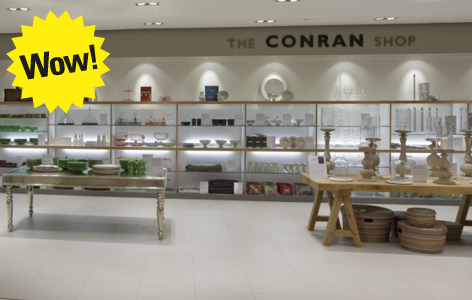
Wow Effect of The Conran Shop

The Wow Effect is the reaction that produces a space where we live a unique and memorable brand experience. It’s an emotional rush that invades your senses and makes you want to return there.

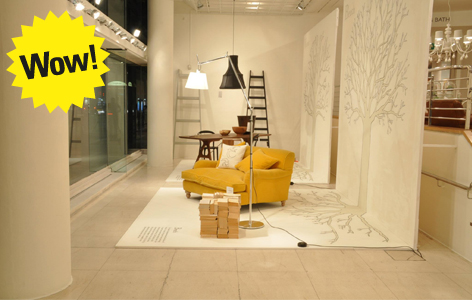
Who & Where: The Conran Shop in Chelsea, Marylebone, Paris, New York, Dublin, Nagoya, Fukuoka, Shinjuku, Marunouchi and Osaka. www.conranshop.com

About its products and services: Furniture, lamps, home accessories and gifts from iconic designers set out in their stores in a inspiring and stimulating way. Their great vocation for good design has led them to expand their services by working with other complementary disciplines doing projects of architecture, industrial design, interior design and retail.

How: Their spacious stores recreate original and cool environments and in which products are exposed in an ordered and unique way, bringing the pieces to works of art that decorate the space and own it. Their strong commitment to functionality becomes evident for example in their testing areas to watch the opacity of their range of blinds or the chance to order the full range of collections. Despite being present in different cities, all stores follow the same storyline and a methodology consistent with its style, tone and performance in all areas. Regularly organize events and product presentations, and accompany their space with prestigious restaurants and cafes to liven up those who go shopping.

Wow Effect: 8/10

—-

El efecto WOW es la reacción que nos produce un espacio en el que vivimos una experiencia de marca única y memorable. Es un ajetreo emocional que nos invade los sentidos y hace que queramos volver.

Quién y dónde: The Conran Shop en Chelsea, Marylebone, París, Nueva York, Dublín, Nagoya, Fukuoka, Shinjuku, Marunouchi y Osaka. www.conranshop.com

Sobre sus productos y servicios: Muebles, lámparas, accesorios para el hogar y regalos de diseñadores icónicos se exponen en sus tiendas de forma inspiradora y estimulante. Su gran vocación por el buen diseño les ha llevado a ampliar sus servicios colaborando con otras disciplinas complementarias en proyectos de arquitectura, diseño industrial, interiorismo y comercio. 

Cómo: Sus amplias tiendas recrean ambientes originales y con aire fresco en los que se exponen los productos de forma ordenada y única, elevando las piezas a obras de arte que decoran el espacio y lo poseen. Su fuerte apuesta por la funcionalidad, se hace evidente por ejemplo en sus zonas de prueba de la opacidad de las cortina o la opción de encargar piezas a medida contando con la gama completa de las colecciones. A pesar de estar presente en diferentes ciudades, todas sus tiendas siguen un mismo hilo argumental y una metodología coherente con su estilo, tono y actuación en todos los espacios. Organizan regularmente eventos y presentaciones de productos, así como acompañan sus espacios con restaurantes de gran prestigio y cafés en los que amenizar la compra. 

Wow Effect: 8/10

Views of the 20th century: Consumer Confidence Index (CCI)* // Lecturas del s.XX: Índice de Confianza del Consumidor (ICC)*

For a better understanding and to complete all those elements linked to the brand experience that influence the buying process, we will count with the collaboration of experts that will introduce concepts that will improve our business development, from different disciplines and points of view. Today we are pleased to introduce a new text of Insik W. Yoon, sociologist.

The problem that faces Spain is not so of an excessive public debt, but a sustained boundless private debt on assets that are losing accounting value, hence the problem of Spanish banks. Public debt stands at 68% of GDP, while private debt is over 200% GDP. Such a debt in a context of economic recession (reduction in income) raises doubts about whether we will be able to pay the debt. We will not discuss whether the latest episode of the Spanish debt is a «bailout» or a «soft loan», but the truth is that this situation affects consumption. If we add 5.6 million of unemployed with an inefficient labor market, the retail sector’s concern is  well founded.
One way to estimate future consumption is by measuring it through leading indicators like the Consumer Confidence Index (CCI). Since 2008 has continued to be negative. After a brief recovery in 2010 until mid-2011, falls back to 2009 levels. The perspective of domestic consumption for 2012 is very negative.

Consumption of luxury products seems to hold well the storm, the problem lies in the market for the supposed middle class. At the end of easy credit, on the one hand, we find an excess of supply (which is being destroyed), and the ocean is more bloodied than ever. On the other hand, consumption deflects towards saving. These circumstances raise different forms of competition in an environment of economic growth. Is it enough with the strategy of specialization? Will compete in price? Or maybe the small shop will be internationalized? Electronic commerce can be part of the solution, but in any case, it will take high doses of creativity to «reinvent» the business.
One possible route is to play with the concept of «strangeness» to become a niche, ie: focus on a specific type of consumer and add value to your offer. Some people consider the value, and value is not price. You can create value by solving a problem, but doing it with style leaving a personal stamp. If someone wants coffee (problem), give them coffee (solution), but do it with style, leave your trace in the business. Do not try to please everyone, or you will have to compete on price.

 I.W.Y.

Ego Consumans

(*)In Spain, the CCI is made since 2004 and is based on the methodology employed by the University of Michigan to calculate its Consumer Sentiment Index. The first index of this type it was developed by the Conference Board in 1967 (USA).

—-

Para completar y entender mejor todos los elementos vinculados a la experiencia de marca que inciden en el proceso de compra, contaremos con la colaboración de expertos que nos irán introduciendo, desde distintas disciplinas y visiones, conceptos que nos ayudarán a construir mejor nuestro negocio. Hoy estamos encantados de presentaros un nuevo texto de Insik W. Yoon, sociólogo.

El problema que afronta España no es tanto de una deuda pública excesiva, sino de una deuda privada desmesurada sustentada sobre activos que van perdiendo valor contable, de ahí el problema de los bancos españoles. La deuda pública se sitúa en un 68% del PIB, mientras que la deuda privada está por encima del 200% PIB. Semejante deuda en un contexto de recesión económica (disminución de ingresos) levanta sospechas sobre si seremos capaces de pagar la deuda contraída. No vamos a discutir sobre si el último episodio de la deuda española es un “rescate” o un “préstamo blando”, pero lo cierto es que esta situación afecta al consumo. Si a ello le añadimos 5,6 millones de parados con un mercado laboral ineficiente, la preocupación del sector retail está fundada.

Una forma de estimar el consumo futuro es midiéndolo a través de los indicadores avanzados como el Indice de Confianza del Consumidor (ICC). Desde el 2008 no ha dejado de estar en negativo. Tras una breve recuperación en 2010 hasta mediados del 2011, vuelve a caer a niveles del 2009. La perspectiva del consumo doméstico para el 2012 es muy negativa.

SOURCE: Comisión de la UE (European Economy. Supplement B), INE, DGT, ANFAC y BCE.

El consumo de productos de lujo parece que aguanta bien el temporal, el problema se encuentra en el mercado destinado a la supuesta clase media. Al acabarse el crédito fácil, por un lado, nos encontramos con un exceso de oferta (que se está destruyendo), y el océano está más ensangrentado que nunca. Por otro lado, se desvía el consumo hacia el ahorro. Estas circunstancias generan una forma de competencia diferente que en el de un entorno de crecimiento económico. ¿Será suficiente con la estrategia de la especialización? ¿Competirán en precio? ¿O tal vez el pequeño comercio se internacionalizará? El comercio electrónico puede ser parte de la solución, pero en cualquier caso, harán falta grandes dosis de creatividad para “reinventar” los negocios.

Una posible vía sea jugar con el concepto de “rareza” para hacerse con un nicho, es decir, centrarte en un tipo de consumidor específico y aportar valor añadido en tu oferta. Algunas personas tienen en cuenta el valor, y el valor es diferente del precio. Puedes crear valor solucionando un problema, pero haciéndolo con estilo, con un sello personal. Si alguien quiere café (problema), véndele café (solución), pero hazlo con estilo, deja tu huella en el negocio. No pretendas agradar a todo el mundo, o tendrás que competir en precio.

I.W.Y.

Ego Consumans

(*) En España, el ICC se elabora desde el 2004 y está basado en la metodología que emplea la Universidad de Michigan para calcular su Indice del Sentimiento del Consumidor. El primer índice de este tipo lo empezó a elaborar la The Conference Board en 1967 (EEUU).

Lovemarks

Lovemarks are those brands connected emotionally with users and whose value may be transmitted from generation to generation. Their positioning appeals to the user subjectively and personally, so that may have effects on its behavior. The brand has impacted its heart, beyond reason, and sympathizes with its values and its way of being. Identifies and imagines a future with it always near.

Like in any romance, mutual appreciation and details for their engagement will always be grateful and especially useful in times of weakness and confusion. Personalized attention, customization of the product and service, innovation that meets the expectations of users and a commitment to industry leadership, mark the steps to the heart of the users (see the decalogue we proposed in a previous post, too). Enduring crisis situations or differentiation from the competitors is always easier with a good bulk of users willing to continue investing in their lovemark.

That emotional connection is always linked to the user experience that has lived with it, with happy memories and fun that occurred at the point of sale or during the consumption or use. Over time, they must adapt to new trends and lifestyles to continue connecting with users. Exemplify this Coca-Cola, Mini, Clipper, Lacoste, Disney, Apple, though of course: everyone will have their own. For further reading we recommend the book «Lovemarks: the future beyond brands» by Kevin Roberts (2010).

Brandcelona retail consulting can advise you on the highlights to position your brand as a lovemark. Do not hesitate to contact us at info@brandcelona.com to study the best alternatives and plan how to carry them out in your strategic planning.

—-

Las lovemarks son aquellas marcas conectadas emocionalmente con el usuario y cuyo valor podría ser transmitido de generación en generación. El posicionamiento de éstas atrae al usuario de una forma tan subjetiva y personal que puede llegar a influir en el comportamiento de éste. La marca ha impactado en su corazón, más allá de la razón, y simpatiza con sus valores y con su manera de ser. Lo identifica e imagina un futuro con ella siempre cerca.

Como en cualquier romance, el aprecio mútuo y los detalles que agradezcan su fidelidad siempre serán congratulantes, y especialmente útiles en momentos de debilidad y desconcierto. La atención personalizada, la customización del producto y servicio, la innovación que se ajusta a las expectativas de los usuarios y la apuesta por el liderazgo del sector, marcarán los pasos a seguir hacia el corazón de los usuarios (véase el decálogo que propusimos en un post anterior). Sobrellevar situaciones de crisis o diferenciarse de la competencia siempre será más fácil con un buen grueso de usuarios dispuestos a seguir apostando por su lovemark.

Esa conexión emocional siempre va ligada a la experiencia que viva el usuario con ella, con recuerdos felices y divertidos que hayan ocurrido en el punto de venta o durante su consumo o uso. Con el paso del tiempo, deberán adaptarse a las nuevas tendencias y estilos de vida para seguir conectando con los usuarios. Son ejemplo de ello Coca-Cola, Mini, Clipper, Lacoste, Disney, Apple, aunque claro está: cada uno tendrá las suyas. Para ampliar la lectura os recomendamos el libro «Lovemarks: el futuro más allá de las marcas» de Kevin Roberts (2010).

Brandcelona retail consulting te puede asesorar sobre los aspectos más destacados para posicionar tu marca como una lovemark. No dudes en contactarnos en info@brandcelona.com para que estudiemos las mejores alternativas y planificar cómo llevarlas a cabo en tu planificación estratégica.

Dialogues on the future of retail part I // Diálogos sobre el futuro del retail parte I

This is the first part of a series of dialogues between Marc Guitart and Erika Herrera thinking about the future of retail.

MG: We live in very different cities, but I’m sure we can measure innovation globally. This is increasingly spreading to other sectors such as retail. Stores are struggling to counter online stores and vice versa and are committed to innovation, though, of course, this innovation does not have to always be linked with technology, right?

EH: In-store innovation can lead to finding new ways of attracting a consumer group that usually passes unnoticed, and stands if you use multi-channel strategies.

MG: What has been the most innovative thing you’ve seen in a store?

EH: I recently visited a store for plus-size women. Called my attention that each of its elements were carefully designed and thought for the consumer. Since the size of the testers, to a «magic» mirror connected to social networks allowing to share what you like or create a wishlist for future purchases. I loved especially this latter, it is a creative way to link the real and virtual world to maintain and promote the consumer interest. And you?

MG: I remember that in South Korea Tesco implemented in some subway stations  a virtual linear (HomePlus) in which you could scan QR codes of products with your smartphone and they were added to your shopping list. In 2 months they increased their sales by 130% in their online store! I think food industry is betting a lot for innovation in its format and concept.

EH: Luxury stores also bet very strong for innovation. One reason that may explain it is the budget they have and the market to which they are addressed. An example I love is Burberry. Using 360-degree screens they have integrated digital experience in-store and among other things, allows to transmit real-time parades.

MG: It is clear that the integration of offline and online experience with social networks is becoming increasingly important.

EH: A recent trend that will mark the world of luxury shops.

MG: In the health sector, sport and wellbeing are also being incorporated many innovative elements from the concept of the space to the way of buying.

EH: This sector takes it in their DNA as products and customers demand it. That is, the type of market that demands constant innovation in-stores. For example, Adidas, whose commitment to innovation is noticeable from the visual merchandising of the product, to their recent collaboration with Intel to connect stores to the digital world.

MG: Innovation in-store always adds value to the brand, because is the intangible memory that users carry on.

EH: Good or wrong, what is happening in-store is recorded in the consumer’s mind. Much more now with multi-channel experience, which means, among other things, that what you see and experience in the physical store is reflected (or so it should) in all other channels, and vice versa. Thus, innovation in-store should be a priority, as is the basis on which to build the consumer experience.

MG: Absolutely. It is about betting on a consistent experience whether online or offline, all that the user is living with a brand will remain in its memory as its experience, hence the importance of designing and managing strategic planning to address it.

We will return to the ‘Dialogue on the future of retail’ in the following article of the series. Meanwhile, feel free to introduce yourself into the conversation sharing your opinion.

—-

Ésta es la primera parte de una serie de conversaciones entre Marc Guitart y Erika Herrera reflexionando sobre el futuro del retail.

MG: Vivimos en ciudades muy distintas, pero estoy seguro de que podemos medir la innovación a nivel global. Ésta cada vez se extiende por otros sectores, como en el retail. Las tiendas luchan para contrarrestar las tiendas online y viceversa y apuestan por la innovación, aunque, claro, esta innovación no tiene que ir siempre ligada con la tecnología, verdad?

EH: La innovación en una tienda puede traducirse en encontrar formas de atraer a un grupo de consumidores que usualmente pasa desapercibido; y sobresale si hace uso de estrategias multicanal.

MG: ¿Qué ha sido lo más innovador que has visto en una tienda?

EH: Recientemente visité una tienda para el mercado de mujeres de tallas grandes. Llamó mi atención el que cada uno de sus elementos estuviera cuidadosamente diseñado y pensando para la consumidora. Desde el tamaño de los probadores, hasta un espejo “mágico” que se conecta con las redes sociales permitiendo compartir lo que te gusta o hacer una wishlist para futuras compras. Particularmente esto último me encantó, pues es una forma creativa de vincular el mundo real y el virtual para mantener y fomentar el interés del consumidor. ¿Y tú?

MG: Recuerdo que en Corea del Sur Tesco implantó en estaciones de metro un lineal virtual (HomePlus) en el que escaneabas el QR code con tu smartphone y añadías los productos a tu lista de la compra. En 2 meses aumentaron un 130% sus ventas en su tienda online! Creo que el sector de la alimentación está apostando mucho por innovar en su formato y concepto. 

EH: Las tiendas de lujo también apuestan muy fuerte por la innovación. Una razón que tal vez lo explique es el presupuesto con el que cuentan y el mercado al que van dirigidas. Un ejemplo que me encanta es Burberry. Con el uso de pantallas de 360º han logrado integrar la experiencia digital dentro de la tienda y entre otras cosas, permite trasmitir desfiles en tiempo real.

MG: Está claro que la integración de lo offline y lo online con redes sociales cada vez tiene más peso.

EH: Una tendencia reciente que sin duda marcará el mundo de las tiendas de lujo.

MG: En el sector de la salud, el deporte y el bienestar también se están incorporando muchos elementos innovadores, desde el concepto de los espacios hasta la forma de comprar.

EH: Este sector lo lleva en el ADN en tanto los productos y los clientes así lo exigen. Es decir, el tipo de demanda del mercado conduce a una constante innovación de las tiendas. Por ejemplo, Adidas cuyo compromiso con la innovación se nota desde el visual merchandising del producto, hasta su reciente colaboración con Intel para tiendas conectadas al mundo digital.

MG: La innovación in-store siempre aportará valor añadido a la marca, es el recuerdo intangible que se llevan los usuarios.

EH: Sea bueno o malo lo que pasa in-store se registra en la mente del consumidor. Mucho más ahora con la experiencia multi-canal, la cual implica, entre otras cosas, que lo que se vea y experimente en la tienda física se refleja (o así debería) en todos los demás canales, y viceversa. Por ello, la innovación dentro de la tienda debe de ser prioridad, en tanto es la base sobre la que se construye la experiencia del consumidor.

MG: Totalmente de acuerdo. Se trata de apostar por una experiencia coherente ya sea online u offline, todo lo que viva el usuario con una marca quedará en su memoria como su experiencia, de ahí la importancia de diseñar y gestionar la planificación estratégica para abordarlo.

Retomaremos los ‘Diálogos sobre el futuro del retail’ en el siguiente artículo de la serie. Mientras, siéntete libre de introducirte en la conversación y darnos tu opinión. 

The sport of wellness // El deporte del bienestar

Triyoga Primrose Hill via http://www.triyoga.co.uk

Triyoga lesson via kedharayoga.blogspot.com.es

Triyoga Soho via myfashdiary.com

As a general rule, establishments dedicated to sport and wellness split the Latin quote «mens sana in corpore sano» focusing on physical exercise and toning or, relaxation and meditation. However, there is an increasing interest in being able to combine both concepts in one place and to create a community of professionals and practitioners related to it.

Triyoga centers in London are a clear example of this turnaround in the strategic concept of physical and menta wellnessl. They have 4 studios in different neighborhoods of London (Primrose Hill, Chelsea, Soho and Covent Garden) that share the same philosophy: to combine yoga, pilates and therapeutic treatments in a unique space dedicated to personal and collective wellbeing. A spa for body and mind.

Its wide range of classes and treatments try to cover a broad range of ages, lifestyles and needs, under the motto ‘Everyone Triyoga!’. Also propose courses and intensive workshops in unique spaces and with highly regarded professionals, to show their commitment to excellence. They also offer a breakfast menu, lunch and drinks to regain strength after a session.

The studios are open spaces with high ceilings painted in white and combined with stained glass. They take care of every detail of the service, including the graphics, to create a genuine brand experience that relates to the welfare in its broadest cross. Tehy add to their offer the sale of products and accessories the sessions (books, gifts, equipment, CDs and DVDs, personal care products and clothing) and organize trips around the world that combine yoga in unique accommodations surrounded by tranquility and nature.

The strategic concept and philosophy of Triyoga integrates wellness in the users and makes them part of it -practicing it- and it became evident both in their studies as in the professionalism of its employees, communication and the service and experience design offered.

—-

Por norma general, los establecimientos dedicados al deporte y al bienestar dividen la cita latina «mens sana in corpore sano» centrándose en el ejercicio físico y la tonificación o bien, en la relajación y meditación. Sin embargo, cada vez hay más interés en poder unir ambos conceptos en un mismo espacio y crear una comunidad de profesionales y practicantes afín a ello.

Los centros de Triyoga en Londres son un claro ejemplo por este cambio de rumbo en el concepto estratégico del bienestar físico y mental. Cuentan con 4 establecimientos en distintos barrios de Londres (Primrose Hill, Chelsea, Soho y Covent Garden) que comparten la misma filosofía: unir sesiones de yoga, pilates y tratamientos terapéuticos en un único espacio dedicado al bienestar personal y colectivo. Un spa para el cuerpo y la mente.

Su amplia oferta de clases y tratamientos intenta cubrir un gran abanico de edades, estilos de vida y necesidades, bajo el lema ‘Everyone triyoga!’ (‘Todo el mundo prueba el yoga!’). Proponen además cursos y workshops intensivos en espacios singulares y con profesionales de gran prestigio, como muestra de su apuesta por la excelencia. También ofrecen una carta de desayunos, comidas y bebidas saludables para recuperar fuerzas después de una sesión.

Los estudios son espacios diáfanos con techos altos en los que predomina el blanco combinado con vidrios de colores. Se cuidan todos los detalles del servicio, incluso a nivel gráfico, para crear una experiencia de marca genuina que la relacione con el bienestar en su significado más transversal. Añaden a su oferta la venta de productos y accesorios para las sesiones (libros, regalos, equipamiento, cds y dvds, productos de cuidado personal y ropa) y escapadas organizadas en el extranjero que combinan las sesiones de yoga en alojamientos singulares rodeados de tranquilidad y naturaleza.

El concepto estratégico y la filosofía de Triyoga integra el bienestar en su usuario y le hace partícipe de él -practicándolo-, haciéndose evidente tanto en sus estudios, como en la profesionalidad de sus empleados, la comunicación y el diseño del servicio y experiencia que ofrecen.