Designing differences

BDCN_BannerMarcDEF-01

We have now reached 100 posts and I would like to give an overview of this thrilling project called brandcelona, which focuses on differentiation in Business Design and Brand Experience in Retail.

In brandcelona we go for differentiation and interdisciplinarity in every project that we carry out.
The design of differences is a quality, a feature or a circumstance, that emerges from in-depth knowledge of the genuine positioning of the business vision.

What we first design as quantitative differences (that is, to perform the same things in a better way) turns into qualitative differences design (that is, to create something new) by means of the sound strategic methodology of Business Design that we offer. And here is where brandcelona differs from the rest!

Interdisciplinarity in design stands for a one-of-a-kind choreography, which ends in a memorable brand experience. A quotation of something I recently read: «It is a symphony, which starts with a common note and, once every instrument has played its melody, in harmony or counterpoint with the rest, all instruments converge on a same final note»; interdisciplinarity in design is the experience, the unique feeling that differentiates our brand.

As usually, we encourage you all to keep participating and to continue fostering an innovative model that integrates the user and the brand in a unique experience.

Marc Guitart
Owner of brandcelona®

—-

Hemos llegado a los 100 posts en el blog de brandcelona, y me gustaría poder hacer una visualización general en este entusiasmante proyecto, focalizado en la diferenciación en Business Design y Brand Experience en Retail.

En brandcelona apostamos por la diferenciación y la interdisciplinariedad en los proyectos que realizamos. El diseño de la diferencia es cualidad/calidad, característica o circunstancia que resulta del profundo conocimiento del genuino posicionamiento de una visión de negocio.

Lo que en principio diseñamos como diferencias cuantitativas (hacer lo mismo pero mejor), con la sólida metodología estratégica de Business Design que ofrecemos, llegamos a diseñar diferencias cualitativas (hacer algo distinto). ¡En esto nos diferenciamos!

La interdisciplinariedad en el diseño es una coreografía irrepetible que concluye en una experiencia de marca memorable. Citando una reciente lectura: «Es una sinfonía que empieza con una nota común y después de que cada instrumento toque su melodía, en armonía y/o contrapunto con todos los demás, se llega al final en que todos los instrumentos convergen en una misma nota final»; la interdisciplinariedad en el diseño es la experiencia, la sensación irrepetible que diferencia nuestra marca.

Como siempre, os animamos a seguir siendo partícipes de ello para así continuar apostanto por un modelo innovador que integra al usuario y a la marca en una experiencia única.

Marc Guitart
Propietario de brandcelona®

Loft37: Personalized shoes // Loft37: Zapatos personalizados

mZalaszewskaDEFFor a better understanding and to complete all those elements linked to the brand experience that influence the buying process, we will count with the collaboration of experts that will introduce concepts that will improve our business development, from different disciplines and points of view. Today we are pleased to introduce a text of Maja Zalaszewska, specialist in brand’s identity in the interior space.

I am a woman. If I was asked about the leitmotif of this brand, this is what would come to my mind first… I love to express myself. I have a weakness for beauty. I love shoes. Isn’t this about every woman? But every woman is different and unique, right?

The brand Loft37 seems to have found a recipe for this: hand-°©‐made, great quality (very comfortable, nice materials), good branding, accessible and affordable. Delivered to your home. Beautiful. With a funky twist. PERSONALIZED shoes. Yes! One can have a name written on ones beloved heels!

Loft37 was created by two very creative and talented young ladies –Joanna and Paulina– a lawyer and an interior designer/stylist. They say they are both very enthusiastic, energetic and share passion for beauty. Those features are probably what we can see in their brand Loft37. For the past few years, since its beginning, the brand has been growing really fast. They are now shipping outside of Poland, even to the US.

The key is their website. It is all about fun: easy going, creative, colorful. You click in and you find yourself in a shoe paradise.

The most amazing thing is that you can choose any model and configure your own materials and colors.

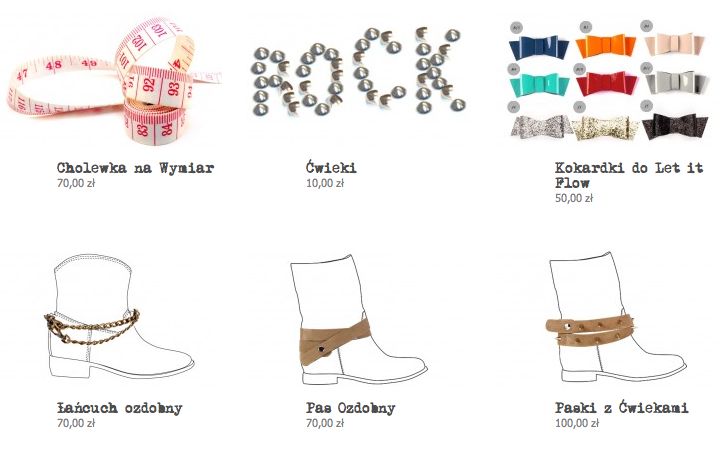
The selection of fabrics is vast –and what is important –the quality is what matters here. Women love details and jewelry –Loft37 did not forget about this important aspect of the feminine side. Additional application allows you to choose from ribbons, chains, belts, etc.

The cherry on the cake is the touch of luxury: the brand has invited several famous Polish designers to design several models.

The strategy and branding go smoothly together. Loft37 stands for personality, easygoing elegance, leisure, fun, comfort, luxury. All brought in together and delivered to your house. Simple.

—-

Para completar y entender mejor todos los elementos vinculados a la experiencia de marca que inciden en el proceso de compra, contaremos con la colaboración de expertos que nos irán introduciendo, desde distintas disciplinas y visiones, conceptos que nos ayudarán a construir mejor nuestro negocio. Hoy estamos encantados de presentaros un texto de Maja Zalaszewska, especialista en identidad corporativa aplicada al diseño de espacios.

Soy mujer, y como tal, si me preguntaran acerca del leitmotiv de esta marca, esto es lo primero que me vendría a la mente… Me encanta decir lo que pienso. Tengo debilidad por la belleza. Me encantan los zapatos. ¿Y no es así en toda mujer? Aunque cada mujer es única y diferente, ¿verdad?

La marca Loft37 parece haber encontrado la receta perfecta para dicha debilidad: hechos a mano, calidad de primera (muy cómodos y hechos con materiales muy buenos), con un buen branding, accesibles y asequibles. Entregados a domicilio. Bonitos. Con un aire moderno. Zapatos PERSONALIZADOS. ¡Sí! ¡Por fin es posible inscribir nombres en tus adorados tacones!

Loft37 fue fundada en Polonia por Joana y Paulina, una abogada y una estilista y diseñadora de interiores muy creativas y con mucho talento, quienes se definen como entusiastas, enérgicas y con una pasión en común: la belleza. Esta fusión de virtudes es probablemente lo que han conseguido plasmar en su marca Loft37. Desde su inicio, y sobre todo en estos últimos años, la marca ha crecido de forma muy rápida, y a día de hoy ya exporta a nuevos mercados, incluso a los Estados Unidos.

La clave de todo se encuentra en la página web: su accesibilidad, creatividad y sus vivos colores garantizan la diversión del usuario. Haces clic para entrar y descubres un paraíso de zapatos ante ti.

¡Pero lo más asombroso de todo es que puedes escoger cualquier modelo y configurar un diseño con los materiales y colores que más te gusten!

La selección de tejidos y materiales es amplia y, lo que es más importante, la calidad es primordial. Las mujeres adoran los detalles y las joyas, y Loft37 no olvida este importante detalle. Aplicaciones adicionales te permiten escoger entre lazos, cadenas, cinturones, etc.

La guinda del pastel viene dada por el toque de lujo: la marca ha invitado a  varios diseñadores de Polonia a colaborar con varios de sus diseños.

Estrategia y branding fluyen conjuntamente. Loft37 es el significado de personalidad, elegancia desenfadada, diversión, confort y lujo. Todo en uno y entregado a domicilio. Así de fácil.

Maja Zalaszewska

Screen shot 2012-12-21 at 9.05.00 PM 225178_188214984558501_1144585_n loft37.pl

Crab’s essence // Esencia de cangrejo

banner_erocchi For a better understanding and to complete all those elements linked to the brand experience that influence the buying process, we will count with the collaboration of experts that will introduce concepts that will improve our business development, from different disciplines and points of view. Today we are pleased to introduce a text of Elena Rocchi, architect, artist and teacher.

All crabs have something in common: they all wander at the bottom of the sea. As they develop, their forelegs turn into two claws, which capture and manipulate the food, so they can be better at courting and fighting.

Claws are what I need on a Sunday afternoon stroll during Christmas time to get through the crowd at Passeig de Gràcia, one of the main shopping streets in Barcelona. I leave home in order to do some research and understand what people like and how people react when they face a shop window during Christmas time. How can a firm get the ones standing there engaged only with their shop window-stages?

Just imagine that you are going for a walk on a Sunday when you suddenly notice a shop window approaching. A group of people is standing in front of it. More people than expected. You think then about continuing without stopping, trying not to run over the people standing there. What should you do? The answer is relatively straightforward: you will have to stop.

You are by the boutique of a brand that was founded in Spain by a German craftsman specialized in leather working that arrived in Madrid in 1872 to learn from the Spanish leather industry: Enrique Loewe Roessberg. Enrique Loewe arrived in Spain in the late 19th century like many other German craftsmen that, since the 16th century, sought their fortune and, at the same time, wanted to undertake a training journey in Spain, France and Italy. Such was the success of Loewe in expanding his business by opening a leather goods workshop in the most commercial district in Madrid, in Lobo street, that in 1905 Loewe was appointed Purveyor to the Royal Household, and Alfonso XIII of Spain became his regular customer. Loewe started manufacturing pink frames écrasé, Moroccan leather jewel boxes and handbags, among others: a Leather goods factory E. Loewe. Príncipe Street, 39. Phone number 1.810. Man spricht deutsch. On parle français. English spoken. Established 1846”).

Over the same years in which Mariano Fortuny produced exotic fabrics in Italy, “Loewe, fiel a la piel” (“Loewe, faithful to leather”) remains faithful to its original philosophy. In Spain, where the firm is renowned for the quality of its lambskins, he finds the “Cordero entrefino español”, which refers to lambs bred in the cool heights of the Spanish Pyrenees.

As we were saying… You are standing in front of a shop window from the boutique at Passeig de Gràcia, 35, first opened in 1940 by German Loewe Knappe and relocated to Passeig de Gràcia from Carrer Ferran (Ferran Street), the second boutique from Loewe opened in Barcelona, after the one in Carrer Fonanella (Fontanella Street). Javier Carvajal was the architect that during 1960s conducted a study about Northern interior design transformed into “Spanish” by using walnut. Designer Vicente Vela not only added many different colors to Loewe’s leather, but he also shaped the firm as a “crab” in 1970. However, the precursor of Loewe’s visual merchandising back in the 70s was designer José Pérez Rozas, as he was the one that first brought such an ephemeral art performance to its shop windows.

Since 1980s Loewe has brought together through its Foundation writers, painters and philosophers as aesthetic consultants of the firm, in order to know how to proceed when selling “Spanishness” of the brand in the world, especially in Japan and in Asia-Pacific. Loewe does so by including “shawls with motifs from Velásquez or the Gala fragrance in the form of a Menina (Spanish for “Maid of Honour”), as said by Luis Antonio de Villena, one of the consultants of the Foundation, which was founded in 1988 by Enrique Loewe Lynch (the fourth Loewe generation).

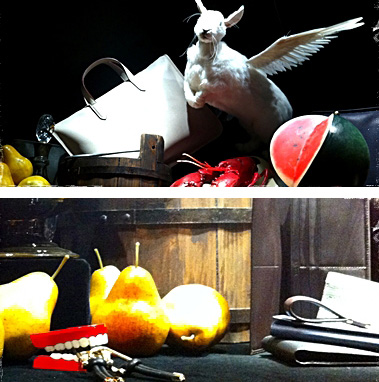
Since you have stopped when trying not to run over the people standing in front of the shop windows from Loewe, you suddenly see a flying rabbit and a world map in the shape of a rotating watermelon next to some handbags, when looking at the show window. Standing right next to a group of women taking pictures of the still life of Loewe, you will be astonished and fascinated by the flying rabbit. While wandering at the bottom of the sea, the crab has caught it with its claws. The crab begins to court the rabbit; he captures it and will eventually manipulate it like the best comfort food.

Stuart Vevers, Loewe’s current creative director since 2008 and the author of the brand’s rejuvenation, explains that the “good practice” of the firm in regards to its shop windows-still lifes for Christmas time in the 20th century results from some ancient and classical codes and aims at pursuing the key principle “A luxury firm must cause tachycardia on its customers”. If the famous advertising campaign “Quizás, quizás, quizás de Loewe” (“Perhaps, perhaps, perhaps by Loewe”) by Eugenio Recuenco focused on the “Spanish traditional character”, seduction and social valuation, what kind of tachycardia should cause the new shop windows-still lifes at Passeig de Gràcia in Barcelona? Every still life has an allegorical and symbolic meaning in their general iconographic messages; Loewe takes up such messages again in this year’s Christmas campaign. And if Leonardo da Vinci’s still lifes show genuine interest for the new-enlightened world, at what new world do the handbags and wallets made out of “Spanish cordero fino” leather aim?

As in the finest still life tradition, the shop window represents natural inanimate objects from our daily life or inanimate objects created by the human Loewe. A gold baroque frame determines the space of the shop window on a black rigorous background. The lighting highlights the symbolic value of the message. Furthermore is Loewe’s still life animate. The flying rabbit wings (probably in its resurrection) and the rotating watermelon-world map appoint Africa as the world’s future. They move.

Based on the belief that objects become “Real” at the other side of death, in case the pharaoh may need them, the still lifes made of food and domestic objects are born for the first time as interior decoration for the tombs in Ancient Egypt. Through baroque paintings, still lifes celebrate the “Vanitas things” (XXX) that death snatches from us when we all become equal. Omnia mors aequat (“Death levels all distinctions”). The genre of “Vanitas” still lifes has to do with the Thirty Years’ War (1618-1648), where many European countries went bankrupt and the economy collapsed. In this context, still lifes try to forget about the crisis by representing vanity and wealth in its fleetingness. The Spanish version here refers to an impoverished country from the 1600s, since the gold found in the American colonies was not invested in a productive way: the Spanish still lifes by Juan Sánchez Cotán had a “lack of food”.

Right in front of the hyperrealist shop window where you are standing you can see these new skilled Zeuxis and Parrhasius and their Trompe-l’oeil. Pliny the Elder appointed the Greek painter Peiraikos as “the painter of vulgar objects” and his works as “a group of delicious things sold at higher prices than the greatest paintings of many other artists”, just like Loewe’s still lifes. Wealthy Loewe financed a new collection with new types of leather. But this time there are no moral messages in his “Cabinet of Wonder”. What would you say there is instead?

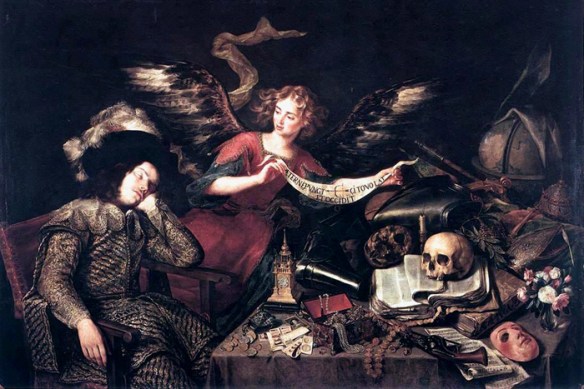
Through “World’s disillusion, Vision of a Knight” from 1670, painter Antonio de Pereda explains probably better the disillusionment shown in Loewe’s shop window. While sleeping, an angel appears in the young boy’s dreams and warns him. Here the flying rabbit is warning you. “Aeterna pungit, cito volat et occidit” (“Eternally it stings, swiftly it flies and it kills”). A bit higher than your eye-level the flying rabbit reminds you of Lewis Carroll’s March Hare at the Unbirthday Party in Alice in Wonderland, and, just like Alice, you are a subgenre in this Tea Party. You are the one celebrating on your Unbirthday; on the day of your death. Only your teeth are lying among this setting of Loewe handbags, watermelons, crabs and key-chains. You are not there anymore. And this all reminds you of the fleetingness of life. Omnia mors aequat (Death levels all distinctions). The Trompe-l’oeil is misleading you, but if you look a little bit closer at the reflection of the shop window you will see that you have no longer multiple points of view; you are now standing in front of your own point of view, where your face is now at the height of the plastic teeth.

The severe austerity in Spanish still lifes is probably what Loewe identifies with the “being Spanish” concept and what would best represent Spain in form of a souvenir to bring back home. But when this is translated into Loewe’s shop window by introducing the brand’s luxury and you in your impermanence, Loewe develops a new technique that goes beyond the boutique. As in the Pop Art-still life “Campbell’s Soup Cans” produced by Andy Warhol, the modified image of the product and your critical view as a consumer, as well as the fact of being temporarily alive, constitutes its real matter.

Ready to wear. Only for a while. Before the Tachycardia.

Stuart Vevers knows these are hard times. And his “good clinical eye” points to the impermanence. Albert Puyol, former president of Loewe, says about the enfant terrible:  “Some people, like Marc Jacobs, John Galliano or Stuart Vevers, perceive life in five different dimensions, instead of perceiving it in two. They see the world through a hole, which turns to be the hole we all eventually see through”.

A whole we all go through in our Sunday stroll in the fifth dimension. Now, honestly; do not forget to take a Loewe handbag for your trip.

—-

Para completar y entender mejor todos los elementos vinculados a la experiencia de marca que inciden en el proceso de compra, contaremos con la colaboración de expertos que nos irán introduciendo, desde distintas disciplinas y visiones, conceptos que nos ayudarán a construir mejor nuestro negocio. Hoy estamos encantados de presentaros un texto de Elena Rocchi, arquitecta, artista y profesora.

Lo que tienen en común todos los cangrejos es vivir “vagando” sobre el fondo del mar.

En su evolución, sus patas delanteras locomotoras se mudan en un par de pinzas que capturan y manipulan el alimento, que cortejan y luchan mejor.

Pinzas son las que necesito un domingo por la tarde para hacerme espacio el Passeig de Gràcia, en época de Navidad. En Barcelona. Salgo a la calle a seguir las investigaciones que me ayudan a entender el gusto de la gente y sus reacciones humanas al encontrarse delante de un escaparate en Navidad. ¿Cómo una firma consigue comprometer con sus escaparate-escenarios a todos aquellos que allí delante están?

Imagínese que Usted está realizando su paseo dominguero cuando a lo lejos observa un escaparate que se aproxima. Un grupo de personas esta parado delante de el. Más gente de lo normal. Piensa entonces Usted en continuar su recorrido y no pararse, intentando ingeniárselas para evitar atropellar a los individuos allí parados. ¿Qué es lo que Usted debería hacer? La respuesta es relativamente sencilla: deberá pararse.

Está Usted a la altura de la tienda de una marca fundada en España por un artesano alemán, que llega a Madrid en 1872 para aprender sobre la marroquinería española: Enrique Loewe Roessberg. Enrique Loewe llega a España a finales del siglo XIX como todos aquellos artesanos alemanes que tienen el propósito de hacer fortuna y al mismo tiempo emprender su viaje de formación en España así como en Francia y Italia desde el siglo XVI. Tal es la fortuna de Loewe en relevar un taller de trabajo de marroquinería en la calle Lobo de Madrid, que en 1905 es distinguido como Proveedor de la Casa Real. Y Alfonso XIII es su cliente habitual. Loewe empieza fabricando marcos de ecrasé rosas, cajas de alhajas en piel de tafilete, bolsos, saquitos para automóvil en piel: una “Fábrica de artículos de piel E. Loewe. Príncipe, 39. Teléfono 1.810. Man spricht deutsch. On parle français. English spoken. Casa fundada en 1846”.

En los mismos años en los que Mariano Fortuny produce tejidos exóticos en Italia, “Loewe, fiel a la piel” sigue con su filosofía original. En España, reconocida por la calidad de las pieles de cordero, Loewe encuentra el «Cordero entrefino español», que vive y pastea feliz en las frías alturas de los Pirineos españoles.

Como estaba diciendo… Está Usted delante de un escaparate de esta tienda al número 35 del Passeig de Gràcia, abierta en 1940 por German Loewe Knappe y trasladada aquí desde la Calle Ferran, la segunda tienda Loewe en Barcelona después de la Calle Fontanella. Javier Carvajal es el arquitecto encargado durante los años 60 del estudio de un interiorismo de carácter nórdico “españolizado” con madera de nogal. El diseñador Vicente Vela es el que, a parte dar a la piel Loewe diversos colores, da forma de “cangrejo” a la firma en 1970. Y sobre todo, José Pérez Rozas, es el creador de bolsos de la casa y el precursor del «visual merchandising» en aquellos años 70, que inaugura la tradición de los escaparates teatrales y elegantes de Loewe, demostración verdadera de arte efímero.

Desde los años 80 Loewe convoca a través de su fundación a escritores, pintores y filósofos como asesores estéticos de la firma sobre como proceder en la venta de la “españolidad” de la firma en el mundo, principalmente en Japón y Asia-Pacifico. Lo hace desde sus tiendas y escaparates “con sus pañuelos con motivos de Velásquez o el perfume Gala, con forma de menina”, como recuerda el escritor Luís Antonio de Villena, uno los asesores de la Fundación creada en 1988 por Enrique Loewe Lynch, cuarta generación Loewe.

Al haberse parado Usted en su intento de evitar atropellar a los individuos delante de los escaparates Loewe, al mirar a la vitrina, descubre un conejo volador y un mapamundi en forma de Sandía Giratoria al lado de unos bolsos. Quedará Usted perplejo y fascinado delante del Conejo volador, allí detrás del grupo de señoras tirando fotos al Bodegón Loewe lleno de ideas regalo. El cangrejo le ha atrapado en sus pinzas mientras estaba “vagando” sobre el fondo del mar. Le empieza a cortejar, le captura y le manipulará como su mejor alimento.

Stuart Vevers, director creativo de Loewe desde 2008 y rejuvenecedor de la marca, apunta en los escaparates-Bodegones el “buen hacer” de la firma según unos códigos antiguos y clásicos, en estos días de Navidad de nuestro siglo XXI, bajo su propósito según el cual “Una firma de lujo tiene que provocar taquicardia en el cliente”. Si la tradicionalidad española junto con la seducción y valoración social son temas centrales de una famosa campaña publicitaria de Eugenio Recuenco «Quizás, Quizás, Quizás de Loewe», ¿qué taquicardia nos deberían dar los nuevos bodegones escaparate del Passeig de Gràcia en Barcelona? Los Bodegones tienen un significado alegórico y simbólico en su mensaje iconográfico general que bien es retomado por Loewe en la campaña de estas Navidades. Y si con los bodegones de Leonardo da Vinci se demuestra el interés por un nuevo mundo ilustrado, ¿a qué nuevo mundo apuntan los bolsos y las carteras de piel de cordero entrefino español?

Como en la mejor tradición de los bodegones, el escaparate representa objetos inanimados de la vida cotidiana, naturales o hechos por el hombre Loewe. El espacio del escaparate, sobre riguroso fondo negro, es determinado por un marco barroco de oro. La iluminación resalta el valor simbólico del mensaje. El Bodegón Loewe es, además, animado. Las alas del conejo volador (quizás en su resurrección) y la sandía-mapamundi que apunta a África como el futuro del mundo, se mueven.

Los bodegones hechos de comida y objetos domésticos nacen por primera vez como adorno del interior de las tumbas del Antiguo Egipto, en esta creencia de que los objetos se hacen “Reales” al otro lado, por si el faraón los necesita. Con la pintura Barroca, los bodegones celebran las “Cosas Vanitas” que la muerte borra al igualar a todos. Omnia mors aequat. El género de Bodegones “Vanitas” tiene que ver con la Guerra de los Treinta Años (1618/1648), con la ruina de muchos países europeos y el desplome de la economía. Los Bodegones en este contexto intentan olvidar la crisis a través de la representación de la vanidad y la riqueza aunque en su fugacidad. La variante española es la de un país empobrecido alrededor de 1600 ya que el oro de las colonias americanas no se ha invertido de manera productiva: los bodegones españoles de Juan Sánchez Cotan son “carentes de comida”.

Delante de este escaparate hiperrealista, Usted se encuentra delante de estos nuevos y diestros Zeuxis y Parrasio y de su Trampantojo. Plinio el Viejo indica al pintor griego Peiraikos como “el pintor de los objetos vulgares”, y a sus obras que, como los Bodegones Loewe “eran en conjunto deliciosas, y se vendían a precios más altos que las más grandes (pinturas) de muchos otros artistas”. El rico Loewe financia una colección de nuevas especies de piel. En su “gabinetes de curiosidades” no hay carnes crudas ni mensajes morales. ¿Qué diría Usted que hay entonces?

Con “Desengaño del Mundo, El sueño del caballero” de 1670, Antonio de Pereda nos explica quizás mejor el desengaño ofrecido por el Escaparate Loewe. El ángel se lo advierte en sueños al joven ricamente vestido.
El conejo Volador se lo advierte a Usted. “Aeterna pungit, cito volat et occidit” (Eternamente hiere, vuela veloz y mata). Ubicado un poco más arriba de la altura del ojo, el conejo volador recuerda la Liebre de Marzo de Lewis Carroll de la Fiesta de No Cumpleaños de Alicia en el País de las Maravillas, y Usted, como Alicia, es un subgénero dentro de este Tea Party. Usted es el celebrado en su día de no cumpleaños. En el día de su muerte. En este arreglo de bolsos Loewe, sandías, cangrejos y llaveros, está su dentadura sin Usted ya, recordándole la fugacidad de la vida. Omnia mors aequat. La  “trampa ante el ojo” le engaña, pero si mira bien en el reflejo del vidrio de la tienda, su figura se coloca ya no en puntos de vista múltiples, sino en el suyo propio, donde su cara está a la altura de la dentadura de plástico.

La severa austeridad de los bodegones españoles es para Loewe quizás lo que identifica el “ser español” para llevarse de souvenir de vuelta al país de cada uno. Pero al traducirlo en sus escaparates introduciendo el lujo de la marca y a Usted en su impermanencia, Loewe inventa una nueva técnica mixta que se expande mas allá de la tienda. Como en los bodegones Pop Art de latas de sopa Campbell de Warhol, su verdadero tema es la imagen modificada del producto comercial y la postura crítica que Usted tome como consumidor y ser vivo temporalmente.

Ready to wear. Only for a while. Before the Tachycardia.

Stuart Vevers sabe que no son tiempos de lujo. Y su inteligente ojo apunta a la impermanencia. El expresidente del grupo de moda Albert Puyol dice del enfant terrible: “Hay gente que, en vez de percibir la vida en dos dimensiones, lo hace en cinco, como Marc Jacobs, John Galliano o Stuart Vevers, que ven el mundo por un agujero que, al final, es por el que acabamos viendo todos”.

Un agujero por el que acabamos pasando todos en nuestro paseo dominguero en la quinta dimensión. Eso sí. Llévese un bolso Loewe para el Viaje.


Elena Rocchi


Antonio de Pereda El sueño del caballero bodegon

MOSAIC 2

What about your brand experience? // ¿Qué hay de tu experiencia de marca?

Often, brands and businesses focus their efforts on creating just an attractive visual identity, that will position the brand as innovative and trendy. However, when talking about user experience, if the content is hollow, the brand will end up being irrelevant to it.

The brand experience is all that surrounds the business and the universe that it creates around. Is about how the user lives the brand both at home and at any space owned or not, and what he feels while interacts with it. You can have an unblemished image without considering how the user would like  the service was, or ignoring the training and knowledge of employees or without being aware if the location of your business can be improved or not. It is difficult to design an experience per se, for being an emotion, a feeling or a sensation, what we propose in brandcelona® is being able to analyze it and guide it to align the brand experience with the desired positioning.

In that process, count on the opinion and participation of those regular users (heavy users) and the sporadic ones, it will be vital to know what they are fascinated for or irritated with about the brand and their interactions. And not only analyzing it at the time of purchase or visit but also during the usage or in the memory or even, at the time of recommending our brand to others.

In fastcompany they make an analogy of brand building with the James Bond movies, determining that to create a compelling and genuine brand must take into account: the history, the style, the team, the sex (or sex drive), the technology, the media and the logo. And the truth is that it does not seem too far-fetched, afterwards, 007 is not only world famous, he always finishes its job effectively, so they continue counting on him. In brandcelona® we also like to be that effective. 😉

—-

A menudo las marcas y comercios centran sus esfuerzos en crear simplemente una identidad visual atractiva, que posicione la marca como innovadora y «trendy». No obstante, a experiencia de usuario, si el contenido está hueco, la marca acabará siendo irrelevante para éste.

La experiencia de marca es todo aquello que envuelve el negocio y el universo que crea a su alrededor. Es cómo vive el usuario la marca tanto en su casa como en cualquier establecimiento propio o no, y qué siente al interactuar con ella. Puede tenerse una imagen impecable pero no tener en cuenta cómo le gustaría al usuario que fuera el servicio, pasar por alto la formación y el conocimiento de los empleados u obviar si la localización de su negocio es mejorable o no. Es difícil diseñar una experiencia per se, por ser una emoción, un sentimiento o una sensación; lo que proponemos desde brandcelona® es ser capaces de analizarla y guiarla para alinearse con el posicionamiento deseado.

En ese proceso, contar con la opinión y participación de los usuarios tanto habituales (heavy users) como esporádicos, será de vital importancia para conocer qué les fascina o que les irrita de la marca y de sus interacciones. Y no sólo debe analizarse en el momento de compra o de visita sino también en el de uso o recuerdo e incluso, en el momento de recomendar a otros nuestra marca.

En fastcompany hacen una analogía de la construcción de marca con las películas de James Bond, determinando que para crear una marca convincente y genuína debe tener muy en cuenta: la historia, el estilo, el equipo, el sexo (o la pulsión sexual), la tecnología, los medios y el sello. Y la verdad, es que no nos parece muy descabellado, al fin y al cabo el agente 007 no sólo es mundialmente reconocido sino que siempre acaba eficazmente su trabajo, por eso siguen contando con él. En brandcelona® también nos gusta ser así de eficaces. 😉

Designing Businesses

There is a increasing number of methodologies for business design, especially for those involved in creating a brand experience and a loyal and close connection with the user. That is why North should not be lost in identifying and implementing a strategy of future that allows wrapping and developing the brand and its experience through a story that appeals visitors sensorially.

The continent (physical form) must always be aligned to the content, and that content must be genuine and distinctive, which will help in positioning the brand in the sector and in the market. To do this, look at what your company wants and what users search for and find something that combines both interests and motivations; that will be vital to run a sound and sustainable project. And is because users are not strangers, we are users too, and we know what we like, what makes us feel comfortable, what facilitates and speeds up parts of our lives … And how hard it is to make things easy! And yet, when achieved, is highly effective for users and for the brand itself.

Stores and establishments exalt this scheme, because it is the user the one that visits the brand and who will associate the experience and the positioning to that place. Development and effectiveness go always together and will be present in the whole offer of processes and services and so, should be visible and felt in any kind of format that presents the business (ephemeral, conceptual, shared with other brands, etc). From there, taking a clear vision of what moves and sets the brand, the actions and activities that help mobilizing visitors and establishing synergies and collaborations, will be part of the current tactics under a global strategy.

From here, after these 10 months posting about it, we want to keep explaining and promoting all that that even not being seen, creates business and is designed under an attractive and distinctive concept, not only to claim for sales but to look for a methodology that helps in understanding and identifying what your brand wants and what motivates the visitor in a trade. We encourage you to continue being part of it in order to continue betting on an innovative model that integrates the user and the brand under a common mutual interest: offering products and services that can solve not only part of our life, but also part of the current paradigm .

Marc Guitart
Owner of brandcelona

—-

Cada vez existen más metodologías para diseñar negocios, especialmente para aquellos involucrados en generar una experiencia de marca y una conexión fiel y cercana con el usuario. Es por eso que no se debería perder el norte e identificar y ejecutar una estrategia de futuro que permita envolver y desarrollar la marca y su experiencia mediante una historia que atraiga sensorialmente al visitante.

El continente (la forma física) debe ajustarse siempre al contenido y es ese contenido genuíno y diferenciador lo que ayudará a posicionar la marca en el sector y en el mercado. Para ello, analizar qué queremos y qué buscan los usuarios y encontrar aquello que aúne ambos intereses y motivaciones, será de vital importancia para ejecutar un proyecto sólido y de futuro. Y es que los usuarios no son entes ajenos, sino que somos nosotros mismos: lo que nos gusta, lo que nos hace sentir cómodos, lo que nos facilita y agiliza partes de nuestra vida…¡Y qué difícil es hacer las cosas fáciles! Y sin embargo, cuando se consigue, es sumamente efectivo tanto para los usuarios como para la propia marca.

Los comercios y establecimientos exaltan este esquema, pues es el usuario el que visita la marca y el que asociará el posicionamiento y la experiencia a ese lugar. El desarrollo  y eficacia irán siempre de la mano y estarán presentes en todos los procesos y servicios que se asocien y de ahí que deba ser visible y sentido en cualquier que sea el formato del negocio (efímero, conceptual, compartido con otras marcas, etc). A partir de ahí, teniendo clara cuál es la visión de futuro que mueve y establece la marca, las acciones y dinamizaciones que ayuden a mobilizar visitantes y establecer sinergias y colaboraciones, serán parte de la táctica del momento derivada de una estrategia global.

Desde aquí, y tras estos 10 meses publicando sobre ello, queremos seguir explicando y dando a conocer todo aquello que aunque no se ve, crea negocios y los diseña bajo un concepto atractivo y diferenciador, no sólo como reclamo de ventas sino como metodología para comprender e identificar poco a poco qué quiere y qué motiva al visitante de un comercio. Os animamos a seguir siendo partícipes de ello para así continuar apostando por un modelo innovador que integre al usuario y a la marca bajo un interés mútuo común: ofrecer productos y servicios capaces de solucionar no sólo una parte de nuestra vida, sino también parte del paradigma actual.

Marc Guitart
Propietario de brandcelona

Proyéctate UIP & brandcelona

Last August 15 brandcelona had the pleasure of presenting by the hand of Marc Guitart this project and its methodology in a workshop and a lecture at the Universidad Interamericana de Panamá.

In the workshop on Service Design & Branding, 25 students of the Faculty of Architecture, Design and Communication worked on methodologies of action in branding and how to setup and design services from brand design.

During the lecture «brandcelona’s brand experience» various projects conducted by brandcelona were presented around brand experience, by means of branding and retailing as a strategy for internationalization. Also discussed specific projects according to their immediate context either geographical, economical, cultural, demographical, technological … and how to frame and use this link to create a close and enveloping identity.

Both sessions served to structure a solid basis on the design methodology, highlighting and sharing their importance for brandcelona in projects and consultancies.

From here, we would like to thank again Ilka Sanchez for her project l’Espai and Lauren Grimaldo, director of new degrees of UIP, for their invitation and the hospitality that we experienced during our stay in Panama.

And of course, «chorreamos seco y bailamos el mogollón», thanks to all!

—-

El pasado 15 de agosto brandcelona tuvo el placer de presentar de la mano de Marc Guitart este proyecto y su metodología en un workshop y una conferencia magistral en la Universidad Interamericana de Panamá.

En el workshop sobre Service Design & Branding, cerca de 25 alumnos de la Facultad de Arquitectura, Comunicación y Diseño trabajaron las metodologías de actuación en branding y cómo configurar y diseñar servicios a partir del diseño de marca.

En la conferencia magistral «La experiencia de marca de brandcelona» se presentaron diversos proyectos realizados por brandcelona entorno la experiencia de marca, a partir del branding y el retail como estrategia para la internacionalización. También se debatió sobre proyectos determinados según su contexto más inmediato ya sea geográfico, económico, cultural, demográfico, tecnológico… y como enmarcar y aprovechar ese vínculo para crear una identidad cercana y envolvente.

Ambas sesiones sirvieron para estructurar unas bases sólidas sobre la metodología de diseño, destacando y compartiendo la importancia de éstas para brandcelona en la realización de proyectos y consultorías.

Desde aquí nos gustaría agradecer de nuevo a Ilka Sánchez por su proyecto l’Espai y a Lauren Grimaldo, directora de nuevas licenciaturas de la UIP, por su invitación y la acogida que nos brindaron durante nuestra estancia en Panamá.

Y cómo no, «chorreamos seco y bailamos el mogollón», ¡gracias a todos!

Sponsorship Activation, another brand extension // Activación de patrocinios, una extensión más de la marca

For a better understanding and to complete all those elements linked to the brand experience that influence the buying process, we will count with the collaboration of experts that will introduce concepts that will improve our business development, from different disciplines and points of view. Today we are pleased to introduce a text of Noelia Cabezas, project manager on business innovation ideas.

«The current trend in communication, is to use the activation of sponsorship as an extension of the brand, to make branding.»

SPONSORSHIP (just plain), is no longer enough.
In the old school the leadership of a sponsorship offers to the client or to the sponsoring brand different positions to provide visibility and activate the brand.

ACTIVATION AND ENTERTAINMENT / SPONSORSHIP ACTIVATION AND BRANDED ENTERTAINMENT, is what creates value today in any sponsorship.
Is the current proposal and future projection to enhance the communication of any brand. A global vision, a distinctive design, the integration in new media, entertainment and user experience, create synergies that connect audiences with the sponsorship and the sponsor.

A client seeking the sponsorship is to go beyond the screen, to echo in different media and thereby obtain returns above all. Not an easy task, since the activation of sponsorship needs to find its starting point, synergy between the event / brand / sponsored person and the sponsoring brands. The key is to follow a methodology suitable for bonding both brands and launch a single message that connects with the user.

Activation is an opportunity that generates dialogue connecting with the public in a context that the audience has chosen and wants to enjoy.

The benefits of doing a sponsorship activation are: obtaining best return on investment, ROI and generating diffusion in the several media.

The advantage of using the Sponsoship Activation as an extension of the brand generates:
– Interaction
– CRM
– Sales promotion
– Information and dialogue
Branding

An added value that we propose is to work closely with the brand and the sponsorship to achieve:
– Live events
– Competitions
– Cross-Promotions
– Contents
– Videos
– Social Media

The Sponsorship Marketing Awards recognizes excellence in sponsorship, marketing and activation of it, generating publicity and always a clear access to the user.

The result of performing a proper activation of sponsorship is to increase the profitability of the brand and the sponsorship. That is achieved by aligning the points mentioned above, launching a single message, generating business opportunity through activation (dialogue and user experience), diffusion beyond the screen and the branding that remains in the user memory.

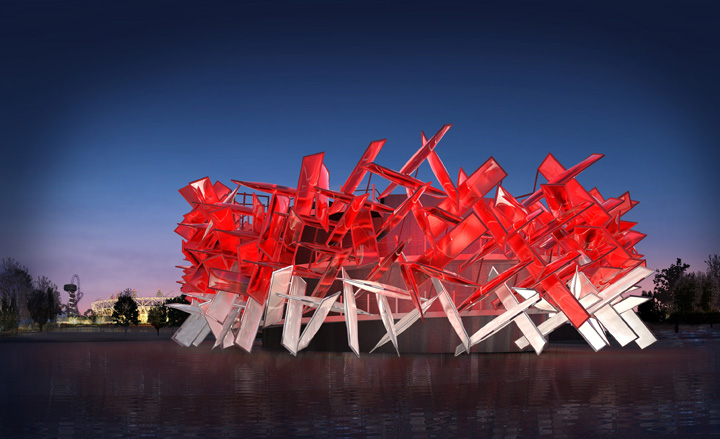
One of the best integrations of sponsorship activation, is the one of Coca-Cola in the Olympic Games in 2012.
Its application in 360° format has a clear the impact and visibility of a previous strategic plan of marketing and communication.

Pernilla & Asif studio has presented the design of a pavilion that can interact as a musical instrument.

The design, structure and thematic is fully aligned to the Olympics.

The user experience, interaction with the brand, entertainment, broadcasting and integration of new media, are the key facts of this spectacular action.

Its strategic approach and media coverage, have been key to creating with the artist Mark Ronson, the event’s commercial song, Move to the Beat of London 2012, integrating young athletes and artists.

The potential is having experience with brands and sponsors, an analytical personality, innovative, creative, with sensitivity to consumer trends and clear communication skills.

—-

Para completar y entender mejor todos los elementos vinculados a la experiencia de marca que inciden en el proceso de compra, contaremos con la colaboración de expertos que nos irán introduciendo, desde distintas disciplinas y visiones, conceptos que nos ayudarán a construir mejor nuestro negocio. Hoy estamos encantados de presentaros un  texto de Noelia Cabezas, project manager de ideas de innovación para empresas.

“La tendencia actual en comunicación, es utilizar la activación de patrocinio como una extensión más de la marca, para hacer branding.”

PATROCINIO (y punto), ya no es suficiente.
En la old school la dirección del patrocinio propone al cliente o marca patrocinadora diferentes posicionamientos para dar visibilidad y activar la marca.

ACTIVACIÓN Y ENTRETENIMIENTO / SPONSORSHIP ACTIVATION AND BRANDED ENTERTAINMENT, es lo que hoy en día crea valor en cualquier patrocinio.
Es la actual propuesta y proyección de futuro para potenciar la comunicación de cualquier marca. Una visión global, un diseño diferenciador, la integración en nuevos medios, el entretenimiento y la experiencia de usuario; crean sinergias que conectan a la audiencia con el patrocinio y el patrocinador.

Un cliente lo que busca con el patrocinio es ir más allá de la pantalla, hacer eco en diferentes medios y sobre todo obtener rentabilidad con ello. No es una tarea fácil, pues la activación de patrocinio necesita encontrar su punto de arranque, sinergia entre el evento/marca/personaje patrocinado y la marca patrocinadora. La clave es seguir una metodología adecuada para unir ambas marcas y lanzar un mensaje único que conecte con el usuario.

La activación es una oportunidad que genera diálogo conectando con el público dentro de un contexto que la audiencia ha elegido y quiere disfrutar.

Los beneficios de realizar una activación de patrocinio es: obtener mejor retorno de inversión, ROI, generando difusión en los diferentes medios de comunicación.

La ventaja de utilizar la Sponsoship Activation como una extensión más de la marca es generar:
−  Interacción
−  CRM
−  Promoción de ventas
−  Información y diálogo
−  Branding

Un plus que proponemos es trabajar en estrecha relación con la marca y el patrocinio para conseguir:
−  Live events
−  Concursos
−  Promociones cruzadas
−  Contenidos
−  Vídeos
−  Redes sociales

En los Sponsorship Marketing Awards reconocen la excelencia del patrocinio, en la comercialización y activación del mismo, generando publicidad y siempre un claro acceso al usuario.

El resultado de realizar una correcta activación de patrocinio es incrementar la rentabilidad de la marca y el patrocinio. Que se consigue alineando los puntos citados anteriormente; lanzar un mensaje único, generar oportunidad de negocio mediante la activación (diálogo y experiencia del usuario), una difusión más allá de la pantalla y el branding de la marca que permanece en la memoria del usuario.

Una de las mejores integraciones de la activación de patrocinio, Coca-Cola en los Juegos Olímpicos de Londres 2012.

Su aplicación en formato 360º ha tenido la repercusión y notoriedad clara de un proyecto estratégico de marketing y comunicación previo.

Pernilla & Asif han presentado el diseño de un pabellón con el que se puede interactuar como instrumento musical.

Su diseño, estructura y temática totalmente alineada a los Juegos Olímpicos.

La experiencia de usuario, la interacción con la marca, el entretenimiento y la difusión e integración con los nuevos medios, son la clave de esta espectacular acción.

Su planteamiento estratégico y repercusión mediática, han sido clave para crear junto al artista Mark Ronson, la canción comercial del evento, Move to the Beat of London 2012, integrando a deportistas y jóvenes artistas.

El potencial es tener experiencia en marcas y sponsors, una personalidad analítica, innovadora, creativa, con sensibilidad por las tendencias de consumo y unas claras dotes de comunicación.

The Coca-Cola beatbox, LONDON 2012 via http://www.hiperarquitectura.com

The Coca-Cola beatbox, LONDON 2012 via http://www.plataformaarquitectura.cl/

The Coca-Cola beatbox, LONDON 2012 via http://www.hiperarquitectura.com

Temps suspendu: Hermès vs Hermes

For a better understanding and to complete all those elements linked to the brand experience that influence the buying process, we will count with the collaboration of experts that will introduce concepts that will improve our business development, from different disciplines and points of view. Today we are pleased to introduce a text of Elena Rocchi, architect, artist and teacher.

There are small actions that give to us as designers the ability to make a transversal reflection between knowledge, occupation and age. Reflection requires a suspended time. Mr. Alvaro (Siza) is impressed on how in our time there is a hurry to finish everything quickly. For some time now, I agree with him. I am an architect. In my work there is never time to finish the good work. Perhaps Architecture and Interior Design will now suffer because of the rush. Architects are freaks of drawing and redrawing, this obsession to retain the good ideas, enjoying the slow time of the working hypotheses. Difficult task, because at the end of the day you have to mediate with the width of the street …

Here I will deal with a slower theme, almost suspended.

Italo Calvino, in his posthumous book «Six Memos for the Next Millennium» opens the book talking about «taking weight» as an attitude to the new time in which we live right now, as well as designers. Speaks of Pegasus, the winged horse born from the blood of Medusa, and Hermes with winged feet, light, air, deft, agile, adaptable, all equipped to «run» from one side to another and to establish relationships between men and their gods. The most similar to our Internet. At a era when there was not even Nokia, Calvino spoke of the speed of Hermes as an ingredient to be carried the future. And yes, we took it.

At the end of the chapter on the speed, Calvino quotes a Chinese story about the artist Chuang-Tzu to whom one day a king ordered the drawing of a crab. Chuang-Tzu told the king he needed five years. After 5 years, the picture was not even begun. «I need another five years,» said the king. On termination of the time a total of ten years, Chuang-Tzu took a brush, and instantly drew the most perfect crab ever had seen.

Quite the opposite of what would happen in our time where we «domiciled» the idea of velocity (Paul Virilio, the vitesse)… Today everything is fast. We do not have a king to ask him ten years to draw a crab. And if we shoot at this speed in which we are involved, we would fall like a top.

Almost all of our scenarios are stuck in this change that has altered «the relationship» between the two times spoken of by the Chinese story: the fast and the suspended, deeply linked to each other in a matter of settling, maturation and separation of the impatience and ephemeral contingency as Calvino tells us.

By turning the world, I find devices that can interpret in another way the direction of these changes.

Hermès/French Fashion for example, speaking of Hermes/Mercury.

In 2009, Hermès sets a time to make a stop on their way to see which is the model that they will apply in their company trip, as a way to professionalizing and personalizing it.

At the 24 of the Rue du Faubourg Saint-Honore in Paris, a clock suspended, La Pendulette Boule, presided over the old desk of Émile Hermès Maurice (1871-1951), a man who collected objects which had in common emotion, tradition and modernity.

A suspended a clock witnessed the birth of this company that deals with the time since 1912, when he made his first strap of a pocket watch that «… agree to postpone the release of a scarf one year to allow a craftsman to perform well his work. «

The handcrafted «Do» by Hermès is well known for its «Kelly bag«. I had boyfriend who was an artisan of leather bags that took almost three days to reproduce one of them… But in the 80s, for all those who «did» things with their hands, seemed normal to spend more time on learning how to do something. 17,000 enrolled in the faculty of Architecture, we were aware that only a small percentage was going to complete their studies to meet the requirement of patience in repeating and repeating and repeating things in a long time, a fundamental condition for the training in our profession. Embarking on the training of architects was knowing that hurry wasn’t worth at all. But neither served for the necessary rest that ideas need.

In an age where time is the real luxury of today’s society, in December 2011 Hermès organized near the Great Wall of Beijing an «altered» and «custom» (re)presentation of time through the clock «Temps Suspendu«. Those who attended to the (re)presentation experienced the «forget» of the actual time to enter into «Hermès» time, using the imagination. The event was to launch the clock «Suspended time», a watch that sometimes acts like «forgetting» for a moment of the present, through a mechanism, and altering the time it takes. Pressing a button at 9, there is the illusion of «suspending time» at 12 while the calendar simply «disappears» from view.

Hermès’ relationship with time has nothing to do with the quantity but quality. From the drawing of the products to their stores. The experience that Hermès wants to give to those buying Hermès is accompanied by a «warm» time. It’s like when you date with the man of your life. The most important thing is this suspended time you will spend with him.

The interpretation of time by Hermès is also the starting point of the design of its stores. Several designers who are called to design them, should think on their designs with an attitude: «Temps Suspendu» as time to dream, without stress.

Hermès’ obsession in trying to draw «humanized» objects in the context of a world ruled by the impersonal is reflected in the scale of their shops and storefronts. Works in their stores with designers who think spaces where people can feel with all their senses. An example is the collaboration with the multidisciplinary artist and industrial designer Tokujin Yoshioka, a very special artist who in his youth visited the Chapelle du Rosaire whose light is nourished by the stained glass of Matisse.

The shopwindow at the Maison Hermès in Japan by Tokujin designed for the french fashion company is a «moment of emotion» in a time suspended.

One of the most famous actress in Japan is on screen and in front of her, a scarf of the new collection. Nothing more. Digital + Analog, both literally suspended, both rectangular, same height, one opposite to the other (one in color, the other in black and white).

An instant of the duration of a breath that will be remembered for that matter, absorbed in their haste to go from one place to another «running (without wings)» and stops to wait for the blow and the magic happen again and again. Hermès vs Hermes.

My mother has an Hermès scarf given by my father in the 80’s, bought in Paris. Blue and gold. I know the feeling of wearing a Hermès scarf around the neck.

But even if I didn’t, the repeated contemplation of that light and delicate breath makes imagining it during the duration of the suspended time, which then you will end up buying: the feeling of that silk. This is design. It is talking about peripheral and dreamy perceptions.

These projects make the user time to a standstill, even the movement keeps running. As the clock button that makes disappear time that we spoke above. Freeze the time of reality and pass to be in your own time. Pierre-Alexis, the 6th generation of Hermès speaks of «a slower time». Slow time, quick time, time to enjoy … All this is Hermès. It is the same pleasure wearing a cashmere sweater or having a beautiful leather accessory. You’re at your own time, and that’s important … It seems that Hermès is like a refuge».

Can we, in our time of Vitesse where everything is fast and in continuous motion with no  stopping signals, stop time?

Can we freeze for a moment the Vitesse, as in the paradox of Zeno’s arrow, where if you look at each position where the arrow is for an instant of its movement to reach its goal, paradoxically it does not move?

Can we stop for a moment the other moments that are happening?

The future world will be a world where differences will be minor. Has started a new process of «changing attitudes» that everyone can analyze in their own small laboratory of taking decisions. Suspend time and say: «I want to be this.»

Elena Rocchi

—-

Para completar y entender mejor todos los elementos vinculados a la experiencia de marca que inciden en el proceso de compra, contaremos con la colaboración de expertos que nos irán introduciendo, desde distintas disciplinas y visiones, conceptos que nos ayudarán a construir mejor nuestro negocio. Hoy estamos encantados de presentaros un  texto de Elena Rocchi, arquitecta, artista y profesora.

Hay pequeñas intervenciones que dan a nuestra condición de diseñadores la posibilidad de hacer una reflexión transversal entre saber, profesión y época. Una reflexión necesita de un tiempo suspendido. Don Álvaro (Siza) se impresiona de cómo en nuestro tiempo hay prisa por acabar todo rápidamente. Desde hace un tiempo, estoy de acuerdo con él. Soy arquitecta. En mi trabajo nunca hay el tiempo para acabar bien los trabajos. Quizás la Arquitectura y el Diseño de Interiores sufren ahora por culpa de las prisas. Los arquitectos somos unos maniáticos de dibujar y redibujar, por esta obsesión de conservar las buenas ideas, de disfrutar del tiempo lento de las hipótesis de trabajo. Difícil tarea, porque al final del día hay que mediar con el ancho de la calle…

Aquí trataré un tema más lento, casi suspenso.

Italo Calvino, en su póstumo libro “Seis propuestas para el próximo milenio” abre el libro hablando de “quitar peso” como actitud para el nuevo tiempo en el que vivimos ahora, también como diseñadores. Habla de Pegaso, el caballo alado nacido de la sangre de Medusa, y de Hermes con alas en los pies, ligero, aéreo, hábil, ágil, adaptable, todo equipado para “correr” de un lado al otro y establecer relaciones entre los hombres y sus dioses. Lo más parecido a nuestro Internet. En una época en la que ni siquiera existía Nokia, Calvino hablaba de la rapidez de Hermes como ingrediente para llevarse al futuro. Y sí, nos lo llevamos.

Al final del capítulo sobre la rapidez, Calvino cita un cuento chino sobre el dibujante Chuang-Tzu al cual un día un rey pidió el dibujo de un cangrejo. Chuang-Tzu le dijo al rey que necesitaba cinco años. Después de 5 años, el dibujo ni siquiera estaba empezado. “Necesito otros cinco años”, le dijo al rey. Al pasar los diez años, Chuang-Tzu cogió un pincel, y en un instante dibujó el cangrejo más perfecto que jamás se hubiera visto.

Todo lo contrario de lo que ocurriría en nuestra época donde hemos “domiciliado” la idea de velocidad (Paul Virilio, la vitesse)… Hoy todo es rápido. Ya no tenemos un rey al que pedirle diez años para dibujar un cangrejo. Y si dejamos de rodar a esta velocidad en la que estamos metidos, como una peonza, nos caeríamos.

Casi todos nuestros escenarios son atrapados en este cambio que ha alterado “la relación” entre los dos tiempos de los que hablaba el cuento chino: el rápido y el suspendido, el uno ligado profundamente al otro en cuestión de sedimentación, maduración y separación de la impaciencia y contingencia efímera, así como nos cuenta Calvino.

Dando vueltas por el mundo, encuentro dispositivos que saben interpretar de otra manera la dirección de estos cambios.

Hermès/moda francesa por ejemplo, hablando de Hermes/Mercurio.

En 2009 Hermès fija un momento en el que hacer un alto en su camino para ver cuál es el modelo que aplicará en su viaje de empresa, como forma de profesionalización y personalización de la misma.

En el 24, Rue du Faubourg Saint-Honoré, en París, un reloj suspendido, La Pendulette Boule, presidía la antigua mesa del despacho de Émile-Maurice Hermès (1871-1951), un hombre que coleccionaba objetos que tenían en común emoción, tradición y modernidad.

Un reloj suspendido fue testigo del nacimiento de esta empresa que trata con el tiempo desde 1912, cuando realizó su primera correa para un reloj de bolsillo y que «…acepta posponer el lanzamiento de un fular un año para permitir que un artesano realice bien su trabajo».

El “Hacer” artesanal de Hermès es famoso por el bolso “Kelly”. Tuve un novio artesano de bolsos de piel que tardaba casi tres días en reproducir uno de ellos… Pero en aquellos años ’80, a todos aquellos que “hacíamos” las cosas con nuestras manos, nos parecía normal tardar en aprender a hacer algo. 17.000 inscritos en la facultad de arquitectura, éramos concientes que sólo un pequeño porcentaje iba a completar sus estudios por cumplir el requisito de la paciencia en repetir y repetir y repetir las cosas en un tiempo largo, condición fundamental de la formación en nuestra profesión. Embarcarse en la formación de arquitecto era saber que tener prisa no servía para nada. Pero sobre todo no servía para el necesario poso que necesitan las ideas.

En una época donde el tiempo es el auténtico lujo de la sociedad actual, en diciembre de 2011 Hermès organiza cerca de la Gran Muralla en Pekín una (re)presentación “alterada” y “personalizada” del tiempo a través del reloj “Temps Suspendu”. Quien asistió a la (re)presentación experimentó “olvidar” el tiempo real para entrar en el tiempo “Hermès”, usando la imaginación. El evento fue para el lanzamiento del reloj del “Tiempo suspendido”, un reloj que a veces “olvida” por un instante, a través de un mecanismo, el momento presente y altera el tiempo del que lo lleve. Presionando un pulsador a las 9, se produce la ilusión de «suspender el tiempo» a las 12 a la vez que el calendario simplemente “desaparece” de la vista.

La relación de Hermès con el tiempo no tiene que ver con la cantidad, sino con la calidad. Del dibujo de los productos a sus tiendas. La experiencia que Hermès quiere dar a los que compran Hermès va acompañada de un tiempo “cálido”. Es como cuando quedas con el hombre de tu vida. Lo mas importante será ese tiempo suspendido que pasarás con él.

La interpretación del tiempo por parte de Hermès es el punto de partida también del diseño de sus tiendas. Varios diseñadores que son llamados a proyectar, deben reflexionar con sus diseños sobre una actitud: “Temps Suspendu” como tiempo para soñar, sin estrés.

La obsesión de Hermès por intentar dibujar objetos “humanizados” en el contexto de un mundo regido por lo impersonal, se refleja en la escala de sus tiendas y sus escaparates. Trabaja para sus tiendas con diseñadores que piensan espacios donde las personas puedan sentir con todos sus sentidos. Un ejemplo es el de la colaboración con el artista multidisciplinar y diseñador industrial Tokujin Yoshioka, un artista muy especial que en su juventud visitó la Chapelle du Rosaire cuya luz es alimentada por los vitrales de Matisse.

El escaparate en la Maison Hermès de Japón que Tokujin diseñó para la empresa de moda francesa es un “momento de emoción” en un tiempo suspendido.

Una actriz de las más famosas en Japón está en pantalla y delante de ella, un pañuelo de la nueva colección. Nada más. Digital + Analógico, ambos suspendidos literalmente, ambos rectangulares, misma altura, uno el opuesto del otro (uno en color, el otro en blanco y negro).

Un instante de la duración de un soplo que quedará en la memoria de el que pasa, absorbido en su rapidez de ir de un lugar a otro “corriendo (sin alas)” y que se para a esperar a que el soplo y la magia ocurran una y otra vez. Hermès delante de Hermes.

Mi madre tiene un pañuelo Hermès que le regaló mi padre en los años ’80, comprado en París. Azul y oro. Sé cuál es la sensación de llevar un pañuelo Hermès al cuello.

Pero aunque no la supiera, la contemplación repetida de aquel ligero y delicado soplo hace imaginar durante el rato que dure el tiempo suspendido, lo que luego acabarás comprando: la sensación de una seda. Esto es diseño. Es hablar de percepciones periféricas y ensoñadas.

Estos proyectos hacen que el tiempo del usuario se paralice, aunque el movimiento siga corriendo. Como el pulsador del reloj que hace desaparecer el tiempo del que hablaba más arriba. Congelas el tiempo de la realidad y pasas a estar en el tuyo. Pierre-Alexis, de la 6ª generación Hermès, habla de “Un tiempo más lento. Tiempo lento, tiempo rápido, tiempo para disfrutar… Todo eso es Hermès. Resulta el mismo placer que ponerte un suéter de cachemir o tener un hermoso accesorio de piel. Estás en un momento para ti, y eso es importante… Parece que Hermès es como un refugio”.

¿Podemos, en nuestro tiempo de Vitesse donde todo es rápido y en movimiento contínuo sin señales de detenerse nunca, suspender el tiempo?

¿Podemos congelar por un momento la Vitesse, como ocurre en la paradoja de la flecha de Zenón, donde si analizamos cada posición en la que se encuentra la flecha durante un instante de su movimiento para alcanzar su objetivo, paradójicamente ella no se mueve?

¿Podemos por un momento parar a los demás instantes que se sucedan?

El mundo del futuro será un mundo donde las diferencias serán menores. Ha comenzado un proceso nuevo de “cambio de actitudes” que cada uno puede analizar en su pequeño laboratorio personal en el que toma sus decisiones. Suspender el tiempo y decir: “ yo quiero ser esto”.

Elena Rocchi

Modern tranquility for sweets // Tranquilidad moderna para los dulces

Higashiya Man in Tokio via http://www.higashiya.com

Ori Higashiya in Tokio via http://www.higashiya.com

Hirashiya Ginza in Tokio via http://www.higashiya.com

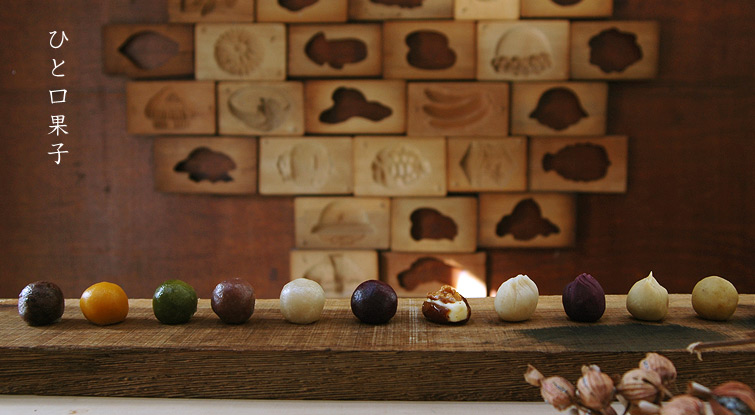
Japanese interior design has always stood out for its simplicity and harmony, achieving an environment full of tranquility, privacy and hospitality. If we add the delicious taste with whom they like to delight sweets and we place it in the modern times, we fully understand the philosophy of Higashiya. This Japanese company is focused on creating and selling Japanese sweets and accessories. It has 3 locations in Tokyo (Ginza, Ori and Man), each one proposes a different interior solution but fully coherent with the image, experience and philosophy of the brand, shared even in their online store.

Higashiya Ginza: besides the display and sales area, there is a traditional Japanese tea room for 50 people. The white and light wood invade the space, ordered by geometric shapes and delicately lit with natural light in the counter and tiny touches of light along the proposed route to follow until the tea room.

Ori Higashiya: known for its glass facade and a wall with a mosaic of geometrically folded waxed paper. It has a bar with wide stools and an area where they sell waxed paper to decorate boxes or to write messages of courtesy when sweets are given on special occasions.

Higashiya Man: a small kiosk surrounded by luxury stores with a cut curtain that shows the logo waved in the wind. Notable for its small format and harmonious use of all linear, neatly organized with the help of wooden crates.

The company strives to create a elegant and artisanal packagings and accessories, emphasizing its clear intention of preserving the beauty of tradition with modern simplicity. Impregnates with delicacy and love all the sweets, boxes, memorial cards and spaces, and manages to convey it in their online store. A sweet pleasure that Josep Ferrando has recommended to us.

—-

El interiorismo japonés siempre ha destacado por su sencillez y armonía, consiguiendo ambientes llenos de tranquilidad, privacidad y hospitalidad. Si lo sumamos al gusto exquisito con el que les gusta deleitar dulces y lo enmarcamos en la modernidad, entendemos perfectamente la filosofía de Higashiya. Esta compañía japonesa se centra en la creación y venta de dulces japoneses y accesorios. Dispone de 3 locales en Toquio (Ginza, Ori y Man), cada uno propone una solución de interiorismo distinta pero totalmente coherente con la imagen, experiencia y filosofía de la marca, compartida incluso en su tienda online.

Higashiya Ginza: además de la zona de muestra y venta, dispone de un salón de té tradicional japonés para 50 personas. El blanco y la madera clara invaden el espacio, ordenado por formas geométricas y iluminado delicadamente con luz natural en el mostrador y con pequeños toques de luz a lo largo del recorrido que propone seguir hasta el salón de té.

Ori Higashiya: destaca por su fachada de cristal y por su pared con un mosaico de papel encerado doblado geométricamente. Dispone de una barra de anchos taburetes y de una zona en la que venden papel encerado para decorar las cajas o bien, para escribir mensajes de cortesía al entregar dulces en una ocasión especial.

Higashiya Man: un pequeño quiosco rodeado de grandes tiendas de lujo con una cortina cortada que muestra el logotipo ondeado por el viento. Destaca por su reducido formato y el aprovechamiento armonioso de todo el lineal, organizado cuidadosamente con la ayuda de cajones de madera.  

La compañía se esfuerza en crear unos packagings y complementos elegantes y artesanales, enfatizando su clara vocación por preservar la belleza de lo tradicional junto a la simplicidad de lo moderno. Impregna de delicadeza y cariño todos sus dulces, cajas, tarjetas conmemorativas y espacios, y logra transmitirlo en su tienda virtual. Un placer muy dulce que Josep Ferrando nos la haya recomendado.

Higashiya sweets via higashiya-shop.com

Wow Effect of L’Eclaireur

L’Eclaireur Place Des Victoires -Hérold (Paris) via http://www.leclaireur.com

L’Eclaireur Place Des Victoires -Hérold (Paris) via http://www.leclaireur.com

L’Eclaireur Place Des Victoires -Hérold (Paris) via http://www.leclaireur.com

The Wow Effect is the reaction that produces a space where we live a unique and memorable brand experience. It’s an emotional rush that invades your senses and makes you want to return there. This time, we introduce a recommendation of our collaborator Josep Ferrando.

Who & Where: L’Eclaireur at 10 Rue Hérold 75001, PARIS (Tel. 00 33 140 41 09 89). www.leclaireur.com

About its products and services: They are pioneers in unconventional distribution of exclusive fashion and design, always caring for innovation and good taste. Recreate unique spaces and select their products according to non-biased trends, satisfying the needs and expectations of its visitors with amazing odds, far away from the banality and superficiality.

How: An eighteenth-century manor house near Victoria Square without window, nor label, nor access from the street, takes us into a universe that mixes fashion, art and design and make your visit an experience that invades the five senses. Classical music and the game of lighting, through a central skylight, is combined with glass cases and animal sculptures that transport us into a museum of the coming trends. The staff, stylists in capital letters, accompany you without pressure and with delicacy. Wood, stone and glass surround the space so that the visitors feel part of a story where the creators are the protagonists. In 2005 was recognized by Goldman Sachs as the most original luxury establishment in the world. In this link you can watch a video of the space.

Wow Effect: 9/10

—-

El efecto WOW es la reacción que nos produce un espacio en el que vivimos una experiencia de marca única y memorable. Es un ajetreo emocional que nos invade los sentidos y hace que queramos volver. Esta vez presentamos una recomendación de nuestro colaborador Josep Ferrando.

Quién y dónde: L’Eclaireur en 10 Rue Hérold 75001, PARÍS (Tel. 00 33 140 41 09 89). www.leclaireur.com

Sobre sus productos y servicios: Son pioneros en la distribución no convencional de moda exclusiva y diseño, partiendo siempre desde la innovación y el buen gusto. Recrean espacios únicos y seleccionan sus productos según las tendencias no tendenciosas, satisfaciendo las necesidades y expectativas de sus visitantes con apuestas sorprendentes, muy lejos de la banalidad y la superficialidad. 

Cómo: Una casa señorial del siglo XVIII cerca de Plaza Victoria sin escaparate, ni rótulo, ni acceso desde la calle, nos adentra a un universo que mezcla la moda, el diseño y el arte y convierte su visita en una experiencia que invade todos los sentidos. La música clásica y los juegos de luces, gracias a una claraboya central, se combina con vitrinas y esculturas animales que nos transportan a un museo de las próximas tendencias. El personal, estilistas con mayúsculas, te acompañan sin presión y con exquisitez. La madera, la piedra y el cristal envuelven el espacio para que el visitante sea parte de una historia en la que los creadores son los protagonistas. En 2005 obtuvo el reconocimiento de Goldman Sachs como el establecimiento de lujo más original del mundo. En este link podréis descubrir el espacio en vídeo.

Efecto Wow: 9 / 10