Slow Shopping

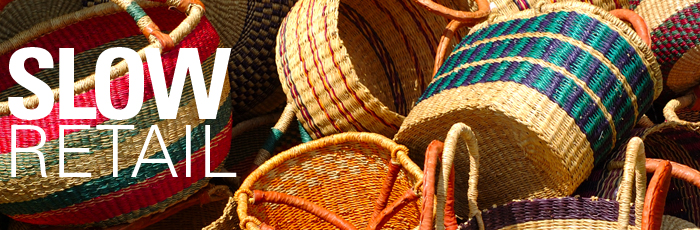
Last Friday 20 we read on La Contra of  La Vanguardia an interview with Pier Giorgio Olivetti, a citizen of the slow movement that explained their bet for the continuity of crafts and artisans through citizen involvement. This is the case of the Italian town Abbiategrasso  and more than 150 other towns and cities that join to this philosophy of stopping globalization and homogenization by calming the daily grind. This does not preclude the adoption of new technologies and innovation to enrich processes and approach bidirectionally consumers and producers.

Despite not being able to support on scale economies, slow trade promotes special attention and customer care that generates social value due to proximity and customization. Aspects that compensate their higher price in the market, ensuring the minimal involvement of intermediaries and a fair treatment for the producer’s job and the employees in the process.

Creating spaces for dialogue and exchange of knowledge that contribute to form and to build an enjoyed and conscious lifestyle , we can bet for the transmission of values beyond the simple selling process.

One can escape from the express buying trends by creating shops to delight consumers with having a great and friendly time by a differential brand concept. This may be a highly valid ( and successfully) strategy to not only gain a foothold in the market but to earn the fidelity and the loyalty of our customers and even suppliers.

In this link, you will find a list of some slow international trades through the site slowretail.com.

—-

El pasado viernes 20 leíamos en La Contra de La Vanguardia una entrevista a Pier Giorgio Olivetti, un ciudadano del movimiento slow que hablaba de cómo se había apostado por  la continuidad de oficios y artesanos gracias a la involucración ciudadana. Es el caso del municipio italiano de Abbiategrasso como de otras 150 más ciudades y barrios que se suman a esta filosofía de frenar la globalización y homogeneización calmando el ajetreo cotidiano. Todo ello no impide la incorporación de nuevas tecnologías e innovación para ayudar a enriquecer los procesos y acercar de forma bidireccional al consumidor y al productor.

A pesar de no poder respaldarse tanto en economías de escala, el comercio slow promueve una atención y cuidado del cliente que genera valor social gracias a la proximidad y la personalización. Aspectos que compensan su mayor precio en el mercado, garantizando la mínima participación de intermediarios y el trato justo del trabajo del productor como de los empleados en el proceso.

Creando espacios de diálogo e intercambio de conocimiento que contribuyen a formar y dar cabida a un estilo de vida disfrutado y consciente, podemos apostar por la transmisión de valores más allá del simple proceso de venta.

Uno puede escapar de las tendencias de compra exprés creando comercios en los que deleitar a los consumidores con pasar un rato agradable y amable gracias a un concepto de marca diferencial. Esta puede ser una estrategia muy válida (y exitosa) para no sólo hacerse un hueco en el mercado, sino ganarse la fidelidad y la lealtad de nuestros consumidores e incluso, nuestros proveedores.

En este link, podréis encontrar un listado de algunos comercios slow a nivel internacional gracias al site de slowretail.com .

K-facts in retail experience #1 // Factores clave en la experiencia en retail #1

Consumer buying habits are diversifying every day by changing their patterns of loyalty and their constant concerns seeking new formats and feelings. They are looking for where to buy their products and/or services in new emotional scenarios that assert their purchasing decisions.

We must be sensitive in identifying and analyzing which are the channels of contact with him and how we can create a special brand experience with our customer.

The K-facts that Brandcelona® proposes for such analysis are a triple i combination (iii):

· Identify: provide our business in a corporate visual identity, evolving your product and service delivery, being genuine and able to connect emotionally with the consumer.

· Innovate: develop new differential strategies for positioning and promotion targeting the different public profile of your business.

· Interest: be able to tell a story that explains the universe of your business, connecting with their sensitivity to capture their attention and loyalty.

In the next K-facts in retail experience posts we will show the correct application and interpretation of the iii applied to different sectors.

—-

Los hábitos de compra del consumidor se diversifican cada día cambiando sus patrones de lealtad y sus inquietudes constantes de búsqueda de nuevos formatos y sensaciones. Buscan donde adquirir sus productos y/o servicios, en nuevos escenarios emocionales que afirmen sus decisiones de compra. 

Debemos ser sensibles en la identificación y análisis de cuáles son los canales de contacto con él y cómo podemos crear una experiencia de marca especial con nuestro cliente.

Los K-facts que Brandcelona® propone para tal análisis son una combinación triple de i (iii):

· Identificar: Dotar a nuestro negocio de una identidad visual corporativa, de producto y de prestación de servicio, genuino y capaz de conectar emocionalmente con el consumidor.

· Innovar: Desarrollar nuevas estrategias diferenciales de posicionamiento y promoción para los distintos perfiles de público de nuestro negocio. 

· Interesar: Ser capaces de transmitir una historia a través de la cual se explique el universo de nuestro negocio, que conecte con su sensibilidad para captar su atención y fidelizar su acción.

En próximos posts sobre K-facts in retail experience mostraremos cuál debería ser la correcta aplicación e interpretación de las iii aplicadas a diversos sectores.

Views of the 20th century: Baudrillard // Lecturas del s.XX: Baudrillard

For a better understanding and to complete all those elements linked to the brand experience that influence the buying process, we will count with the collaboration of experts that will introduce concepts that will improve our business development, from different disciplines and points of view. Today we are pleased to introduce a text of Insik W. Yoon, sociologist.

Baudrillard said that the logic of the consumer society is fundamentally a process of classification and differentiation, ie a logic inscribed in a hierarchy of social statutes that filters and selects groups from top to bottom. Model groups establish an order of difference that submits and relativizes all consumer behaviors, but lived as free individual choice.

We consume not only products and services, but signs or marks that we classify and differ in social terms. In this way, consumption works both as a process of meaning and communication, in which the sign or the mark is likely to be consumed even before the object it represents (eg merchandising).

Through advertising and mass media, objects report and suggest our behaviors. Objects specified by their brands are laden with connotations of differentiation, prestige and fashion. Consumption is a part of this process based in this learned code that disciplines and domestiques ourselves. Finally, the unlimited nature of consumption generates scarcity, and the result is the institutionalization of deficiency as a productive force.

I.W.Y.
Ego Consumans

—-

Para completar y entender mejor todos los elementos vinculados a la experiencia de marca que inciden en el proceso de compra, contaremos con la colaboración de expertos que nos irán introduciendo, desde distintas disciplinas y visiones, conceptos que nos ayudarán a construir mejor nuestro negocio. Hoy estamos encantados de presentaros un texto de Insik W. Yoon, sociólogo.

Decía Baudrillard que la lógica de la sociedad de consumo es fundamentalmente un proceso de clasificación y de diferenciación, es decir una lógica inscrita en una jerarquía de estatutos sociales que filtra y selecciona los grupos de arriba hacia abajo. Los grupos modelos instauran un orden de la diferencia que se somete y relativiza todos los comportamientos consumidores, vividos sin embargo como libres opciones individuales.

Consumimos, además de productos y servicios, signos o marcas que nos clasifican y diferencian en el plano social. De este modo, el consumo funciona a la vez como un proceso de significación y de comunicación, en el que el signo o la marca es susceptible de ser consumida incluso antes que el objeto que la representa (ej: merchandising).

A través de la publicidad y los mass media, los objetos nos informan y sugieren nuestros comportamientos. Los objetos especificados por sus marcas están cargados de connotaciones de diferenciación, de prestigio y de moda; el consumo es un proceso que se inscribe dentro de este código aprendido que nos disciplina y domestica. Finalmente, el carácter ilimitado del consumo genera escasez, y el resultado es la institucionalización de la carencia como fuerza productiva.

I.W.Y.
Ego Consumans

City to City 2012 edition calls for submissions // City to City Edición 2012 convocatoria abierta

From Brandcelona you are encouraged to participate in the new edition of the City to City organized by the FAD. This is to promote all those social, architectural, educational, urban and even commercial initiatives, able to transform a city and its inhabitants.

In the post Transforming The Boroughs Through Trade we talked about this type of exemplary solutions that by the means of inclusion and social cohesion improve our way and space of living.

The valuation criteria of the City to City 2012 rely on processing capacity, simplicity, relevance, innovation, advance ability, the social component, the durability and sustainability.

In this way, the award pursues Barcelona’s famous quote of «making city» through a multidisciplinary approach, so necessary to deal globally with the different scenarios of a city.

You can submit your applications on this link or send it to those you consider appropiate. Submissions are open until February 29.

—-

Desde Brandcelona os animamos a concursar en la nueva edición del City to City organizado por el FAD. Se trata de impulsar todas aquellas iniciativas sociales, arquitectónicas, educacionales, urbanísticas e incluso comerciales, con capacidad de transformar una ciudad y sus habitantes.

En el post Transforming Boroughs Through Trade ya hablamos sobre este tipo de soluciones ejemplares que a partir de la inclusión y la cohesión social consiguen mejorar nuestra forma y espacio de vida.

Los criterios de valoración del City to City 2012 se basan en la capacidad de transformación, la simplicidad, la trascendencia, la innovación, la capacidad de anticipación, el componente social, la perdurabilidad y la sostenibilidad.

De este modo, el premio persigue la famosa cita barcelonesa de «hacer ciudad» mediante la pluridisciplinariedad, tan necesaria para abordar los diferentes escenarios de la ciudad de una forma global.

Podéis presentar vuestras candidaturas en este link o bien hacerlo llegar a quien consideréis oportuno. La convocatoria está abierta hasta el 29 de febrero.

20120116-210100.jpg

About Rendering Authenticity // Sobre suministrar autenticidad

Joseph Pine (TED 2004)

Authenticity is becoming the new consumer sensibility and what makes us happy is spending our time and our money satisfying the desire for this authenticity.

Joseph Pine is a writer and a consultant to entrepreneurs and executives. In this link you will find his TED’s Bio .

Also he is the co-author of the book ‘The Experience Economy: Work Is Theater & Every Business a Stage’ (1999) that exposes that consumers are now buying experiences rather than goods or commodities.

—-

La autenticidad se está convirtiendo en la nueva sensibilidad de los consumidores y lo que nos hace felices es gastar nuestro tiempo y dinero satisfaciendo nuestro deseo por esta autenticidad.

Joseph Pine es escritor y consultor de emprendedores y ejecutivos. En este link podéis encontrar su biografía en TED.

También es el co-autor del libro ‘The Experience Economy: Work Is Theater & Every Business a Stage’ (1999) en el que expone que los consumidores ahora compran experiencias en vez de mercancías y productos.

‘Life is Cool’ introduces a new concept of retail: the ‘shoproom’ // ‘La Vida es Chula’ introduce un nuevo concepto de comercio: la ‘shoproom’

'La Vida es Chula' via Desigual's blog

Desigual launches the project ‘Life is Cool’, a shop and a showroom. Presents a new way of selling clothes transforming its old design offices on the 33 Casp street in Barcelona. Eight hundred square meters that recreates 25 micro-scenarios of collections featuring over a thousand of articles of the brand.

But this is not the most amazing thing: the customer makes his purchase order through an iPad, and if you want more information or a style advice can be assisted by personal shoppers. Also they don’t make you carry your purchases because they send them home for free within 48 hours.

A project that invites to enter into the creative universe of Desigual in a kind of design atelier that includes catwalks and art installations.

—–

Desigual inaugura el proyecto ‘La Vida es Chula’, una tienda y un showroom. Presenta una nueva forma de vender ropa transformando sus antiguas oficinas de diseño en la calle Caspe 33 de Barcelona. Ocho cientos metros cuadrados que recrean 25 micro-escenarios de colecciones presentando más de mil prendas de la marca.

Pero esto no es lo más sorprendente: el cliente hace su pedido de compra mediante un iPad, y si quiere conocer más información o un consejo de estilismo puede ser atendido por personal shoppers. Además no te hacen cargar con tus compras porque te las envían  a casa gratis en menos de 48 horas.

Un proyecto en el que se invita a adentrarse en el universo creativo de Desigual en una especie de design atelier que incluye desfiles y exposiciones de instalaciones artísticas.

'La Vida es Chula' via Desigual's blog

La Vida

'La Vida es Chula' via Desigual's blog

La Vida

'La Vida es Chula' via Desigual's blog

5 recommended books to start 2012 // 5 libros recomendados para empezar el 2012

1. Branding a Store: How to Build Successful Retail Brands in a Changing Marketplace (by Ko Floor, 2010)

Construction and brand strategy in the future of retail market to help to be competitive through differentiation. Only in English.

Construcción y estrategia de marca en el futuro del mercado del comercio para ayudar a ser competitivo a través de la diferenciación. Sólo en inglés.

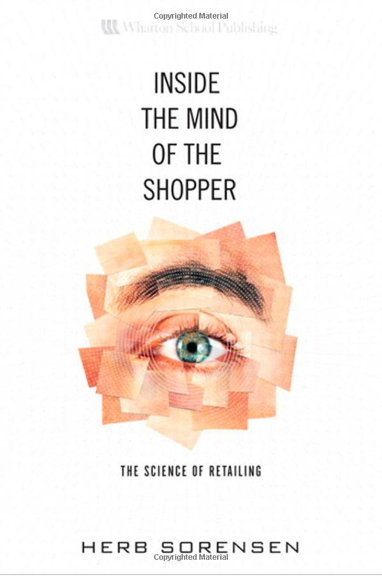
2. Inside the Mind of the Shopper: The Science of Retailing (by Herb Sorensen, 2009)

About what the consumer thinks in a retail space, what catches its attention or what perceives. Only in English.

Sobre qué piensa el consumidor dentro de un espacio comercial, qué capta su atención o qué percibe. Sólo en inglés.

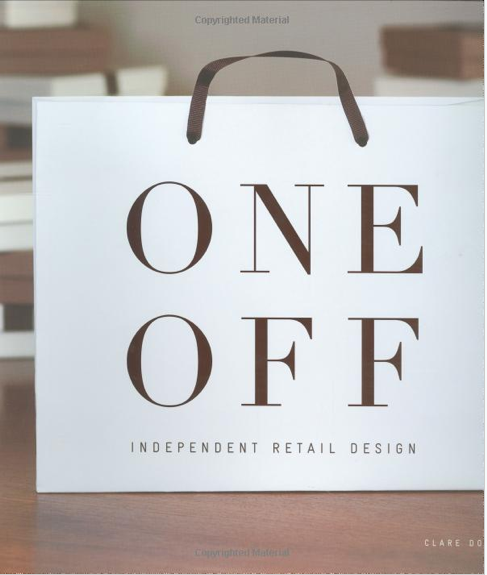
3. One Off: Independent Retail Design (by Clare Dowdy, 2008)

Visual trendy examples on independent retail projects. Only in English.

Ejemplos visuales y de tendencia sobre proyectos de retail independientes. Sólo en inglés.

4. Dayketing: ¡Hoy es un gran día para vender más! (by Luiggi Sarrias, 2010)

About how actions and commercial promotions play a key role in the planning of dates or appointed days in the consumer’s schedule. Only in Spanish.

Sobre cómo las acciones y promociones comerciales juegan un rol clave en la planificación de fechas o días señalados en el calendario del consumidor. Sólo en español.

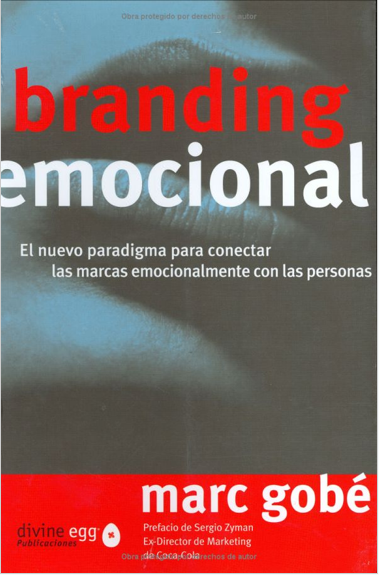
5. Branding Emocional: El Nuevo Paradigma para Conectar las Marcas Emocionalmente con las Personas (by Marc Gobé, 2005)

Emotional brand experience, how through the senses and feelings can a brand grow globally and universally. Only in Spanish.

Experiencia de marca emocional, cómo a través de los sentidos y las sensaciones puede crecer una marca de forma global y universal. Sólo en español.

Launching brandcelona.com

www.brandcelona.com

Today we introduce Brandcelona’s fresh launching site. An easy way to keep in touch with the latest trends and news in the retail sector and the brand experience.

—–

Hoy presentamos la página de lanzamiento de Brancelona acabada de salir del horno. Una forma fácil de mantenerse en contacto con las últimas tendencias y noticias en retail y en experiencia de marca.

Wow Effect of Nani Marquina

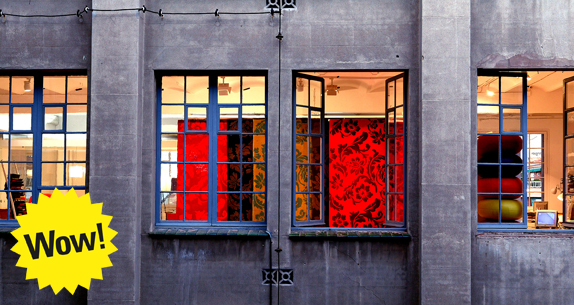
The Wow Effect is the reaction that produces a space where we live a unique and memorable brand experience. It’s an emotional rush that invades your senses and makes you want to return there.

Who & Where: Nani Marquina at Rosselló, 256 / Av. Diagonal, BARCELONA (Tel. 0034 934 871 606). www.nanimarquina.com

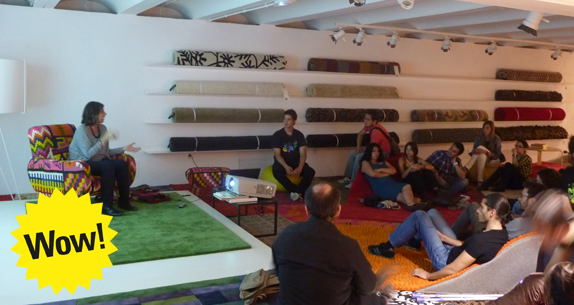
About its products and services: Reinvention of the rug through contemporary design and innovative combination of textures, shapes and colors. It offers an experience where customers can interact with the rug while meets its provenance. Opts for collaborative collections and socially conscious design.

How: Offers leisure and cultural activities in which they interact and learn about their customers, such as workshops for children and cooking lessons. Exhibition of the product as an artistic piece, placing it vertically in the wall while explaining its philosophy. Opting for customer service staff empowered with an extensive knowledge of design and great connoisseurs of the product and its features.

Wow Effect: 9/10

—-

El efecto WOW es la reacción que nos produce un espacio en el que vivimos una experiencia de marca única y memorable. Es un ajetreo emocional que nos invade los sentidos y hace que queramos volver.

Quién y dónde: Nani Marquina at Rosselló, 256 / Av. Diagonal, BARCELONA (Tel. 0034 934 871 606). www.nanimarquina.com

Sobre sus productos y servicios: La reinvención de la alfombra a través del diseño contemporáneo y una innovadora combinación de texturas, formas y colores. Ofrece una experiencia donde los clientes pueden interactuar con la alfombra, mientras conocen su procedencia. Opta por las colecciones colaborativas y el diseño con consciencia social.

Cómo: La oferta de actividades culturales y lúdicas en los que interactuar y aprender sobre sus clientes, tales como talleres para niños y clases de cocina. Exposición del producto como una obra artística, colocándola verticalmente en la pared mientras explica su filosofía. Optando por personal de servicio al cliente con un amplio conocimiento de diseño y grandes conocedores del producto y sus características.

Efecto Wow: 9 / 10