I’ll see you in London! // ¡Nos vemos en Londres!

For a better understanding and to complete all those elements linked to the brand experience that influence the buying process, we will count with the collaboration of experts that will introduce concepts that will improve our business development, from different disciplines and points of view. Today we are pleased to introduce a text of Alexandra Gunnarsson, designer and conceptualizer.

I would not have expected myself to write about a mall, since I am quite anti these complexes. I find them crowded, stressful and filled with a lack of individuality. Everything is merged in to a couple of layers  placed on each other, defined as floors. They all tell a similar story!

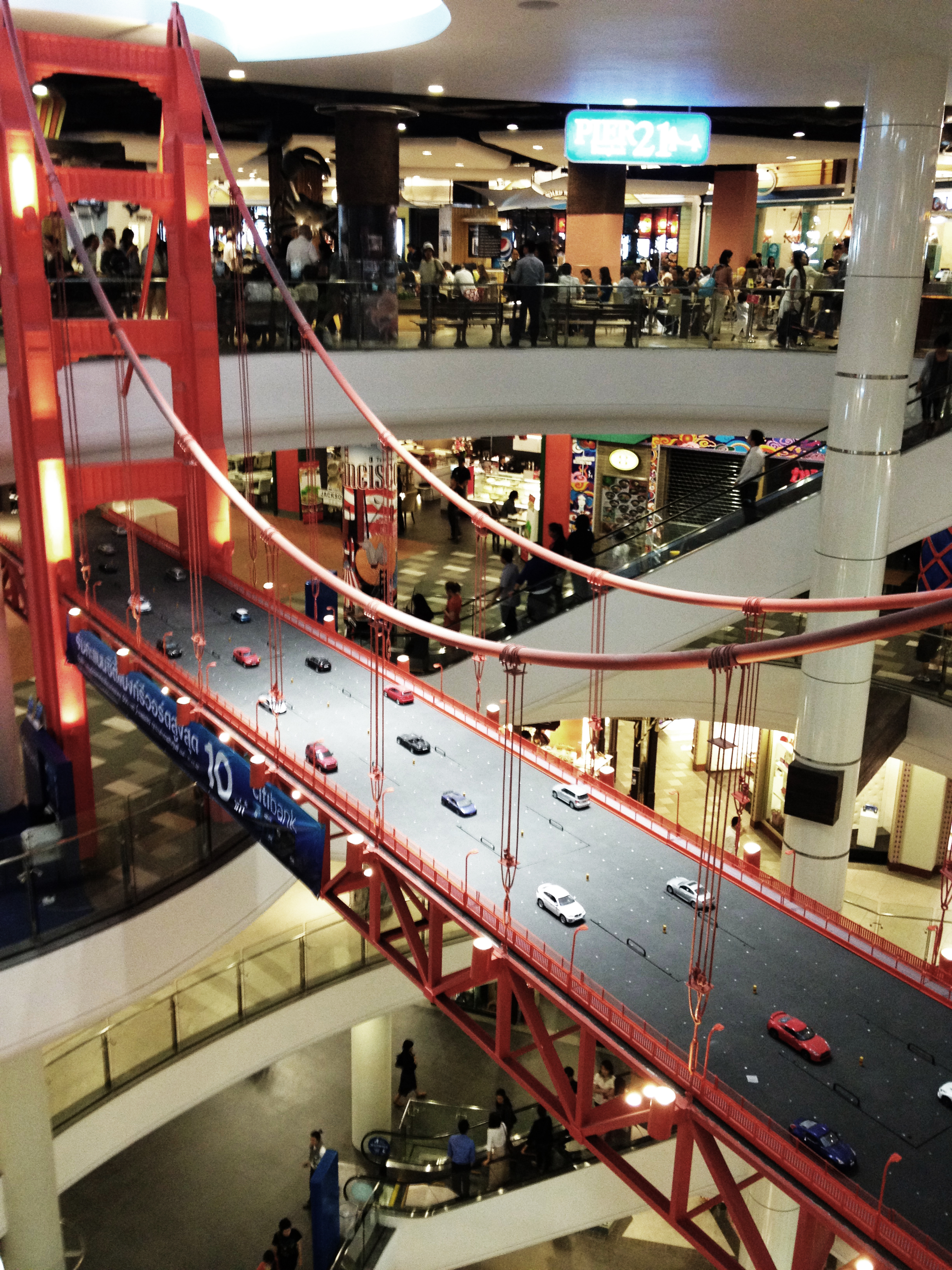
Well, not all of them… One of them mirrors the value of global diversity. It is called Terminal 21, located where Sukhumvit meets Asok in Bangkok, Thailand. I would describe it as a replication of shopping experiences on distance. You enter the terminal and by that action you are leaving Bangkok for a while. Each an every escalator takes you to a new spot on earth. You are being taken all the way from Tokyo to Istanbul, followed by Rome, Paris and London. Taken even further all the way to the Caribbean Islands, followed by a quick stop in L.A. And of course finalizing the trip with a classic shot at the Golden Gate.

It is tastefully crowded with boutiques that are typical for just that city that you’re visiting. The layout of the floors reflects a general visual interpretation of these places. So, it is not all about the shopping, it is about the adventure of it… The experience. For instance, when you actually go to one of these cities, you don’t necessarily remember the shopping itself but rather the journey of it. Please think about it. What do you really remember? One might call it superficial… But the essence of Terminal 21 is a physical reflection of globalization. Its a routine, an all day event… Imagine yourself visiting IKEA for a day with the family. Pit stops at all sections and floors. But at Terminal 21 you would not say… I’ll see you on the 2nd floor. No, you would, say,  –  I’ll see you in London!

—-

Para completar y entender mejor todos los elementos vinculados a la experiencia de marca que inciden en el proceso de compra, contaremos con la colaboración de expertos que nos irán introduciendo, desde distintas disciplinas y visiones, conceptos que nos ayudarán a construir mejor nuestro negocio. Hoy estamos encantados de presentaros un  texto de Alexandra Gunnarsson, diseñadora y conceptualizadora.

No me hubiera imaginado nunca escribiendo sobre un centro comercial, ya que soy bastante contraria a esos complejos. Siempre están llenos de gente, me estresan y predomina la falta de individualidad. Todo se combina en un par de capas colocadas una sobre la otra, definidas como plantas. Todos cuentan una misma historia!

Bien, no todos…Uno de ellos refleja el valor de la diversidad global. Se llama Terminal 21, ubicado en Sukhumvic con Asok en Bangkok, Tailandia. Yo lo describiría como una réplica de la experiencia de marca en la distancia. Nada más entrar a la terminal, vuelas lejos de Bangkok durante un rato. Cada una de las escaleras mecánicas te transporta a un lugar distinto del mundo. Viajas desde Tokio hasta Istanbul, pasando por Roma, París y Londres. Vas aún más lejos llegando a las islas del Caribe, haciendo una parada rápida en Los Ángeles y acabando tu vuelta al mundo con la clásica foto frente el Golden Gate.

Está lleno de boutiques con buen gusto que son típicas según la ciudad que estés visitando. La distribución de las plantas refleja una interpretación visual general de estos lugares. Por lo que no tiene que ver con las compras, se trata de la aventura de hacerlas … La experiencia. Por ejemplo, cuando visitas una de esas ciudades, no necesariamente recuerdas las compras en sí, sino más bien el recorrido de ellas. Por favor, piensa en ello. ¿Qué es lo que realmente recuerdas? Se podría llamar superficial… Pero la esencia de la Terminal 21 es un reflejo físico de la globalización. Es una excursión, un evento de todo un día … Imagínese visitar IKEA un día entero con la familia, deteniéndose en todas las secciones y pisos. Y sin embargo, en Terminal 21 no diría «Nos vemos en la 2 ª planta». No, sería: » ¡Nos vemos en Londres!»

Terminal 21 Mall (Bangkok) via sukhumvit.org

Golden Gate in Terminal 21 via bangkok101.com

London Bus at Terminal 21 Mall via marilil.files.wordpress.com

Terminal 21 Mall via cre8tivelifestyle.com

What you should pay attention to in a retail tour // En qué debes fijarte en un retail tour

When you are participating in a retail tour there are some aspects at which we must attend if we want to have an ordered and structured image of the spaces that have been visited and their positioning. These are the most important points to consider in each of the stops of a retail tour:

Space: the placement, architecture, interior design, lighting, size and distribution, signaling and signage for indoor and outdoor, the inner journey … The continent is as important as the content.

Creativity: how are the products / services displayed, how are processes articulated, how are innovation and new trends driven and how they meet the visitor. Creativity is in  details, work it at all levels to be consistent and decisive.

Brand: the brand and its universe must be present and identifiable through the whole space. Since the user turns the street of the store until he gets home with his purchase.

The concept: every space should focus on a strategic concept to improve its ranking. The concepts related to emotions create personal links with users and provide information about their concerns and needs.

Service / product: it must be the star of the stage and fit in it perfectly. Knowing well what we sell and why will help us find the best way to present it.

Materials: cover the walls, floors and ceilings and through them we can convey many feelings. The warmth of wood in contrast to the cold metal. Each sector has its own codes and should not be used to try to dislodge the visitor.

The context: integrating into the context is sometimes as important as being out of it. However, analyzing and comparing the brand experience will always give us the keys to work it more effectively.

The vision: dynamism and future alternatives should be explored to conceive the space as a long-term strategy. It is important to determine where the business must go and how to get there. It is likely that your users can give clues about what to expect from your brand so interact with them and listening carefully.

The sum of all these aspects will give us a clear and comprehensive overview on the development and design and will allow us to compare each of the visits under the same guidelines. If you had to choose one that for you has more influence on the decision to enter an establishment, what aspect will you choose?

Brandcelona advises and monitors the highlights to design and develop spaces, sets and environments. Do not hesitate to contact us at info@brandcelona.com to study the best alternatives and plan how to carry them out in your establishment. 

—-

Al hacer un retail tour existen diversos puntos en los que debemos prestar atención con el fin de poder tener una imagen ordenada y estructurada de los espacios que se han visitado y su posicionamiento. Estos son los puntos más importantes a tener en cuenta en cada una de las paradas de un retail tour:

El espacio: la ubicación, la arquitectura, el interiorismo, la iluminación, el tamaño y la distribución, la señalización y rotulación tanto exterior como interior, el recorrido interior…El continente es tan importante como el contenido.

La creatividad: cómo se exhiben los productos /servicios, cómo se articulan los procesos, cómo se impulsan la innovación y las nuevas tendencias y cómo se atiende al visitante. La creatividad está en los pequeños detalles, trabajarla a todos los niveles permitirá a una marca ser coherente y resolutiva.

La marca: la marca y su universo debe estar presente e identificable en todo el espacio. Desde que el usuario llega a la calle del espacio hasta que llega a casa con su compra.

El concepto: todo espacio debe focalizarse en un concepto estratégico para mejorar su posicionamiento. Los conceptos vinculados a emociones crearán vínculos más personales con los usuarios y permitirán conocer mejor sus inquietudes y necesidades.

Servicio / producto: debe ser la estrella del escenario y encajar perfectamente en él. Conocer bien qué vendemos y porqué ayudará a encontrar la mejor forma para presentarlo.

Los materiales: cubren paredes, suelos y techos y a través de ellos podemos transmitir numerosas sensaciones. La calidez de la madera, contrasta con el frío del metal. Cada sector tiene sus propios códigos y deben tratar de utilizarse para no desubicar al visitante.

El contexto: integrarse en el contexto es a veces tan importante como salir de él. En cualquier caso, analizarlo y compararlo con la experiencia de marca siempre nos dará las claves para trabajarlo más eficazmente.

La visión: el dinamismo y las alternativas de futuro de un espacio deben estudiarse como una estrategia a largo plazo. Es importante determinar hacia dónde quiere ir un negocio y cómo llegar a ello. Es muy probable que tus usuarios puedan darte pistas sobre qué esperan de tu marca así que interactúa con ellos y escúchales.

La suma de todos estos aspectos nos dará una imagen clara y completa sobre el establecimiento y su diseño y nos permitirá comparar cada una de las visitas sobre unas mismas guías. Si tuviérais que escoger uno que a nivel personal os influye más en la decisión de entrar a un establecimiento, con qué aspecto os quedarías?

Brandcelona asesora y monitoriza los aspectos más destacados para diseñar y concebir espacios, escenografías y ambientes. No dudes en contactarnos en info@brandcelona.com para que estudiemos las mejores alternativas y planificar cómo llevarlas a cabo en tu establecimiento.

The user experience // La experiencia del usuario

User experience (UX) is defined as the perceptions and responses of a person as a result of using or anticipated usage of a product, system or service, as defined by ISO 9241-210. However, in practice, user experience consists of all interactions that a user has with a brand, company or organization and therefore affect all products, systems and services related to it.

Can we be leaders in new technologies having unskilled employees? Can we boast modern design without worrying about the packaging of our products? Can we spend a lot of resources in offering a friendly communication with the user and then have a bad telephone service? The answer is clear, of course we can, but we are neither coherent nor consistent with the user experience.

In the era of participation and two-way conversations, the user experience becomes a critical point to compete for attention, now and in the future, warning the social recommendation and loyalty. To design the user experience is important to invest a lot of empathy and take a holistic view of the brand that must be present in every detail. From Brandcelona, we understand that the best way of channeling the user experience of a brand is contextualizing all the agents that compose it from the emotional and rational side. Both solutions allow us to offer corporate, operational and emotional strategies allow us to engage customers over time.

A few days ago we tweeted an article on the Spanish newspaper El País on the closure of stores in Facebook of large e-tailers as his followers weren’t turning into buyers. Followers are content producers and users, but to turn them into buyers they must feel they are getting benefits and earnings also attractive for them. A win-win relationship in which both sides win. The same applies to user experience: needs to be designed by a positive strategy that generates value for the brand and for the user and must be seen in all supports and channels of our brand.

Brandcelona retail consulting can advise you on the most important elements to design a great user experience on your brand. Do not hesitate to contact us at info@brandcelona.com so we can study your best alternatives and plan how to carry them out in your business plan.

—-

La experiencia del usuario (UX) se define como las percepciones y respuestas de una persona como resultado del uso o uso anticipado de un producto, sistema o servicio, según define la ISO 9241-210. No obstante, en la práctica, la experiencia del usuario está compuesta por todas las interacciones que un usuario tiene con una marca, compañía u organización y por lo tanto, afectarán a todos los productos, sistemas y servicios relacionados con ésta.

¿Podemos ser líderes en nuevas tecnologías y tener empleados inexpertos? ¿Podemos presumir de diseño vanguardista y despreocuparnos luego del packaging de nuestros productos? ¿Podemos invertir muchos recursos en ofrecer una comunicación amable con el usuario y luego tener un mal servicio de atención telefónica? La respuesta es clara, poder podemos, pero no estaremos siendo ni coherentes ni íntegros con la experiencia del usuario.

En la era de la participación y las conversaciones bidireccionales, la experiencia del usuario se convierte en un punto crítico para captar la atención, ahora y en un futuro, poniendo en la picota la recomendación social y la fidelización. Para diseñar correctamente la experiencia del usuario es importante cargarse de una gran cantidad de empatía y tener una visión holística de la marca que esté presente en todos los detalles. Desde Brandcelona entendemos que la mejor manera de canalizar la experiencia del usuario de una marca es contextualizando todos los agentes que la componen desde la vertiente emocional y racional. Ambas nos permitirán ofrecer soluciones corporativas, operativas y emocionales para generar estrategias de fidelización con nuestros clientes de forma duradera en el tiempo.

Hace unos días tuiteamos una notícia de El País sobre el cierre de tiendas en Facebook de grandes cadenas de Internet pues no conseguían transformar sus seguidores en compradores. Los seguidores son productores y usuarios de contenidos, pero para que se conviertan en compradores deben sentir que están obteniendo ventajas y una utilidad también beneficiosa para ellos. Una relación win-win en la que ambos lados ganan. Lo mismo ocurre con la experiencia del usuario: debe diseñarse mediante una estrategia positiva que genere valor para la marca y para el usuario y debe contemplarse en todos los soportes y canales de nuestra marca.

Brandcelona retail consulting te puede asesorar sobre los aspectos más destacados para diseñar una excelente experiencia de usuario sobre tu marca. No dudes en contactarnos en info@brandcelona.com para que estudiemos las mejores alternativas y planificar cómo llevarlas a cabo en tu plan de negocio.

K-facts in retail experience #1 // Factores clave en la experiencia en retail #1

Consumer buying habits are diversifying every day by changing their patterns of loyalty and their constant concerns seeking new formats and feelings. They are looking for where to buy their products and/or services in new emotional scenarios that assert their purchasing decisions.

We must be sensitive in identifying and analyzing which are the channels of contact with him and how we can create a special brand experience with our customer.

The K-facts that Brandcelona® proposes for such analysis are a triple i combination (iii):

· Identify: provide our business in a corporate visual identity, evolving your product and service delivery, being genuine and able to connect emotionally with the consumer.

· Innovate: develop new differential strategies for positioning and promotion targeting the different public profile of your business.

· Interest: be able to tell a story that explains the universe of your business, connecting with their sensitivity to capture their attention and loyalty.

In the next K-facts in retail experience posts we will show the correct application and interpretation of the iii applied to different sectors.

—-

Los hábitos de compra del consumidor se diversifican cada día cambiando sus patrones de lealtad y sus inquietudes constantes de búsqueda de nuevos formatos y sensaciones. Buscan donde adquirir sus productos y/o servicios, en nuevos escenarios emocionales que afirmen sus decisiones de compra. 

Debemos ser sensibles en la identificación y análisis de cuáles son los canales de contacto con él y cómo podemos crear una experiencia de marca especial con nuestro cliente.

Los K-facts que Brandcelona® propone para tal análisis son una combinación triple de i (iii):

· Identificar: Dotar a nuestro negocio de una identidad visual corporativa, de producto y de prestación de servicio, genuino y capaz de conectar emocionalmente con el consumidor.

· Innovar: Desarrollar nuevas estrategias diferenciales de posicionamiento y promoción para los distintos perfiles de público de nuestro negocio. 

· Interesar: Ser capaces de transmitir una historia a través de la cual se explique el universo de nuestro negocio, que conecte con su sensibilidad para captar su atención y fidelizar su acción.

En próximos posts sobre K-facts in retail experience mostraremos cuál debería ser la correcta aplicación e interpretación de las iii aplicadas a diversos sectores.

‘Life is Cool’ introduces a new concept of retail: the ‘shoproom’ // ‘La Vida es Chula’ introduce un nuevo concepto de comercio: la ‘shoproom’

'La Vida es Chula' via Desigual's blog

Desigual launches the project ‘Life is Cool’, a shop and a showroom. Presents a new way of selling clothes transforming its old design offices on the 33 Casp street in Barcelona. Eight hundred square meters that recreates 25 micro-scenarios of collections featuring over a thousand of articles of the brand.

But this is not the most amazing thing: the customer makes his purchase order through an iPad, and if you want more information or a style advice can be assisted by personal shoppers. Also they don’t make you carry your purchases because they send them home for free within 48 hours.

A project that invites to enter into the creative universe of Desigual in a kind of design atelier that includes catwalks and art installations.

—–

Desigual inaugura el proyecto ‘La Vida es Chula’, una tienda y un showroom. Presenta una nueva forma de vender ropa transformando sus antiguas oficinas de diseño en la calle Caspe 33 de Barcelona. Ocho cientos metros cuadrados que recrean 25 micro-escenarios de colecciones presentando más de mil prendas de la marca.

Pero esto no es lo más sorprendente: el cliente hace su pedido de compra mediante un iPad, y si quiere conocer más información o un consejo de estilismo puede ser atendido por personal shoppers. Además no te hacen cargar con tus compras porque te las envían  a casa gratis en menos de 48 horas.

Un proyecto en el que se invita a adentrarse en el universo creativo de Desigual en una especie de design atelier que incluye desfiles y exposiciones de instalaciones artísticas.

'La Vida es Chula' via Desigual's blog

La Vida

'La Vida es Chula' via Desigual's blog

La Vida

'La Vida es Chula' via Desigual's blog

Brandcelona Ten’s

Brandcelona provides knowledge, advice and methodology as tools aimed at entrepreneurs and heads of departments involved in the development of projects in the sectors of retail, services and customer service. To improve the business management and position it to new needs of a competitive market and meet customer needs.

Brandcelona proporciona el conocimiento, asesoría y metodología como herramientas destinadas a empresarios y responsables de departamento involucrados en el desarrollo de proyectos de los sectores del comercio, servicios y servicios al consumidor. Mejorar la gestión del negocio y posicionarlo en las necesidades del nuevo competitivo mercado y las exigencias de los clientes.

1. LEADERSHIP // LIDERAZGO

Design and innovation can lead to the consolidation and international expansion of the vision of your business model. Those actions and projects that promote this goal of being leaders through differentiation will be key to attract new customers.

El diseño y la innovación pueden encarrilar la consolidación y expansión internacional de su visión de modelo de negocio. Esas acciones y proyectos que promuevan el objetivo de ser líderes mediante la diferenciación serán claves para atraer nuevos clientes.

2. KNOWLEDGE // CONOCIMIENTO

Feeling design and knowing the conditions for a unique retail experience are an insurance to be part of the international market.

Sentir el diseño y conocer las condiciones para una experiencia de retail única son un seguro para formar parte del mercado internacional.

3. GROWTH // CRECIMIENTO PROFESIONAL

With a better understanding of professional development tools you will allow your business to respond to new market realities and the demands of your buyers. Brandcelona wants to offer criteria to its customers for a greater visibility of their business.

Con un mejor entendimiento de las herramientas de desarrollo profesional permitirá que su negocio de respuesta a las nuevas realidades del mercado y a las exigencias de sus compradores. Brandcelona quiere dar criterio a sus clientes para conseguir una mayor visibilidad de su negocio.

4. EXPERIENCE // EXPERIENCIA

Experiences are often reminded when they change our vision of the world. Brandcelona inspires you and gives you the knowledge so you can make your business a great experience.

Las experiencias que recordamos son a menudo las que nos cambian la visión del mundo. Brandcelona te inspira y te da el conocimiento para que puedas hacer de tu negocio una gran experiencia.

5. TRENDS // TENDENCIAS

Flagging a distinctive identity and style that matches or complements the market trends will help them see your business as unique and different.

Marcar un estilo y una identidad característica que se combine o complemente con las tendencias de mercado ayudará a percibir su negocio como único y diferente.

6. SERVICE DESIGN // DISEÑAR EL SERVICIO

Design services for your business and in retail helps to project the brand experience to its customers and differentiate themselves with reputation and loyalty.

Diseñar los servicios empresariales y en el retail ayuda a proyectar la experiencia de marca en sus clientes y diferenciarse con notoriedad y fidelización.

7. CREATIVITY // CREATIVIDAD

Throughout history, the Mediterranean has been the center of an important cultural base of creativity and innovation to meet the constant changes of our society. Today Barcelona is an international design center with a network of design centers recognized outside its borders.

A lo largo de la historia, el Mediterráneo ha sido el centro de una importante base cultural creativa e innovadora para afrontar los cambios constantes de nuestra sociedad. Hoy en día Barcelona, es un centro de diseño internacional con una red de centros de diseño reconocidos fuera de sus fronteras.

8. METHODOLOGY // METODOLOGÍA

Brandcelona provides a system and tools to ensure a process of projection and corporate positioning.

Brandcelona ofrece un sistema y unas herramientas para garantizar un proceso de proyección y posicionamiento corporativo.

9. BRANDING // GESTIÓN DE MARCA

Brands are the main attraction and value of companies. Its position is essential to attract customers and turnover. Brandcelona offers the most effective in achieving branding and positioning.

Las marcas son el principal atractivo y valor de las empresas. Su posicionamiento es básico para atraer clientes y volumen de negocio. Brandcelona ofrece las soluciones más efectivas en la realización y posicionamiento del branding.

10. INNOVATION // INNOVACIÓN

Enhance your business vision with new projection tools and channels to help developing business in an effective and flexible to face the constant changes in our society and technology.

Enriquecer su visión de negocio con nuevas herramientas y canales de proyección que ayuden a desarrollar su negocio de manera eficaz y flexible para afrontar los cambios constantes en nuestra sociedad y en la tecnología.