The Magic in Books // La magia del libro

Chronicle Books Metreon (San Francisco) via chroniclebooks.com

Chronicle Books Second Street (San Francisco) via chroniclebooks.com

Chronicle Books Union Street (San Francisco) via chroniclebooks.com

Chronicle Books is a company in San Francisco devoted to the independent publishing of books and gifts. It has 3 stores located in the SOMA district (South of Market) well-known for the flourishing presence of publishers, design studios and multimedia firms. The firm has taken advantage of all that combination to carry out an original and innovative company that tries to bring the magic of literature and writing to everything it does.

They distinguish their main product with a revealing commitment with new books for adult and children, discovering new authors and recovering the pleasure of giving books. They also have the exclusive distribution rights in the United States of Princeton Architectural Press, PQ Blackwell, Moleskine ®, Blue Apple Books, Quirk Books and Laurence King Publishing.

The proper size of its stores (neither too large nor too small) and the disposition of their products is accompanied by an atmosphere of charm, culture and humor. Products are shown avoiding the crush and the overlapping, optimizing the space with minimalist and functional shelves. Also stands out for its range of postcards and the dynamism achieved through the organization of events such as book signings, cooking workshops and children’s events.

Its concern for sustainability, which is increasingly present in the publishing world, integrates 3 main strategic lines: gresponsible business practices, eco-efficiency of their offices and employee involvement in social causes.

They achieve a great feature of their philosophy and pitch with their communications, for example in their blog. A mixture of images and texts about what they read, what they publish, what makes them laugh and what excites them. Also, their app on Facebook is a clear example of brand experience and creativity, promoting polls, exclusive contents and quizzes. A point of contact between authors, editors and readers that keeps the magic of literature and culture in the online support.

—-

Chronicle Books es una compañía de San Francisco dedicada a la editorial independiente de libros y regalos. Cuenta con 3 tiendas ubicadas en el distrito de SOMA (South of Market) caracterizado por la presencia de numerosas editoriales, estudios de diseño y empresas multimedia. La firma ha sabido aprovechar toda esa conjunción para sacar adelante una compañía innovadora y original que trata de trasladar la magia de la literatura y la escritura a todo lo que hace.

Su principal producto se diferencia por ser una apuesta reveladora de libros para adultos e infantiles, escogiendo exquisitamente sus títulos y formas, descubriendo nuevos autores y recuperando el placer de regalar libros. Además cuentan con los derechos exclusivos de distribución en EUA de Princeton Architectural Press, PQ Blackwell, Moleskine®, Blue Apple Books, Quirk Books y Laurence King Publishing.

El tamaño adecuado de sus tiendas (ni muy grande ni muy pequeño) y la disposición de sus productos se acompaña con una atmósfera de tranquilidad, cultura y humor. Los productos se exhiben evitando la aglomeración y la superposición, optimizando el espacio con estanterías minimalistas y funcionales. Destaca también por su oferta de postales y por el dinamismo que consiguen gracias a la organización de eventos como firmas de libros, talleres de cocina y eventos infantiles.

Su preocupación por la sostenibilidad, factor cada vez más presente en el mundo editorial, integra 3 líneas estratégicas principales: las buenas prácticas empresariales, la eco-eficiencia de sus locales y la involucración de los empleados en causas sociales.

Consiguen una fantástica aplicación de su filosofía y tono en su comunicación, como por ejemplo en su blog. Una mezcla de imágenes y textos sobre lo que leen, lo que publican, lo que les hace reir y lo que les excita. También su app en Facebook es un claro ejemplo de su experiencia de marca y su creatividad, dando lugar a las encuestas, los contenidos exclusivos y los juegos. Un punto de contacto entre autores, editores y lectores que mantiene viva la magia de la literatura y la cultura también en el soporte online.

Feliç Sant Jordi: courage and love // Feliç Sant Jordi: valentía y amor

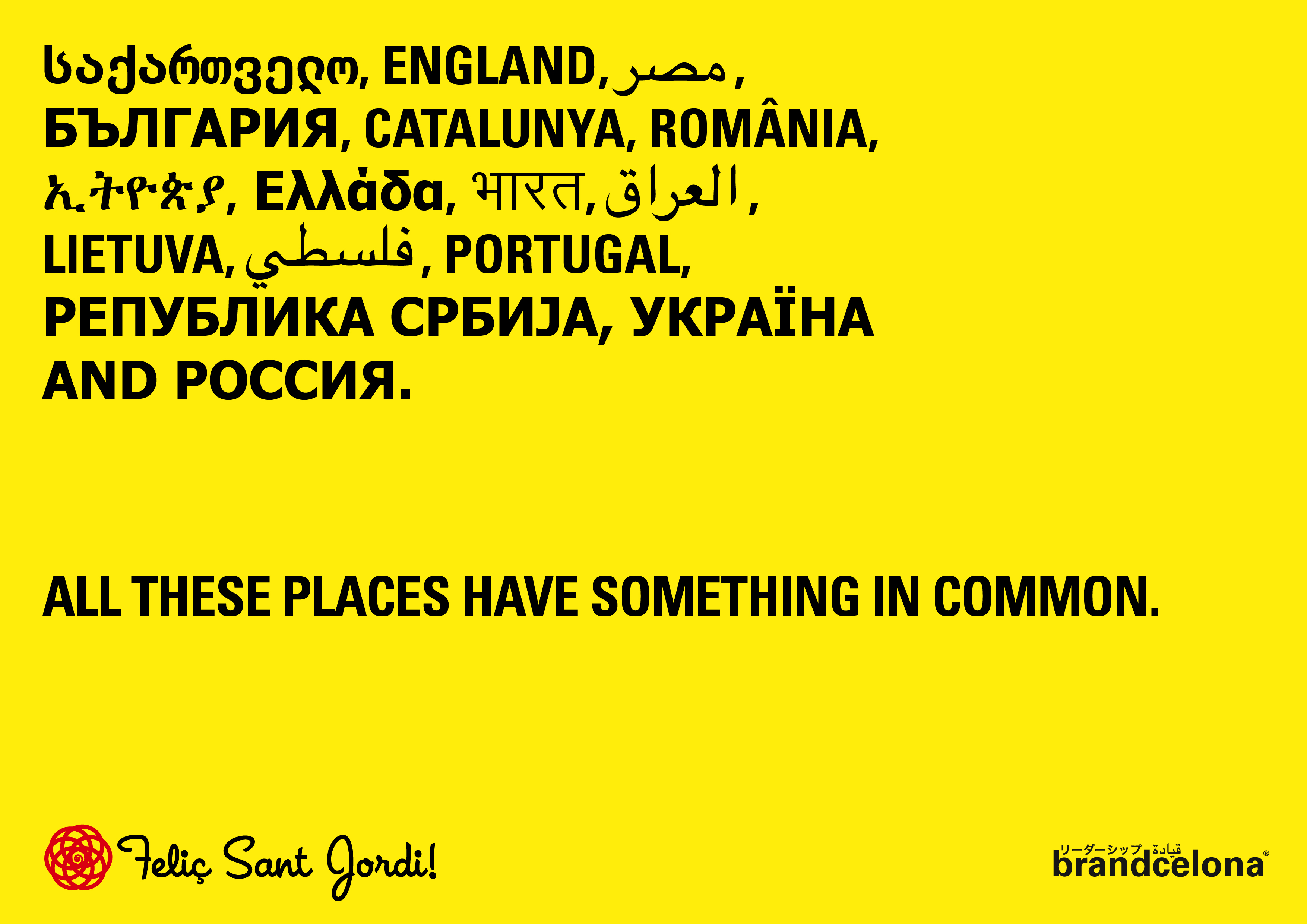
Long time ago a brave knight called Sant Jordi, ended with a dragon that was threatening the town. Once again we celebrate his feat filling the streets with red crosses, roses, books and small acts of courage and love. Cover your store with it and take to the streets to celebrate it with others. Have a nice Saint George’s Day!

—-

Hace mucho tiempo un valiente caballero llamado Sant Jordi, acabó con el dragón que amenazaba al pueblo. Un año más celebramos su hazaña llenando las calles de cruces rojas, rosas, libros y pequeños actos de coraje y amor. Impregna tu tienda de ello y sal a la calle a celebrarlo con los demás. ¡Feliz día de Sant Jordi!

St Jordi Music for your store

Now that World Book Day (Sant Jordi) is coming, we share with all of you a playlist to play in your store and attract knights and princesses that end with the dragon and fill the world of roses and books. Enjoy it!

—-

Ahora que se acerca el Día Internacional del Libro (Sant Jordi), os proponemos una lista de reproducción para hacer sonar en vuestras tiendas y atraer a caballeros y princesas que acaben con el dragón y llenen el mundo de rosas y libros. ¡Disfrutadla!

Architecture & Retail: São Paulo Emplaced interior // Arquitectura & Comercio: São Paulo Interior emplazado

For a better understanding and to complete all those elements linked to the brand experience that influence the buying process, we will count with the collaboration of experts that will introduce concepts that will improve our business development, from different disciplines and points of view. Today we are pleased to introduce a new text of Josep Ferrando, architect.

Frequently the interior architecture is thought of «door-in» and obvious the place, the context as the project material.
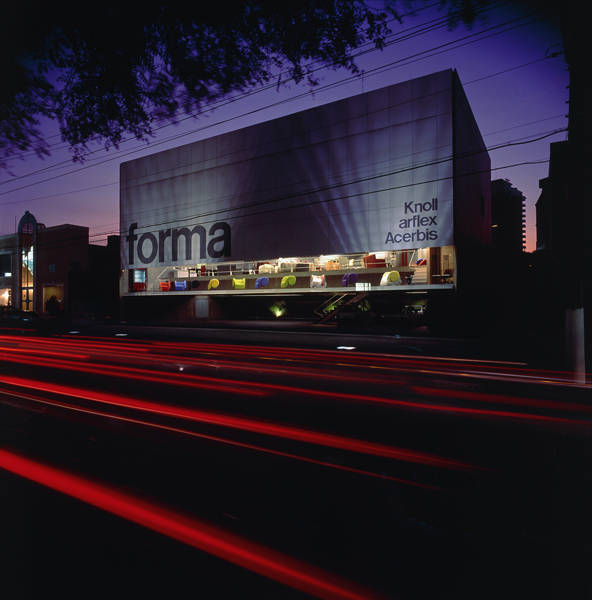
The Forma Store (1987), designed by the architect Paulo Mendes da Rocha is a great example of interior design subject to an environment, where the analysis of the site plan triggers all subsequent decisions until the disposal of products.

The project summarizes the site characteristics, program requirements and constructive rigor.

The Cidade Jardim Avenue is one way through the city of Sao Paulo connecting various centers and granting the privilege to cars. An avenue of heavy traffic, full of buildings of all shapes, materials and colors.
The store stands discreetly rising with the abstract force of a great ad that recognizes the urban scale. Gets character identity because of its formal strength, an elementary prism that appears contrasting with the visual chaos that characterizes the avenue.

From the concept of an elevated volume, is ideated a new model of displaying objects: a single glass case suspended that ensures visibility of furniture and makes them present even though the speed of the passing cars.
The building seems to float slightly, generating a threshold at a human scale, a first space-door that humanizes the environment. This shady space allows you to place the car, as there are no garages in the area and when drivers park in front of the surrounding shops they completely hide the window.
A second door, a retractable ladder, allows closing the store through an elaborate design that compensates weights to manually manipulate the ladder.
The cross section shows a small detail, the different levels of exposure between the interior and the window. This topographic game allows that the view of the furniture and the people who are inside do not add up, therefore, the case is individualized. This slight drop creates areas and generates diagonal visuals outward, tracing a beam that shows a controlled outer space, but not the traffic on Cidade Jardim Avenue.

Construction merge form and are solved simultaneously.
The structure at the service of the interior: the facade is constructed as a steel beam of eight meters high and covers 30 meters and is supported at its ends by a concrete wall, freeing up the entire interior for the exhibition. The service spaces are added to the structure and build a portico with thickness.

The work of Paulo Mendes da Rocha shows the gap as a value and as a tool that enhances the exhibition of products. The formal intensity attracts the customer, avoiding the vulgar spectacularity.

—-

Para completar y entender mejor todos los elementos vinculados a la experiencia de marca que inciden en el proceso de compra, contaremos con la colaboración de expertos que nos irán introduciendo, desde distintas disciplinas y visiones, conceptos que nos ayudarán a construir mejor nuestro negocio. Hoy estamos encantados de presentaros un nuevo texto de Josep Ferrando, arquitecto.

Con frecuencia la Arquitectura de Interiores se piensa de “puertas a dentro” y se obvia el lugar, el contexto como material de proyecto.
La Tienda Forma (1987), obra del arquitecto Paulo Mendes da Rocha, es un gran ejemplo de diseño interior supeditado a un entorno, donde el análisis del plano de emplazamiento desencadena todas las decisiones posteriores hasta la disposición de los productos.

El proyecto sintetiza las características del lugar, los requisitos del programa y el rigor constructivo.

La Avenida Cidade Jardim es una de las vías que atraviesa la ciudad de Sâo Paulo conectando diversos centros y otorgando el privilegio a los coches. Una avenida de tráfico intenso, llena de edificios de todas las formas, materiales y colores.
La Tienda se destaca elevándose discretamente con la fuerza abstracta de un gran anuncio publicitario que reconoce la escala urbana. Consigue carácter identitario debido a su fuerza formal, un prisma elemental que aparece por contraste en medio del caos visual que caracteriza la avenida.

A partir del concepto de volumen elevado, se idea un nuevo modelo de exposición de objetos: una única vitrina suspendida garantiza la visibilidad de los muebles y los hace presentes a pesar de la velocidad del que pasa en coche.
El edificio parece flotar ligeramente, generando un umbral a escala humana, un primer espacio-puerta que humaniza el entorno. Este espacio en sombra permite ubicar los coches, ya que no existen garajes en la zona y cuando los conductores aparcan justo delante de las tiendas colindantes ocultan completamente los escaparate.
Una segunda puerta, la escalera retráctil, permite cerrar la tienda mediante un elaborado diseño que compensa los pesos para manipular manualmente la escalera.
La sección transversal nos muestra un pequeño detalle, el distinto nivel entre la parte de exposición interior y el escaparate. Este juego topográfico permite que la visión de los muebles y de la gente que esta en el interior no se sumen y, por lo tanto, se individualice la vitrina. Este ligero desnivel zonifica y genera visuales en diagonal hacia el exterior, trazando un haz que muestra el espacio exterior controlado, pero no el tráfico de la Avenida Cidade Jardim.

Forma y construcción se confunden, están resueltas al mismo tiempo.
La estructura al servicio del interior: la fachada se construye como una gran viga metálica de ocho metros de altura que cubre 30 metros y apoya en sus extremos en unos muros de hormigón, permitiendo liberar todo el interior para la exposición. Los espacios servidores se suman a la estructura y construyen un pórtico con grosor.

La obra de Paulo Mendes da Rocha nos muestra el vacío como un valor y como un instrumento que realza el objeto expuesto. La intensidad formal atrae al cliente, huyendo de la espectacularidad vulgar.

Retail Week Conference 2012 Highlights

A few weeks ago took place in London one of the most prestigious events on retail and innovation: the Retail Week Conference (14 and 15 March 2012). Leading brands in retailing of all sectors such as Diesel, Tesco, Amazon, Google, McDonald’s, Harrods, Twitter, Facebook, Lush, Inditex or Gap participated during those days discussing the future of retail and the main trends and innovations. We wanted to summarize the main points that were touched and we encourage you to read more in the link we add at the end of the post.

1. Retailers should provide incentives for sustainability and guide consumers into a new form of environmentally sustainable retailing.

2. Mobile platforms are game-changers to multi-channel retailers. Services based on geolocation and scan codes (QR or bar) will rethink many businesses. Users want the information in any form they require it.

3. Talent will not be sought only at the executive level but throughout the organization, excellence must be at all levels.

4. Use social networks to interact with your users and identify innovation in areas of interest that are more advantageous for your brand.

5. Tough times have served to bring out the best, there is hope and confidence in the sector.

6. Promote R + D and retain creative talent of people who understand the brand. Understand what people want:  needs should be clear.

7. To internationalize a brand is important to first gain the credibility of its users; positioning the brand in key countries will be easier.

To conclude the event, they held on March 22 a free ‘webinar’ (online seminar) on the implementation of new technologies in-store of which we did a live following in our Twitter profile @brandcelona. In the following link you will find the press room of the RWC 2012 in which you can visit all the articles published during the conference.

—-

Hace unas semanas tuvo lugar en Londres uno de los eventos más prestigiosos sobre comercio y la innovación: la Retail Week Conference (14 y 15 de marzo de 2012). Las marcas líderes en comercio de todos los sectores como Diesel, Tesco, Amazon, Google, McDonald’s, Harrods, Twitter, Facebook, Lush, Inditex o Gap participaron en estas jornadas debatiendo sobre el futuro del retail y sobre las principales tendencias e innovaciones actuales. Hemos querido hacer un resumen de los principales puntos que se trataron y os animamos a leer más en el link que enlazamos al final del post.

1. Desde el comercio debe incentivarse la sostenibilidad y guiar a los usuarios hacia un comercio sostenible con el medio ambiente.

2. Las plataformas móviles serán claves para los comercios multi-canal: los servicios basados en la geolocalización y el escaneo de códigos (QR o de barras) harán replantear muchos negocios. El usuario quiere información en cualquier formato que necesite.

3. El talento no debe buscarse sólo a nivel ejecutivo sino en toda la organización, la excelencia debe estar en todos los niveles.

4. Utiliza las redes sociales para interactuar con tus usuarios e identificar innovación en aquellas áreas de interés que sean más ventajosas para tu marca.

5. Los tiempos difíciles siempre han servido para sacar lo mejor de cada uno; hay esperanza y confianza en el sector.

6. Potenciar la I+D y retener el talento creativo de aquellas personas que comprendan la marca. Entiende lo que quiere la gente: las necesidades deben ser claras.

7. Para internacionalizar una marca es importante ganarse primero la credibilidad de sus usuarios; posicionarse después en países clave será más sencillo.

Como colofón del evento, el 22 de marzo tuvo lugar un ‘webinar’ (seminario online) gratuito  sobre la aplicación de nuevas tecnologías en los comercios del cual hicimos seguimiento en directo en nuestro Twitter @brandcelona. En el siguiente link encontraréis la sala de prensa de la RWC 2012 en la que podéis visitar todos los artículos que se publicaron durante las jornadas. 

User coaching for using our products // Entrenar al usuario a usar nuestros productos

Psaging Barcelona via cutesuite.wordpress.com

Psaging Barcelona via psaging.com

Psaging Barcelona via psaging.com

When talking about brands in health and wellness, their products and services must be endorsed with the correct use and their optimal integration into the habits and lifestyle of the user. Bringing this knowledge greatly improves engagement between the brand and the customer for several reasons: 1. The user receives these recommendations as an added value of the brand and its products, 2. The philosophy of the brand is integrated into the user’s lifestyle and 3. The recommendations may become a way of promoting cross-selling products and services.

A clear example of this «user coaching» in wellness is Psaging. This brand of health, beauty and natural nutrition focuses on the concept of teaching to prepare our bodies nutritionally to prevent future problems and they do it with positivism and empathy with their users. Proposing to change the «getting older» by growing up and aging by live, ultimately, they promote messages of «mens sana in corpore sano» and positive vitality as a way of life. Through the phrase «Today could be a great day» they emphasize the importance of the morning in our day to day as a turning point to nourish our body and mind.

They have 9 establishments throughout the Spanish territory and are characterized by providing them with a fresh, modern and gourmet style changing the traditional image of an herbalist. Clean wood, warm light, arranged shelves and monthly product demonstrations make of them friendly spaces to ensure a close contact with visitors. 3 main sections are differentiated in their stores: nutritional supplements, natural cosmetics and organic food. They also have a fantastic online store, and argue their vision concept through the magazine «Psaging Magazine»a blog and Psaging Guides. These are full of recipes, tips and healthy habits to ensure optimum use of their products.

—-

Cuando hablamos de marcas dedicadas a la salud y el bienestar, sus productos y servicios deben ir acompañados de un correcto uso y de una integración óptima de éstos en los hábitos y estilo de vida del usuario. Acercar ese conocimiento mejora notablemente el vínculo afectivo de la marca y el cliente por diversos motivos: 1. El usuario recibe esas recomendaciones como un valor añadido de la marca y sus productos, 2. La filosofía de la marca se integra dentro del estilo de vida del usuario y 3. Las recomendaciones pueden convertirse en soportes en los que fomentar la venta cruzada de productos y servicios.

Un claro ejemplo de este «coaching» en bienestar es Psaging. La marca de salud, belleza y nutrición natural se centra en el concepto de enseñar a preparar nuestro organismo nutricionalmente para evitar futuros trastornos y lo hacen de una forma positiva y empática con sus usuarios. Proponen cambiar el «hacerse mayor» por el crecer y el envejecer por el vivir más, en definitiva, promueven mensajes de «mens sana in corpore sano» y de vitalidad positiva como una forma de vida. A través de la frase «Hoy puede ser un gran día» hacen hincapié en la importancia de las mañanas de nuestro día a día como momento crucial para nutrir el cuerpo y la mente.

Cuentan con 9 establecimientos repartidos por el territorio español y se caracterizan por dotarlos de un aire fresco, moderno y de gourmet a la imagen tradicional de las herboristerías. Madera limpia, luz cálida, lineales ordenados y demostraciones de producto mensuales hacen de ellos espacios amables y de contacto cercano con los visitantes. En sus establecimientos se diferencian 3 secciones principales: complementos nutricionales, cosmética natural y alimentación biológica. Además, cuentan con una fantástica tienda online, y argumentan su concepto a través de la revista «Psaging Magazine», su blog y las guías Psaging. Todo ello lleno de recetas, consejos y hábitos saludables para garantizar un uso óptimo de sus productos.

When safety and comfort are the leitmotif // Cuando la seguridad y el confort son el leitmotiv

Safety and comfort systems in spaces have been gaining weight in the construction field not only for the protection of access by outsiders to the property, but also to optimize the ease of access by authorized persons.

In these cases, a brand dedicated to this sector must balance creating comfortable and safe spaces and make it evident through exhibition spaces where the user can obtain more information about the versatility of these systems.

Traditionally, companies dedicated to security showed their range of products in catalogs without the ability to demonstrate and facilitate the testing to its users. It was also difficult to manage and transmit the acquired knowledge and R+D if the binding sites between installers and users could not be identified.

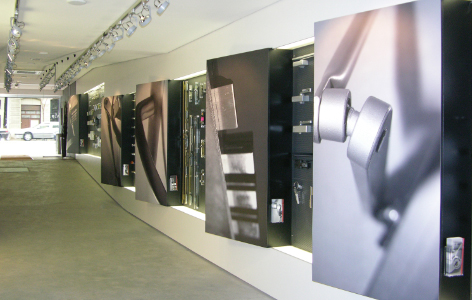
Maldonado family business, dedicated to providing security solutions, opted for this shift towards a corporate culture shared with the technician and the user, and by prioritizing the display and demonstration of their products and services. It has 3 stores in the city of Barcelona and a sales team spread throughout the Spanish territory. Service, tranquility, organization, management and comfort are the maximum and are adapted to the leitmotif of their 3 showrooms and sales areas. They show all security solutions such as escape routes, electronic and electromechanical systems controlled by software, open systems with master key access, solutions for apartments and communities, etc..

One of the mainstays of the brand is the R+D for new products and systems through its training room (the Maldonado Institute for Security Studies ), the organization of technical conferences with content ranging from safety to leadership and motivation and the dissemination of their knowledge through a magazine conducted jointly with several companies, called «Journal of Safety.»

Its strategy of bringing its products and systems to different target audiences (architects, technicians, users, owners, directors of security) as well as training in the implementation of their solutions are tailored to the needs and expectations of professionals and individuals that visit them .

Brandcelona retail consulting structures and executes working methods through consulting and the brand experience in commercial spaces. For any further information, please contact us by email at info@brandcelona.com .

—-

Los sistemas de seguridad y confort en espacios han ido ganando peso en la construcción no sólo por la protección de acceso de personas ajenas a la propiedad, sino también para optimizar la facilidad de acceso de las personas autorizadas.

En estos casos, una marca dedicada a este sector debe buscar el equilibrio creando espacios confortables y seguros y hacerlo evidente mediante sus espacios de exposición para que el usuario obtenga la mayor información sobre la versatilidad de estos sistemas.

Tradicionalmente, las empresas dedicadas a la seguridad mostraban su gama en catálogos sin contar con la capacidad de hacer demostraciones y de facilitar la prueba a sus usuarios. Además, era difícil manejar y transmitir el conocimiento adquirido y la I+D si los puntos de unión entre instaladores y usuarios no podían ser identificados.

La empresa familiar Maldonado, dedicada a ofrecer soluciones de seguridad, apostó por este cambio de dirección hacia una cultura empresarial compartida con el técnico y el usuario, así como por priorizar la exposición y demostración práctica de sus productos y servicios. Dispone de 3 establecimientos en la ciudad de Barcelona y un equipo comercial repartido por todo el territorio español. Servicio, tranquilidad, organización, gestión y comodidad son sus máximas y se adaptan al leitmotiv de sus 3 espacios showroom y venta. En ellos se muestran todo tipo soluciones en seguridad como: vías de escape, sistemas electrónicos y electromecánicos controlados mediante software, sistemas de apertura de accesos con llave maestra, soluciones para apartamentos turísticos y comunidades, etc.

Uno de los pilares de la marca es la I+D de nuevos productos y sistemas mediante su sala de formación (el Instituto Maldonado Estudio de la Seguridad), la organización de jornadas técnicas con contenidos que van desde la seguridad hasta el liderazgo y la motivación y la difusión de su conocimiento a través de una revista realizada conjuntamente con diferentes empresas del sector, llamada «Revista de Seguridad».

Su estrategia de acercar sus productos y sistemas a los diferentes públicos objetivos (arquitectos, técnicos, usuarios, propietarios, directores de seguridad) así como formar en la aplicación de sus soluciones se adapta a las necesidades y expectativas de los profesionales y particulares que los visitan.

Brandcelona retail consulting estructura metodologías de trabajo y actuación junto con el asesoramiento y la experiencia de marca en el espacio comercial. Para ampliar cualquier información al respecto, contacte con nosotros a través del email info@brandcelona.com .

brandcelona manifesto

1. Grow taking care of the needs and motivations of your users without losing the vision of your business. As the Canadian poet Laurence J. Peter quoted «If you don’t know where you’re going, you will probably end up somewhere else.»

2. Design your service turning it into something fast, comfortable and flexible for your users. Time is our scarcest commodity so let’s make the time users spend with us profitable and satisfying.

3. Know well your industry, your team and your users and share your experience. Knowledge is useless if we don’t share it.

4. Analyze trends and adapt to those that are more suitable to the brand and its users. Invest resources in learning where you can proactively keep walking. Do not wait until trends trap you and turn against you by becoming your brand obsolete.

5. Innovate with your users and be sure to be aware of their opinion and suggestions.  Dynamism combat shock.

6. Lead or take a good look at the leaders and analyze their advantages. Leaders help move forward and are not always those that get more sales.

7. Create your own methodology. Do not anchor at doing things in a traditional way under the premise of «we’ve always done it like this», adjust your working methodology to your brand, your users and trends.

8. Be creative. Do not look no simply to be better than your competitors, be different and genuine and promote creativity among your users: co-creation is very enriching.

9. Create your brand positioning in the mind of your users with attractive and positive values. Your brand will form the principal value of your business.

10. Turn your business into an experience and make it memorable. Surprise, care, excite and enthusiasm your users, and make them part of it.

—-

1. Crece adaptándote a las necesidades y a las motivaciones de tus usuarios sin perder la visión de tu negocio. Como dijo el poeta canadiense Laurence J. Peter “Si no sabes dónde vas acabarás en otra parte.”

2. Diseña tu servicio convirtiéndolo en algo ágil, cómodo y flexible para tus usuarios. El tiempo es nuestro bien más escaso así que hagamos que el tiempo que nos dedican los usuarios sea provechoso y satisfactorio.

3. Conoce bien tu sector, tu equipo y tus usuarios y comparte tu experiencia. El conocimiento es poco útil sino lo transmitimos.

4. Analiza las tendencias y adáptate a las que más beneficien a la marca y a sus usuarios. Invierte recursos en conocer hacia dónde puedes seguir caminando de forma proactiva. No esperes a que las tendencias te acorralen y se vuelvan en tu contra convirtiéndote en obsoleto.

5. Innova con tus usuarios y no dejes de conocer su opinión y sugerencias. El dinamismo siempre combate los golpes.

6. Lidera o fíjate bien en los líderes y analiza sus ventajas. Los líderes ayudan a avanzar y no siempre son los que consiguen más ventas.

7. Crea tu propia metodología. No te ancles en hacer las cosas de forma tradicional bajo la premisa del “siempre se ha hecho así”, adapta tu metodología de trabajo a tu marca, a tus usuarios y a las tendencias.

8. Sé creativo. No busques simplemente ser mejor que tu competencia, sé diferente y genuino y promueve la creatividad entre tus usuarios: la co-creación es muy enriquecedora.

9. Crea marca posicionándote en la mente de tu usuario con unos valores atractivos y positivos. Tu marca conformará el valor principal de tu negocio.

10. Convierte tu negocio en una experiencia y haz que te recuerden por ello. Sorprende, cuida, ilusiona y entusiasma a tus usuarios y haz que sean partícipes de ello.

The concept behind concept-stores // El concepto detrás de las concept-stores

Levi’s XX concept-store Tokyo via slamxhype

Aesop concept-store in Paris via designdodo.wordpress.com

Munich concept-store Barcelona via sonajero.es

10 Corso Como concept-store Milan via 10 Corso Como Facebook Page

Concept-stores are establishments that blend products and brands targeting a specific group of customers by the same lifestyle, under a single concept.

A place where all the products displayed identify their users and become a benchmark for style and character. Typically offer a wide and diverse range that changes with certain frequency to constantly surprise the user with new features or new applications. The products listed are not distributed in conventional categories but for a theme based on cross-selling. This involves identifying a concept aligned with the vision of the brand and explore all the products and services that can conform, creating an immersive experience during the visit of the space. Usually accompanied by activities and areas to connect with customers and understand their needs and motivations getting them into the universe of the brand.

The concept-store format is very useful to experiment and be creative, exploring the possibilities and opportunities of the brand with its visitors. They should be seen as changing and spaces in which to host a good number of visitors to organize newsworthy events (shows, concerts, parades, exclusive exhibition of new products …). Many of the concept-stores eventually end up becoming a must visit space for a brand and its environs, so they try to differentiate with a stunning architecture and interior design.

One of the first brands to embrace this trend in the ’90s was 10 Corso Como in Milan, followed by Colette in Paris and Quartier 206 in Berlin. Today it is a concept spread throughout the world -as you can see in the images-, proof of this are the examples of brands that we’ve been talking in the last months as Le Labo (New York), Desigual (Barcelona),  Isolée (Madrid), Merci (Paris) or Starbucks (Amsterdam).

Brandcelona retail consulting can advise you on the highlights to design a concept-store. Do not hesitate to contact us at info@brandcelona.com  to study the best alternatives and plan how to carry them out in your business plan.

—-

Las concept-stores son establecimientos en los que se mezclan productos y marcas dirigidas a un grupo concreto de clientes segmentados por un mismo estilo de vida, un mismo concepto.

Un espacio en el que todos los productos expuestos identifican a sus usuarios y se convierte en un referente para su estilo y carácter. Suelen ofrecer una gama muy amplia y diversa que cambia con cierta frecuencia para sorprender constantemente al usuario con novedades o nuevas aplicaciones. Los productos expuestos no se distribuyen por categorías convencionales sino por temáticas basadas en las ventas cruzadas. Se trata de identificar un concepto alineado con la visión de la marca y explorar todos los productos y servicios que pueden conformarlo creando una experiencia envolvente durante la visita del establecimiento. Suelen acompañarse de actividades y áreas en las que conectar con los clientes y conocer sus necesidades y motivaciones con tal de adentrarlos en el universo de la marca.

Las concepts-stores tienen un formato muy útil para experimentar y ser creativo, explorando las posibilidades y oportunidades de la marca con sus visitantes. Además, deben concebirse como espacios cambiantes y en los que acoger a un buen número de visitantes al organizar eventos noticiables (espectáculos, conciertos, desfiles, presentaciones exclusivos de nuevos productos…). Muchas de las concept-stores acaban convirtiéndose en establecimientos de referencia de la marca e incluso de su entorno, por lo que tratan de diferenciarse con una arquitectura e interiorismo sorprendente.

Una de las primeras marcas en adoptar esta tendencia en los ’90 fue 10 Corso Como en Milán, seguida por Colette en París y Quartier 206 en Berlín. Hoy en día es un concepto extendido por todo el mundo -como se observa en las imágenes-, muestra de ello son los ejemplos de marcas de los que hemos ido hablando en los últimos meses como Le Labo (Nueva York), Desigual (Barcelona),  Isolée (Madrid), Merci (París) o Starbucks (Ámsterdam).

Brandcelona retail consulting te puede asesorar sobre los aspectos más destacados para diseñar una concept-store. No dudes en contactarnos en info@brandcelona.com para que estudiemos las mejores alternativas y planificar cómo llevarlas a cabo en tu plan de negocio.

Views of the 20th century: Duby-Ariès // Lecturas del s.XX: Duby-Ariès

For a better understanding and to complete all those elements linked to the brand experience that influence the buying process, we will count with the collaboration of experts that will introduce concepts that will improve our business development, from different disciplines and points of view. Today we are pleased to introduce a new text of Insik W. Yoon, sociologist.

Internet, social media, privacy are hot topics in business today. Every enterprise tends to the Net and it seems inevitable that we will living in an «entangled» society. With IT and mobile connectivity to transform any place in a workplace, and the problem of privacy in social networks, it is obvious to consider where it begins and ends the private sphere. In an interview in a Spanish newspaper at Polo brothers, creators of Territorio Creativo and authors of #Socialholic (Gestión 2000), Fernando Polo made this reflection: «the line between the private and the personal will be diluted in the coming years.» Do not quite understand the difference between private and personal, but the comment reminded me of a monumental work by historians led by Georges Duby and Philippe Ariès, the fifth volume of the History of Private Life: Riddles of Identity in Modern Times .

Duby explains that the dissociation between business and family was not a strictly a urban phenomenon. In the peasantry, this movement of separation among the farm and home starts during the nineteenth century when raising a wall between the common room and the barn. This is not to preserve family privacy, but to dissociate clearly the work and private life; both become autonomous. Thereafter, one is structured in opposition to the other. In the early twentieth century that border was still confused; before, the company or the family farm gathered in one place two sets of different activities.

The history of the twentieth century, in part, is the history of this dissociation, which also implies a distinction between time and space. The organization of the workplace specializes with the diffusion of Taylorism, which implies a strict order and assigns each worker a place, reinforcing the control over the domain of time and space. The use of time is structured following the differentiation of space. But as sensed Fernando Polo, «we are workers of the information society and the opposite is happening to us.» Work starts in the same place where you live, you start to «live» where you work (anywhere) which will lead to a cultural change in the way of thinking about «life and work» beyond the conventional schemes of «balancing family and work.» The spaces are becoming multifunctional and fickle. Control over the time and space domain is diluted, and the individual gains in power of choice.

The History of Private Life reviews the history of the last two thousand years from the perspective of this double conflict, showing how we have engaged in constant battles between the private and public, separated by a «wall» that moves back and forth, marking the end and beginning of new eras. The private power resists outwards from the assaults of public power, but inside, it also contains individual aspirations to independence.

I.W.Y.
Ego Consumans

—-

Para completar y entender mejor todos los elementos vinculados a la experiencia de marca que inciden en el proceso de compra, contaremos con la colaboración de expertos que nos irán introduciendo, desde distintas disciplinas y visiones, conceptos que nos ayudarán a construir mejor nuestro negocio. Hoy estamos encantados de presentaros un nuevo texto de Insik W. Yoon, sociólogo.

Internet, redes sociales, privacidad son temas candentes de la actualidad empresarial. Todo negocio tiende a la Red y parece irremediable que viviremos en una sociedad “enredada”. Con las TI y la conectividad móvil que transforman cualquier lugar en un lugar de trabajo, y el problema de la privacidad en las redes sociales, es obvio plantearse dónde empieza y dónde acaba la esfera de lo privado. En una entrevista a los hermanos Polo, creadores de Territorio Creativo y autores de #Socialholic (Gestión 2000), Fernando Polo hacía esta reflexión: “la barrera entre lo privado y lo personal se diluirá en los próximos años”. No entiendo muy bien la diferencia entre lo privado y lo personal, pero el comentario me recordó una obra monumental dirigida por los historiadores Georges Duby y Philipe Ariès, el quinto volumen de la Historia de la vida privada: de la Primera Guerra Mundial hasta nuestros días.

Duby explica que la disociación entre la empresa y la familia no fue un fenómeno estrictamente urbano. En el campesinado, este movimiento de separación entre la explotación y el domicilio se inicia durante el s.XIX cuando se eleva un muro entre la habitación común y el establo. No se trata de preservar la intimidad familiar, sino de disociar claramente el trabajo y la vida privada; ambas se hacen autónomas. A partir de entonces, ésta se estructura por oposición a aquélla. A comienzos del s.XX esa frontera todavía se confundía; antes, la empresa o la explotación familiar reunía en un único y mismo lugar dos series de actividades diferentes.

La historia del s.XX es, en parte, la historia de esta disociación, que implica además una diferenciación de tiempo y espacio. La organización del lugar de trabajo se especializa con la difusión del taylorismo, que implica un orden estricto y asigna a cada obrero un lugar; se refuerza el control sobre el dominio del tiempo y el espacio. La utilización del tiempo se estructura siguiendo la diferenciación del espacio. Pero como intuía Fernando Polo, “a nosotros, que somos trabajadores de la sociedad de la información, nos está pasando lo contrario”. Se empieza a trabajar en el mismo sitio donde se vive, se empieza a “vivir” en donde se trabaja (en cualquier lugar): lo que llevará a un cambio cultural en la forma de concebir “vida y trabajo” más allá de las formas convencionales de la “conciliación familiar y del trabajo”. Los espacios empiezan a ser multifuncionales y volubles. El control sobre el dominio del tiempo y el espacio se diluye, y el individuo gana en poder de elección.

La Historia de la vida privada repasa la historia de los últimos dos mil años desde la perspectiva de este doble conflicto, mostrando cómo se han entablado combates constantes entre lo privado y lo público, separados por un “muro” que avanza y retrocede, marcando el fin y el comienzo de nuevas épocas. El poder privado resiste, hacia fuera, los asaltos del poder público; pero, hacia dentro, también contiene las aspiraciones individuales a la independencia.

I.W.Y.
Ego Consumans